August Weather: Nairobi among 3 counties set for cold conditions
By Valerian Khakayi, August 12, 2026Nairobi is among three counties expected to experience cool and cloudy conditions as the Kenya Meteorological Department forecasts varying weather conditions across the country between Thursday, August 13, and Friday, August 14, 2026.
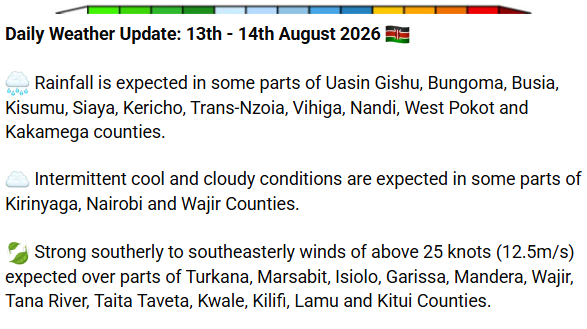
According to the latest weather update, intermittent cool and cloudy conditions are expected in parts of Nairobi, Kirinyaga and Wajir counties during the forecast period.
The weather outlook also points to rainfall in several counties, with residents in parts of western Kenya expected to experience wet conditions.
Rainfall is forecast in some parts of Uasin Gishu, Bungoma, Busia, Kisumu, Siaya, Kericho, Trans Nzoia, Vihiga, Nandi, West Pokot and Kakamega counties.

Residents in these areas have been advised to remain alert to changing weather conditions, particularly where rainfall could affect travel and other daily activities.
Meanwhile, strong southerly to southeasterly winds are expected in several parts of the country. The Kenya Meteorological Department said winds exceeding 25 knots, equivalent to about 12.5 metres per second, are expected over parts of Turkana, Marsabit, Isiolo, Garissa, Mandera, Wajir, Tana River, Taita Taveta, Kwale, Kilifi, Lamu and Kitui counties.
The strong winds could affect outdoor activities, travel and maritime operations, particularly along the coast and in northern and eastern Kenya.
Why August is often cold in Kenya
August is typically part of Kenya’s cooler season, particularly in the central highlands and Nairobi. The period falls within the country’s June-July-August season, when temperatures can drop, especially during early mornings and evenings.
Nairobi’s elevation contributes to its relatively cool conditions, with cloudy weather sometimes making temperatures feel colder during the day.
The current forecast comes amid continued discussions about changing weather patterns in Kenya and the wider East African region. While El Niño is often associated with significant shifts in rainfall patterns, it is important to distinguish between an El Niño event and ordinary seasonal weather.
El Niño refers to the periodic warming of the central and eastern tropical Pacific Ocean, which can influence weather patterns in different parts of the world. Its effects in East Africa can vary depending on the season and other atmospheric factors.
Kenya has previously experienced periods of unusually heavy rainfall associated with El Niño conditions, including flooding in some areas.
However, the August 13-14 forecast does not by itself indicate an El Niño event. Weather conditions are influenced by several factors, and residents are encouraged to follow official updates from the Kenya Meteorological Department.