KWS relocates Lake Baringo crocodiles, shares key safety tips
By Dan Kauna, August 31, 2026On August 31, 2026, the Kenya Wildlife Service (KWS) stepped in to move dangerous crocodiles away from Kampi ya Samaki on Lake Baringo, bringing relief to a community struggling with rising water levels.
Over the past decade, swelling waters have forced residents and wild animals into dangerously close quarters. While official relocation efforts are underway, staying safe near crocodile-infested waters also requires precautions at the household level.
How KWS is removing danger from shorelines
The recent operation by the KWS Veterinary & Capture Unit targets high-risk areas where crocodiles pose an immediate threat to human life.
Photos from the exercise show officers dressed in green overalls and dark gumboots working along the muddy bank to physically restrain a massive crocodile, binding its snout securely with black cord before transport.
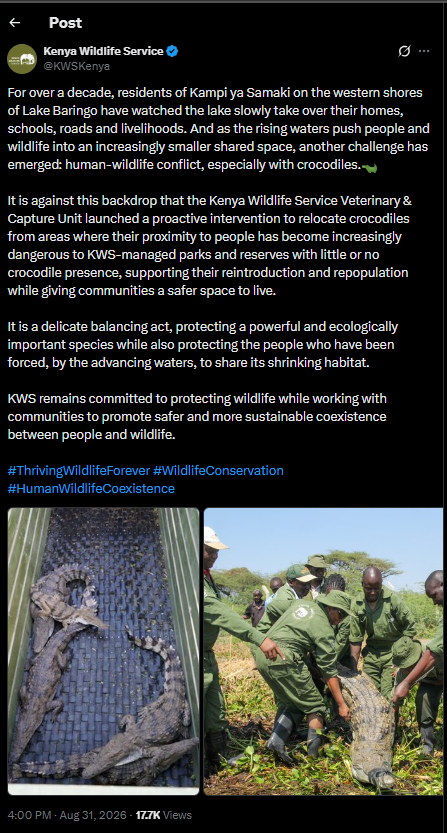
Captured reptiles are loaded side by side into transport containers fitted with heavy-duty rubber flooring and taken to protected reserves with low crocodile populations.
Addressing the situation, KWS explained that environmental changes have created a severe challenge for local families. “For over a decade, residents of Kampi ya Samaki on the western shores of Lake Baringo have watched the lake slowly take over their homes, schools, roads and livelihoods,” the agency shared on X.
KWS noted that moving the animals is “a delicate balancing act, protecting a powerful and ecologically important species while also protecting the people who have been forced, by the advancing waters, to share its shrinking habitat.”
Daily steps to protect your family and livestock
While KWS continues its capture exercise, residents living near lakes and rivers can significantly lower their risk of attacks by adjusting daily habits. Crocodiles are ambush hunters that are most active during early morning hours, late afternoons, and at night.
Fetching water, bathing, or fishing during these low-light periods dramatically increases the chances of a dangerous encounter.
Official advice from the IUCN Crocodile Specialist Group stresses that “crocodilians often hunt near the water’s edge, so be alert on the shore and in the shallows.”
Experts recommend standing at least five metres back from the water when walking along riverbanks. Dumping fish waste or livestock scraps near landing sites must also be avoided, as rotting meat draws reptiles closer to areas where children play or families wash.
Building sturdy wooden barriers around livestock watering spots protects goats and cattle, preventing losses that can cost farmers over Sh100,000 per animal.