Advertisement
How to start a transport cooperative with your neighbours
21st May, 2026 08:41 AM

When the Transport Alliance strike took effect on May 18, something quietly impressive happened across Nairobi’s residential estates.
Neighbours who had barely spoken began coordinating WhatsApp groups, splitting fuel costs, and rotating vehicles to get each other to work. It worked.
Now the question is, why stop?
A transport cooperative takes that same energy and adds structure, saving money, reducing stress, and turning the commute into something you plan rather than survive.
Getting the basics right
Start with membership. A functional cooperative works best with five to twelve households along a shared route. Any more and scheduling becomes cumbersome; fewer and the savings thin out.
Once the group is set, agree on a contribution model. The fairest approach is distance-weighted cost sharing, where each member pays proportional to how far they travel, factoring in fuel and a small maintenance buffer.

Set a monthly figure, collect payments, and keep a shared ledger that everyone can view.
Route planning should be collective. Map all pick-up and drop-off points, agree on the most time-efficient sequence, and build in allowance for Nairobi traffic. Designate one person as the week’s coordinator, with the role rotating monthly so no single member carries the administrative load indefinitely.
Vehicle rotation needs clear rules. Where multiple members own cars, draw up a schedule that spreads mileage fairly. Please reimburse any member using their own vehicle based on the actual journey cost, not a flat figure that can erode goodwill over time.
Formalising the arrangement
A cooperative without agreed-upon rules is just a favour that eventually expires. Draft a one-page operating agreement covering how costs are calculated and collected, what happens when a member cancels or is consistently late, how someone exits the arrangement, and how disputes are resolved.
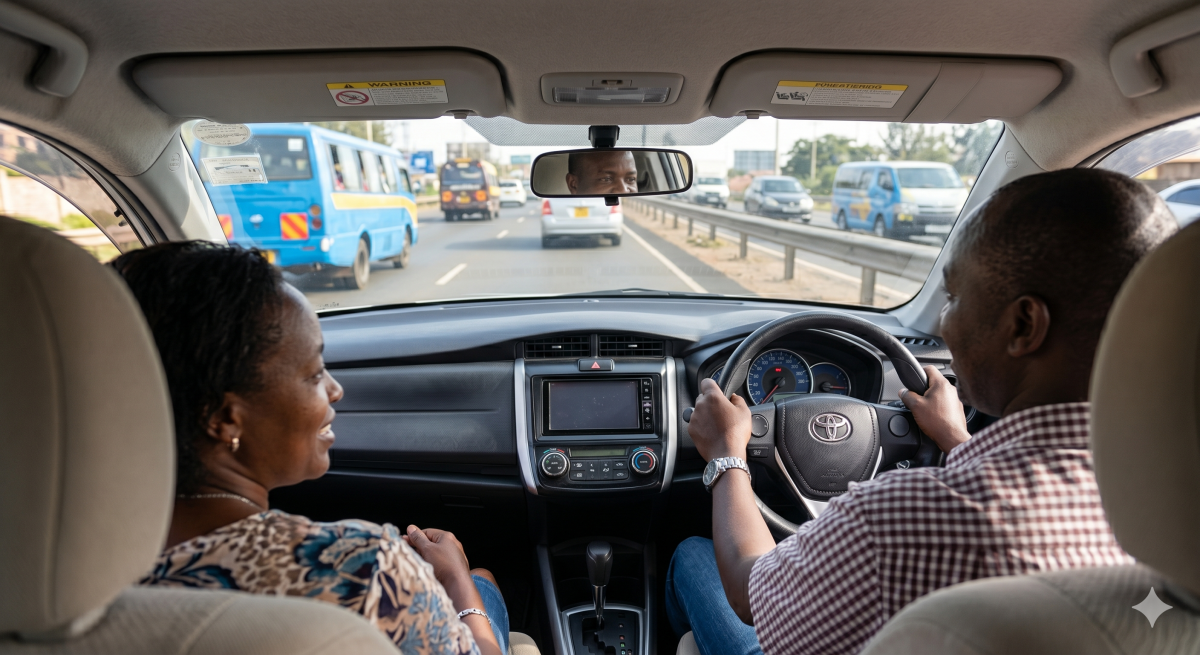
Research published in Environment, Development and Sustainability in June 2025 found that “a 50% cost reduction with carpooling positively impacts the propensity to carpool and the belief in carpooling benefits”, which resonates with anyone spending Ksh300 or more daily on matatu fares.
The incentive is clear; the structure is what makes it stick.
Assign a treasurer, a route coordinator, and a point person for new member enquiries.
A brief monthly check-in on the group (a voice note or group call works fine) keeps small friction from growing into bigger problems.