Advertisement
How you can explain Kenya’s budget to your child
11th June, 2026 01:16 PM

Every June, Kenya’s Cabinet Secretary for the National Treasury walks into Parliament and reads out a document that will shape what things cost, what gets built, and where public money flows for the next twelve months.
Most adults find it dense. Children find it invisible. But the annual budget is actually one of the best free teaching tools a parent has if you know how to translate it.
Here is a simple guide to doing exactly that.
Start with what they already understand
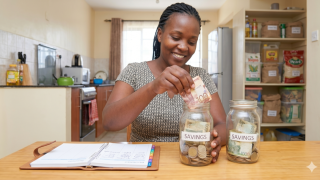
For a five-year-old, the word budget means nothing. But the idea behind it does. At this age, the best approach is to use something they already know, such as pocket money, or the family shopping trip.

Try this: “You know how we save coins so we can buy milk and bread? The government does the same thing. It collects money from grown-ups who work, then decides how to spend it – on schools, hospitals, roads.”
That is enough. Do not go further. At five, the goal is not to explain VAT. It is to plant the idea that money requires a plan, and that plans involve choices.
The ten-year-old version – trade-offs and fairness
By ten, children are ready to think about fairness and priorities. This is the age where the concept of trade-offs lands well.
Tell them: “Kenya has KshX to spend this year. If we spend more money building new roads, we might have less money for buying new school books. So the government has to decide what matters most.”

You can even make it a kitchen-table exercise. Give them a pretend budget of Ksh1,000 and ask them to divide it between school fees, food, transport, and savings. They will argue about it. That argument is the lesson.
Research published in the Journal of Consumer Affairs found that “through repeated practice that is supported by parents or other adults, children can develop positive financial habits” which is precisely what this kind of structured conversation provides.
The teenager’s version – real stakes, real curiosity
Teenagers can handle the actual numbers, and many are curious once they realise the budget affects them directly.
Walk them through the parts that touch their lives. Has the fuel levy gone up? That affects the matatu fare to school. Has the government increased allocation to technical training? That is relevant if they are considering a TVET path. Is there a new tax on mobile data? That hits their daily routine immediately.

The goal here is not to make them economists. It’s to help them see that government decisions are not abstract – they land in their pockets, their classrooms, and their futures.
Ask them: “If you were the CS for the National Treasury, what would you spend more money on? And what would you cut?” You might be surprised by how thoughtful the answer is.
Budget day is not just a news event. In the right hands, it is a once-a-year chance to raise a child who understands that money has limits, choices have consequences, and paying attention to public finance is part of being an adult.