Advertisement
Study: Thinking about your legacy could improve your mental health
24th May, 2026 09:33 PM

Research shows that considering the legacy we are leaving behind can help us improve our mental health and find more meaning during our lives, even if we are still young.
When Beth Hunter’s father was diagnosed with Alzheimer’s disease, she asked him whether she could record them having a conversation, so she could listen back to it in years to come.
He refused. He wasn’t the type to have deep heart-to-hearts about their relationship, Hunter says – he didn’t confront his diagnosis or talk about death.
Instead, he prioritised writing his war stories, and did so by hand, before hiring someone else to type them. This is what he felt was most valuable to pass on after his death.
While leaving a legacy may feel more urgent for older adults who feel the pressing nature of limited time, some scholars argue the drive to leave one can – and maybe should – begin earlier in life. And a growing body of research suggests that better understanding our innate human interest in passing something on to future generations after we die could reveal new ways to improve mental health.
“The vast majority of people don’t think about it,” says Hunter, who is an associate professor at Bowling Green State University, Ohio, US, and an expert in legacy in the context of cancer survivorship.
But legacy can manifest in different ways and even be an unconscious act. “Everyone leaves a legacy, whether you know it or not,” says Hunter. It isn’t just the bequeathment of wealth or property, or everlasting art such as music or writing.
Instead, some researchers have split legacy into three main overlapping categories: biological legacy, which we leave through our bodies and genetics, material legacy, represented by our wealth and possessions, and the legacy of our values, such as faith, culture and heritage.
A bodily legacy
For many, the most obvious form of biological legacy is passing on genetics through having biological children. But genetic lineage, which refers to an ancestral line connected through genes, and legacy, our lasting impact after death, can be two separate things.
Leaving a biological legacy may also involve leaving the very shells we live in: our bodies. About 170 million Americans are registered organ donors, though only three in every 1,000 people die in circumstances that allow for a successful organ donation.
Some people wish to even donate their whole bodies to science, meaning their bodies will be used to educate medical students or for research, such as the development of new clinical procedures. In the US in 2021, more than 26,000 body donations were received.
In one recent study of over 100 people registered to donate their bodies in Belgium, the desire to contribute to science was the leading motivator, at 57%. Other motivators were altruism and gratitude for medical care, but interestingly, 16% said their motivation was to give meaning to their death.
Thinking about legacy can help people move from a state of ‘death anxiety’ into one of ‘death reflection’
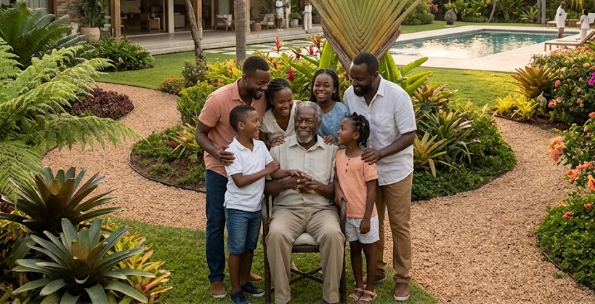
This is true of those with genetic illnesses or health conditions, too. Famously, activist Susan Potter, who had suffered from various illnesses and chronic health conditions such as cancer, diabetes and arthritis, donated her body to the Visible Human Project in Colorado, US, to help young people become better doctors.
Thinking about legacy can also provide comfort for those facing imminent death. For those in end-of-life care at any stage of life, some hospitals and hospices facilitate “legacy activities” to help patients conclude their lives in a way that is most meaningful to them and their families.
This could be a journal or scrapbook, a card to a loved one, an art project, or an “ethical will”, which is a non-legal document allowing people to write down their thoughts, values and advice to be passed on.
Research on terminally ill adults and children suggests that these types of legacy activities may help to decrease depression and anxiety. It can also assist with the grief process during one’s final months of life.
A legacy of values
Philanthropy, bequeathing an estate or passing on valuable belongings, are all ways to leave a material legacy. Heirlooms like photographs, journals or other possessions might be similarly cherished as a way of passing down valuable family histories. Donating a building in one’s name, for example, leaves a mark on society too.
But research suggests that what people most want to pass on as their legacy are values and beliefs – such as kindness and the importance of helping others.
One study that pored over the stories of 38 women of diverse ages and health statuses found that participants longed to pass on experiences and values.

Typically, they would seek to do this by setting a moral example through their behaviour, religion or spirituality, and by explicit acts such as writing down or tape-recording their stories, family history or key milestones in their life, perhaps in the form of an autobiography.
Leaving a legacy of values seems to have numerous benefits. When a group of US researchers interviewed a cohort of adults aged 65 and over who had created a legacy of values document, they found that participants were able to find peace, accept the past, communicate what mattered most to them, and that it inspired them to continue living.
Several participants described leaving a legacy of values as a “tangible gift”, while one said the process “reminds you of what you’ve survived, what obstacles you’ve faced, how you face them, and what philosophies helped you face them”.
Thinking about your legacy can be good for you
While humans have likely thought about legacy for thousands of years, scholars have only been researching the concept for some 75 years. In 1950, German psychoanalyst Erik Erikson coined the term generativity, describing it as the extent to which a person is interested in the well-being of others, particularly with regard to benefiting future generations.
He included generativity as the seventh of his eight stages of psychosocial development, noting it was a key task for people in their mid-life.
If a person fails to achieve generativity, Erikson posited, it can affect the trajectory of their later life, and perhaps even worsen their health. Other scholars have since expanded on and provided evidence for this theory, although some have also suggested that achieving generativity is not just a challenge for adults in midlife, but should be considered as a lifelong process.
Crucially, our fascination with leaving a legacy tells us that humans are wired to care deeply about the opinions of others, says Bering. “Even in death, we can’t escape the concern.”
It’s well established that humans need connection with others throughout our lifespan – it improves our health and is a crucial source of happiness. Therefore, legacy may also be an “artificial extension” of our human need to be loved and to belong.
Leaving your own legacy
Despite the growing body of research, why we want to be remembered positively after we die is still something of a puzzle. “After all… if you believe that a brain is required for ongoing consciousness, we’ll be psychologically unable to know or enjoy our reputations postmortem,” Bering says.
Obsessing throughout our entire lives over how we will be perceived after death might “rob us of our appreciation and enjoyment of the more visceral here-and-now”, Bering argues. “I think it can also make us second-guess consequential decisions, if we hesitate to take certain moral stands for the implicit fear of ‘how we’ll be remembered’,” he says.
The benefit, these researchers suggest, is two-fold: it offers humans a sense of motivation and meaning when we are alive, and “symbolic immortality” when we die – extending ourselves into the future, even if we are not physically there.