Advertisement
Why slow reading might be better for your brain
28th June, 2026 01:37 PM

Between clearing office reports, studying for exams, and trying to stay updated with daily news, the volume of text we handle every day can be overwhelming.
This pressure makes speed-reading courses and apps look very attractive. Many promise to double your reading speed in just a few days. But science shows a big gap between what these commercial programmes sell and how the human brain actually processes words.
The hard limit of your brain
When we read, our eyes do not move smoothly across a page. Instead, they make quick jumps and pauses to grab the meaning of words. Pushing your eyes to move faster than the brain can process causes your understanding to drop immediately.
A 2016 study published in Psychological Science in the Public Interest looked at decades of data on how people read.
The researchers concluded that “the research shows that there is a trade-off between speed and accuracy.

It is unlikely that readers will be able to double or triple their reading speeds (e.g., from around 250 to 500–750 words per minute) while still being able to understand the text as well as if they read at normal speed.”
For most people, reading faster than 400 words per minute means you are just skimming, and your brain misses the main points.
How to truly improve your reading efficiency
Instead of spending hard-earned money on apps that claim to train your eyes, you can adopt a few habits that science supports.
First, understand that your inner voice, which is the habit of silently pronouncing words in your head while reading, is completely normal. It actually helps you understand complex ideas. Trying to eliminate it hurts your memory.
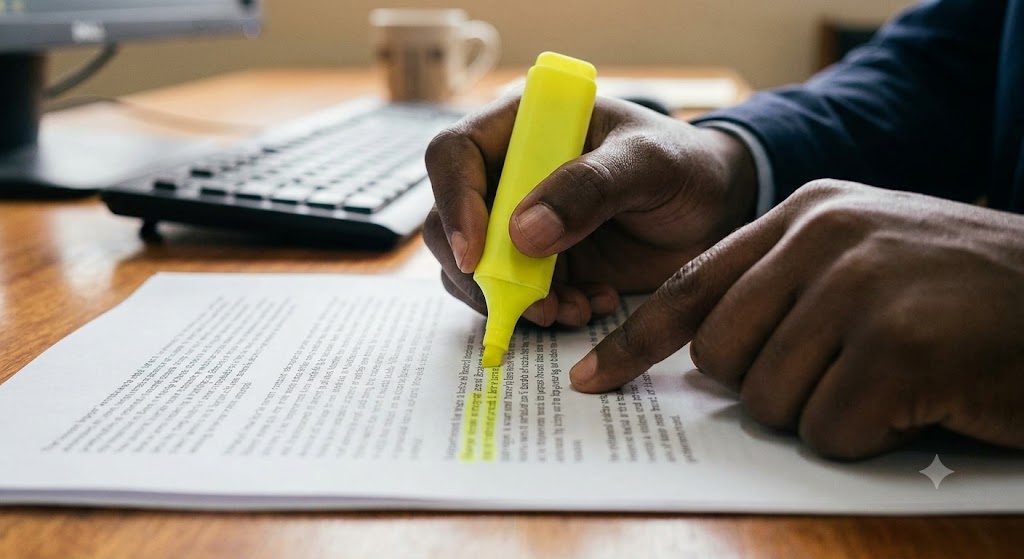
To read more efficiently, try active previewing. Spend two minutes looking at headings, introductions, and summaries before reading the full text. This gives your brain a map of the information.
Another useful method is chunking, where you train your eyes to look at small groups of words together rather than focusing on every single letter. Finally, removing distractions stops you from constantly jumping backwards to re-read sentences.
True efficiency is about the depth of your engagement with the words, not how fast you flip the pages.