Advertisement
How to spot a fake job advert before it wastes your time and money
07th May, 2026 09:41 AM

In a time when job opportunities are heavily shared online, fake job adverts are becoming harder to detect. What looks like a promising opening on social media or a website can easily turn into a scam designed to collect money, personal details or free labour from desperate job seekers.
Many people only realise an advert was fake after they have already sent money, shared personal information, or wasted days applying for a position that never existed. According to the Kenya Ports Authority, online fraud cases linked to fake recruitment schemes have continued to increase as more people search for jobs digitally.
How to spot the signs
One of the biggest warning signs is being asked to pay money during the application process. Genuine employers do not ask candidates to send registration fees, training fees, or interview processing charges before employment. Fraudsters often use convincing language and urgency to pressure applicants into making quick payments, especially through mobile money platforms. Career experts from BrighterMonday Kenya advise job seekers to avoid any employer demanding payment before interviews or placement.
Poorly written adverts can also reveal a scam. While mistakes can happen, fake job posts usually contain several spelling errors, unclear job descriptions, and exaggerated promises. Some adverts promise very high salaries for simple roles without requiring qualifications or experience. If an offer sounds unrealistic, it is important to question it.
Another rising alarm is a lack of company information. Genuine employers usually provide clear details about their business, including a physical address, official website, and professional email contacts. Scammers often use personal email addresses or social media accounts with limited information.
Before applying, job seekers should take time to search for the company online and confirm whether it actually exists. The Kenya Labour Market Information System encouraged applicants to verify employers before submitting documents or personal information.
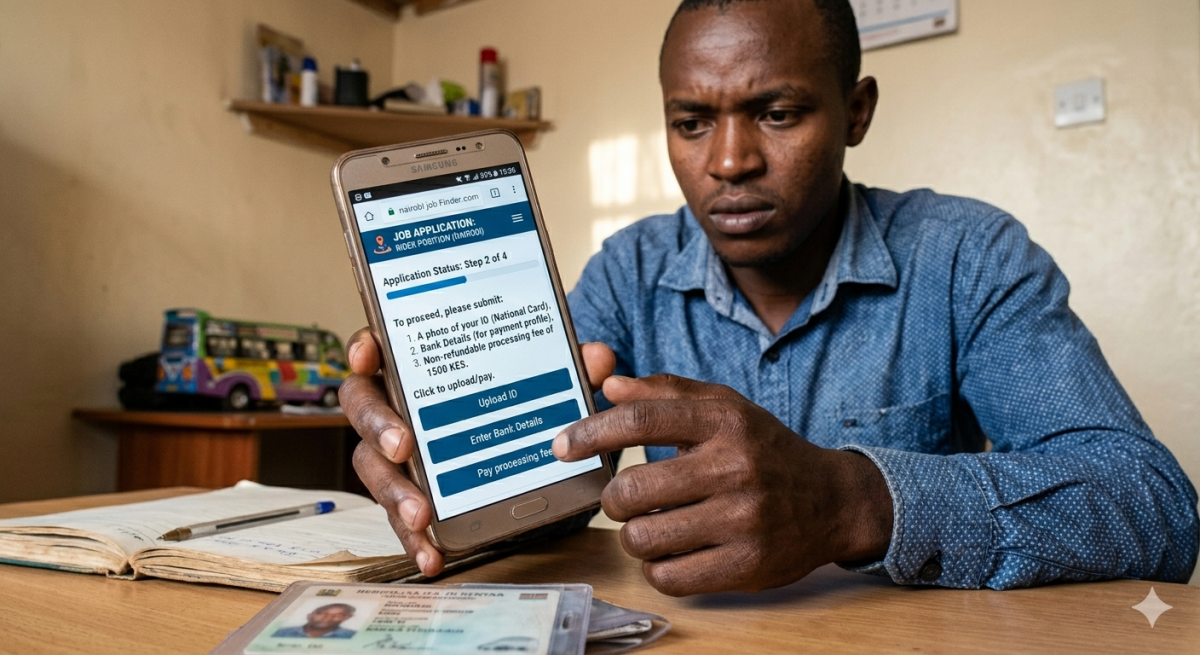
Fake recruiters also tend to rush the hiring process. In some cases, applicants receive congratulatory messages immediately after sending their CVs, without attending interviews or assessments. Professional recruitment normally involves several steps, including interviews and background checks. Being “hired” too quickly should raise suspicion.
Job seekers should also be careful when sharing personal documents. Identity cards, bank details, passwords, and PIN numbers should never be shared carelessly during an application process. Cybercriminals sometimes use fake job advertisements to collect personal data for fraud or identity theft.
Social media has made it easier for fake adverts to spread quickly. Some scammers copy logos and information from real companies to appear legitimate. Others create fake accounts pretending to represent well-known organisations. Verifying information through official company pages or trusted job platforms can help applicants avoid being misled.
What to do
Experts advise job seekers to ask questions, confirm details, and seek advice from trusted professionals, which can help prevent costly mistakes. A genuine opportunity should offer professionalism, transparency, and proper communication from the beginning.