How to deal with a partner who refuses to go to therapy
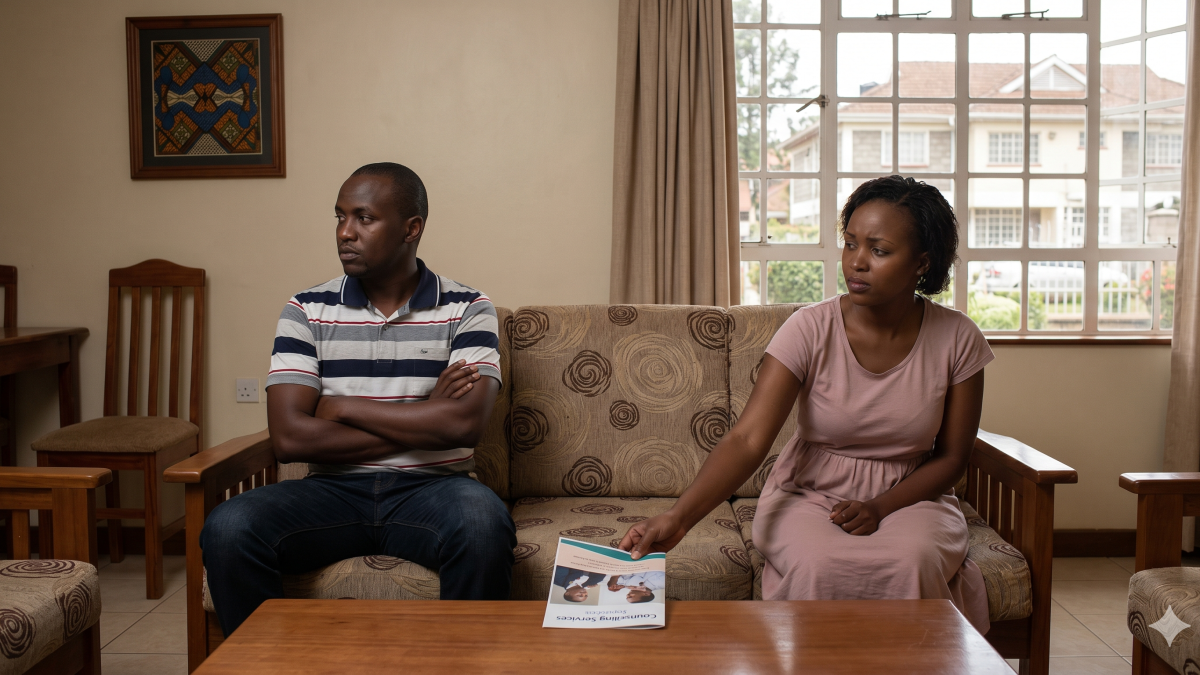
In many Kenyan homes, the word “therapy” often carries a heavy weight. It is sometimes viewed with suspicion or seen as a sign that a relationship has reached its breaking point.
When one partner suggests professional support, and the other flatly refuses, the resulting tension can feel like an immovable wall.
You might also like



However, resistance is rarely about a lack of love.
It is often rooted in fear, stigma, or a misunderstanding of what happens behind closed doors. Shifting this dynamic requires a change in strategy rather than an increase in pressure.
Changing approach through framing
The way you introduce the idea of therapy often determines the response.
If the suggestion comes during a heated argument or feels like an accusation, a partner is likely to retreat.

Research highlights a “demand-withdraw” pattern where “one party, the demander, pressuring the other party through emotional requests, criticism, and complaints. The other party, the withdrawer, retreats through defensiveness and passive inaction.”
To avoid this, frame the conversation around the relationship rather than your partner’s perceived flaws.
Instead of saying “You need to fix your anger,” try “I want us to communicate better so I can feel closer to you.” Timing is equally vital.
Choose a moment when you are both calm and connected, perhaps during a quiet evening or a weekend walk. This reduces the sense of threat and allows the suggestion to be seen as an invitation to build a stronger future together.
Starting journey alone
If a partner remains firm in their refusal, you do not have to remain at a standstill.
You can choose to begin therapy on your own.

This is not a “consolation prize” but a powerful catalyst for change. As you learn new ways to set boundaries, regulate your emotions, and communicate your needs, the entire dynamic of the relationship begins to shift.
There is scientific backing for this approach.
Clinical observations suggest that “the patterns of perception, emotion, communication, and action observed during the process of resolving interpersonal problems were consistent with those observed in intrapersonal problem resolution.”

By working on yourself, you often inadvertently provide the “blueprints” for a healthier partnership.
If the resistance is permanent, you must eventually decide if the current Sh0 investment in your collective mental well-being is a cost you can afford to pay long-term.