TIFA reveals burglary is the most common crime in Kenya: How to protect your house
By Steve Ireri, September 9, 2026Residential break-ins and burglaries have emerged as the most common form of crime experienced by Kenyans, with a new national survey revealing that one in every four reported crime victims suffered a break-in at home.
The findings were contained in TIFA Research’s latest national survey released on Wednesday, September 9, 2026, which examined Kenyans’ economic conditions, public policy concerns, crime experiences and trust in key institutions.
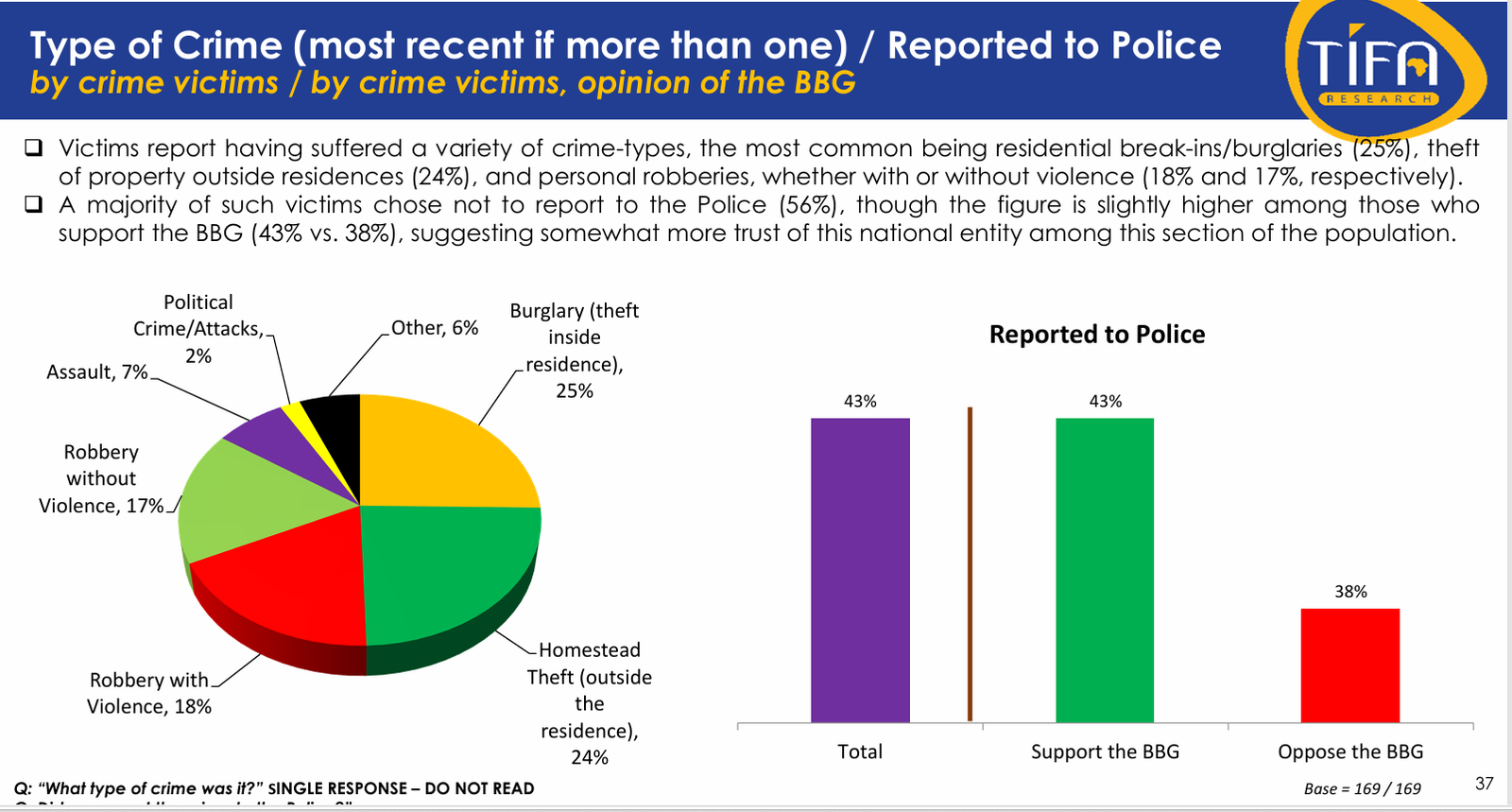
The survey found that residential break-ins and burglaries accounted for 25 per cent of the crimes experienced by respondents, placing them ahead of theft of property outside residences at 24 per cent.
Personal robberies without violence accounted for 18 per cent of reported crimes, while robberies involving violence stood at 17 per cent.
The findings offer a sobering picture of the security risks confronting households, with homes emerging as the most common setting in which respondents said they had experienced crime.
TIFA conducted the survey between June 13 and 22, 2026, through face-to-face household interviews involving 2,048 randomly selected Kenyan adults aged 18 and above across all 47 counties.
The survey further established that eight per cent of Kenyans had been victims of crime during the first half of 2026.
Crime experiences, however, varied significantly across the country, with South Rift recording the highest proportion of victims at 14 per cent, followed by Nairobi and Lower Eastern at 13 per cent each.
At the other end of the scale, six per cent of respondents in the Coast region reported being crime victims, compared with three per cent each in Northern and Central Rift.
The survey also found that crime victims were not necessarily targeted only once, with 39 per cent saying they had experienced such misfortune more than once.
The findings raise important questions about how households can strengthen their security, particularly given that burglary emerged as the leading individual crime category recorded in the survey.
How to protect your house from burglars
One of the simplest ways to make a home less attractive to burglars is to strengthen points of entry.
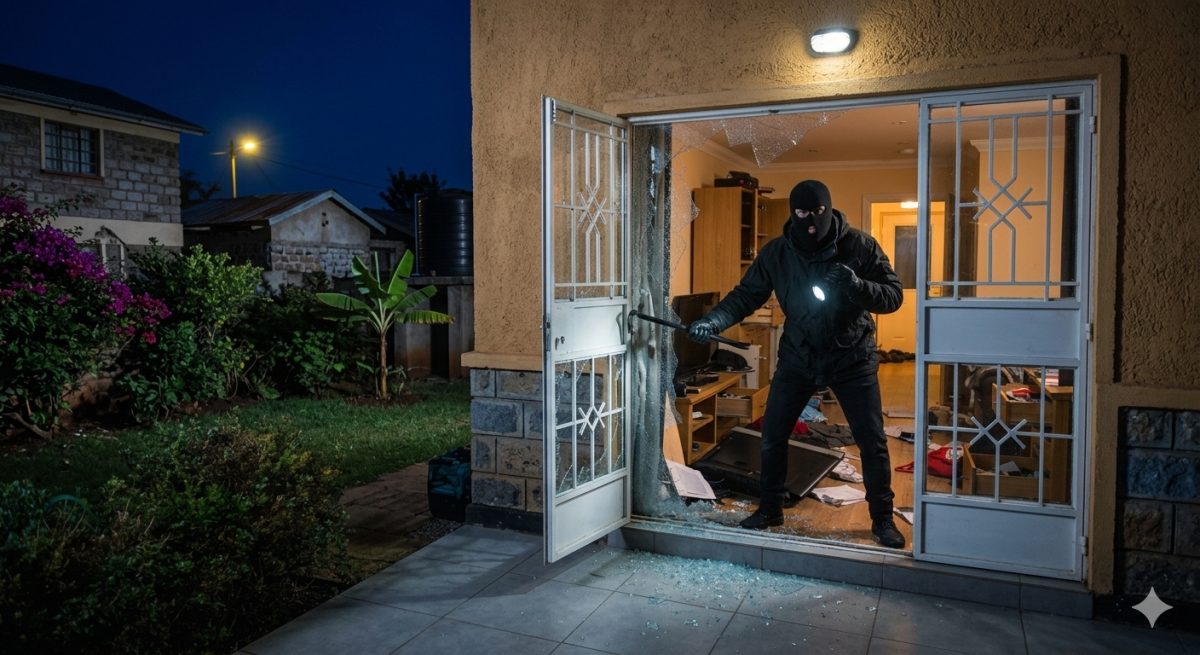
Doors should be fitted with strong locks, while homeowners should ensure that door frames, hinges and surrounding structures are sturdy enough to withstand forced entry. Where possible, external doors should have additional security features such as deadbolts or reinforced locks, particularly for houses located in areas that are more vulnerable to break-ins.
Windows also require attention because they can provide another entry point for intruders.
Homeowners can reinforce vulnerable windows with secure locks, burglar-proofing or other appropriate security measures, while ensuring that such installations do not create safety hazards for occupants in the event of an emergency.
Lighting can also play an important role in discouraging intruders. Keeping the areas around entrances, gates, pathways and other vulnerable points adequately lit can make it more difficult for someone to approach a house without being noticed.
Motion-sensor lights can provide an additional layer of security by illuminating areas when movement is detected.
The area immediately outside the house should also not provide convenient hiding places. Overgrown bushes, piles of materials and other obstructions close to doors and windows can give intruders cover, making it harder for neighbours or security personnel to notice suspicious activity. Keeping compounds reasonably clear can therefore improve visibility around the property.
Do not make it easy for criminals
Homeowners should also be careful about what they leave outside their houses. Ladders, tools and other equipment that could assist an intruder in gaining access should be secured rather than left in easily accessible areas.
Spare keys should similarly not be hidden in obvious locations such as under doormats, flower pots or near the doorway.
For families with domestic workers, tenants or other people who may have access to the home, control of spare keys and access codes can also be important. Keys should be changed or locks replaced when there is uncertainty about who still has access to them.
Technology can provide another layer of protection.
Security cameras, alarms and other home-monitoring systems can help homeowners detect unusual activity and provide evidence if a crime occurs. Even where a full surveillance system is not affordable, strategically placed cameras covering the main entrance, gate and other vulnerable points can improve visibility around a property.
Knowing the people living around you, sharing information about suspicious activity and maintaining communication within residents’ associations or neighbourhood security groups can make it harder for criminals to operate unnoticed.
However, residents should avoid confronting suspected criminals themselves and instead contact the Police or appropriate security authorities.