Plants in your garden that are toxic to children
By Dan Kauna, August 27, 2026Many Nairobi homes and compounds keep at least one ornamental plant for colour, shade or simple beauty.
Few parents check whether that plant is safe for a curious toddler to touch or chew.
Some of the most common garden and indoor varieties in Kenya carry real, documented risks for children, and a few facts can help any household stay safer.
Dumb cane and oleander pose the biggest threat
Dieffenbachia, commonly called dumb cane, thrives indoors and in shaded corners of many compounds. Its leaves and stem contain calcium oxalate crystals that injure the mouth and throat on contact.
A case report on the plant notes that once a child bites into it, “the tongue swells, saliva increases, and the person loses the ability to speak.”
Oleander, a favourite hedge and fence plant across Nairobi estates, is far more dangerous. Every part of the shrub, from leaf to root, contains cardiac glycosides that interfere with heart rhythm.
A 2020 review in the journal Human and Experimental Toxicology found that “one N. oleander leaf had severe toxic effects in children.”
Even a small taste can trigger vomiting, an irregular heartbeat and, without urgent hospital care, death.
Euphorbia and datura carry hidden risks too
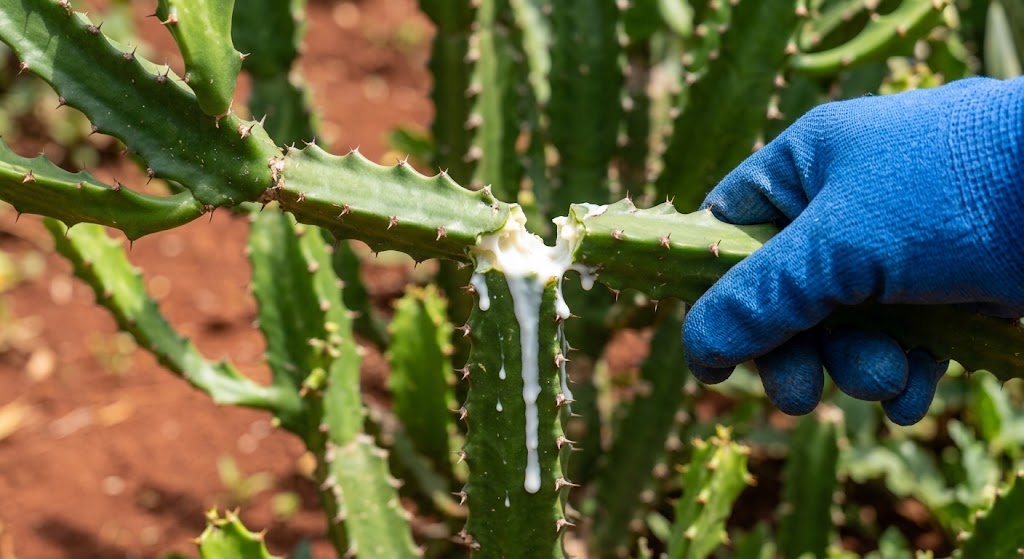
Many succulent Euphorbia species, often grown as living fences or ornamental hedges, release a milky sap when a stem breaks.
The sap causes intense burning on skin contact and severe pain and inflammation if it reaches the eyes, sometimes needing urgent hospital treatment.
Keep secateurs, broken stems and pruning offcuts away from small hands.
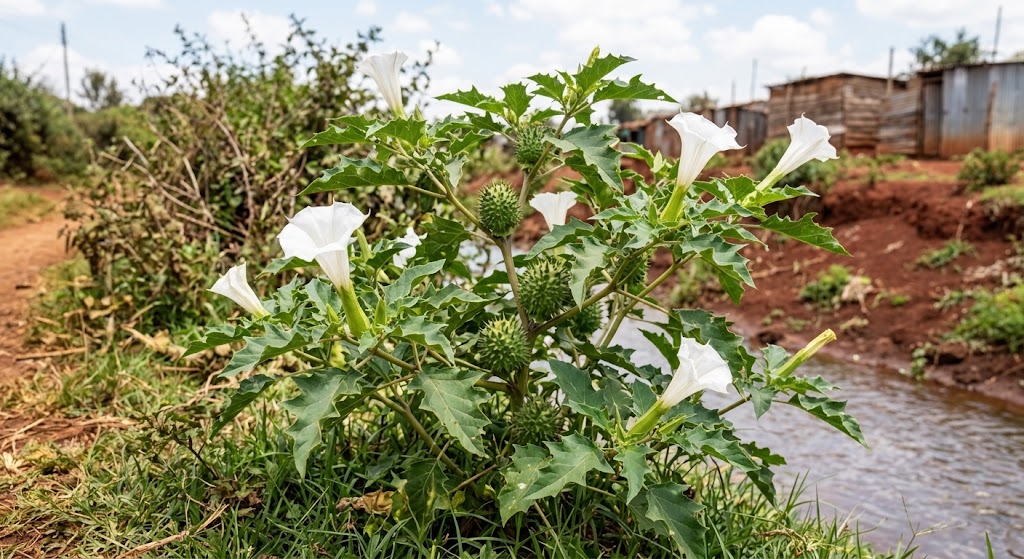
Datura, known locally as thorn apple, grows wild along roadsides, riverbanks and untended plots around the city. Every part of the plant contains atropine and related alkaloids.
Children who swallow the seeds or flowers can develop agitation, dilated pupils, hallucinations and a racing heart, usually within hours of exposure.
A garden does not need to lose its greenery to stay safe. Keep these plants out of reach of children under five, teach older children not to chew unfamiliar leaves or seeds, and wash hands after handling sap or trimmings.
If a child swallows any part of these plants or gets sap in the eyes, get them to the nearest hospital immediately and carry a sample of the plant for identification.