Advertisement
Why more women over 40 are returning to dance parties
21st July, 2026 01:06 PM
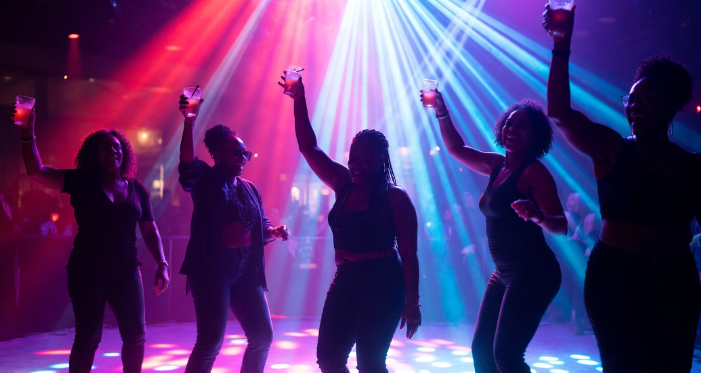
Women aged between 40 and 65 are increasingly returning to dance parties, challenging the long-held belief that nightlife is only for the young.
Recent research suggests that dancing at electronic music events can provide significant physical and emotional health benefits, helping participants reduce stress, improve mood, strengthen social connections and rediscover a sense of identity beyond work and family responsibilities.
A study by researchers at the University of Leeds found that many women in this age group have either continued attending dance events for decades or are returning after taking time away due to parenting, careers or societal expectations.
The findings suggest that these events offer much more than entertainment—they provide a welcoming space where age becomes less important than shared experiences, music and movement.
“Women aged 40-65 are turning to raves for real mental health,” said one of many Instagram posts and press headlines. “Why many women over 40 still go to raves,” read another. But surely the question should be: why the hell wouldn’t they?
Many of those who do never actually stopped. Of the 136 women surveyed for the study, “82% had been attending for more than 20 years”, says one of its authors, Alinka Greasley, professor of music psychology at the University of Leeds. “I’m a DJ myself,” she says. “I still go out raving and I’ve been doing so for 26 years.”
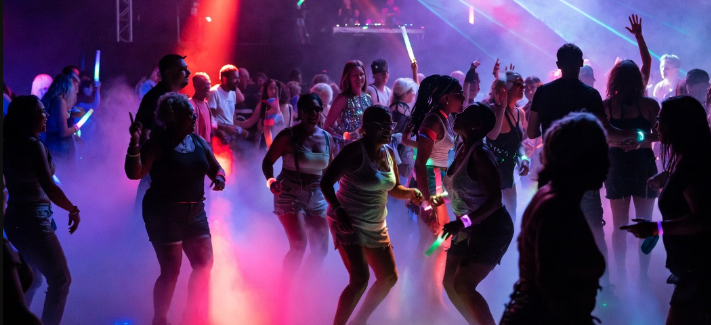
But others like me had lapsed, only to return when the need became borderline desperate. There is a small amount of psychological literature looking at why clubbers stop as they get older, with women citing family responsibilities, says Greasley, “or saying:
‘I feel that women of my age shouldn’t be out doing those activities.’” Joanna, 50, started clubbing again six years ago and now goes every few months with old friends. “There’s something about it being completely separate from parenting and work that feels really special,” she says. She realised she had been missing nightlife when her children were very little. “And I love club culture,” she says.
When going raving was first mooted by her friend, Joanna’s internalised ageism reared its head. “I was so resistant, I was almost repulsed by the idea of a woman in her 40s going clubbing – and possibly taking drugs.”
This unease at entering spaces that are traditionally associated with youth culture is not unusual. Greasley says that before she and her colleague Alice O’Grady did the study, women O’Grady had previously interviewed “had experienced comments on the dancefloor such as: ‘
Whose mum are you?’” And while some said they dressed up for self-expression, many dressed down to escape attention in a sea of 18- to 25-year-olds.
Other comments included people saying such things as: “Oh, can I take a photo of you?” or: “Wow, I hope I’m still clubbing when I’m your age.” But, says Greasley, “negative attitudes were not a defining part of their participation”. Quite the contrary.
The music itself and dancing were the top draws for the women, followed by socialising with friends. But, “overwhelmingly”, says Greasley, “they were reporting that they did feel a really strong sense of belonging.
There’s a strong theme of age being irrelevant; they talk about making friends with people in different generations – predominantly they’re going to spend time with their own friends but also get something from being there, around other people.” A couple of women even said they go with their children “and feel at home”.
Rachel Giddings, a psychotherapist who works with (mostly EDM) artists on their wellbeing and uses psychology to hone their performances, says that while
“women often feel lost in society at a certain age, when you go into an inclusive dance space, you can enter a liminal space where time dissolves and everybody is treated as an equal. Doesn’t matter if you’re a CEO, a road sweeper, a woman or a man, if you’re 25 or 55, you can access that space, and that gives you a sense of belonging.”
Joanna says she did feel conspicuously “‘a mum’ at first, and like: ‘Oh, I won’t know how to dance any more.’ But after I had been once, that melted away. There are a lot of young girls out, but you see other people in their 30s, 40s, 50s and actually begin to stop noticing.”
On one early outing, she saw a couple in the queue who looked as if they could be in their 60s. “She was wearing a tweed suit – it was almost as if they were in fancy dress, like:
‘Hi, we’re the old couple,’ and I saw them dancing later on, so that made me feel a lot better.” In any case, she says, clubbing now isn’t about trying to get back to her younger self. “I’m seeing where it’s at these days, and I quite like it. It’s something that you can dip in and dip out of.”
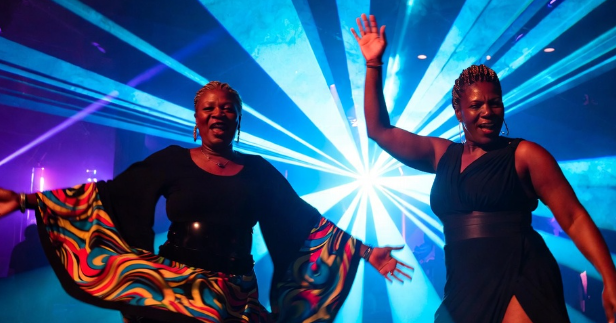
My big night out was in a vast club filled with mostly young people, but all the eye contact from strangers was warm, inclusive and full of shared wonder. To be fair, pretty much everyone seemed to be high or drunk or both, but as Giddings points out – with no judgment either way – you can reach that awed, transcendental state without drugs.
“These psychological states are absolutely accessible without substances,” she says. When she posts on this topic on social media, she says, “there are thousands of comments where people say: ‘Never had a drug in my life but I feel these feelings,’ or: ‘I’ve done drugs and don’t any more, and feel these feelings.’”
Giddings says part of her mission is to redefine society’s perception of rave culture as naughty or illicit. “When you are going out on the dancefloor, you are doing it because it’s healing, because it’s connective.” People often say clubbing is escapist, “but actually, the reframe is: it’s self-regulation together. We say: ‘I’m escaping from my normal life,’ but we’re actually seeking togetherness, identity, belonging.”
This raving-for-wellbeing narrative, as Giddings points out, also appeals to gen Z – an unprecedentedly health-conscious youth demographic. “At age 14, they’re in my gym on the treadmill next to me,” she says.
Even on some fundamental levels, clubbing now is more clean-cut than it was in the 90s. Joanna says when she first started going again, “I was just stunned by needing a photo ID, and the air-con – no sweat dripping from the ceilings. And no one’s smoking [inside], obviously, so your hair and clothes don’t stink.”
Dancing all night undeniably counts as exercise and comes with added mental-health benefits that can be especially helpful when you’re middle-aged, burned out or perimenopausal.
Greasley says these include “feeling alive, feeling energised, both at the time and afterwards. And then also a lot of women report that the ability to go out and enjoy nights and to dance for hours has a positive impact on lowering anxiety and depression and low-mood states.” I have often likened the mood swings that come with perimenopause to the “hormonal” moods of adolescence – perhaps for women it’s both of these times that we seek a release the most.
Dancing with others is particularly medicinal. As Greasley says: “People moving together increases social connection and bonding, and that entrainment with other people I think is particularly the case for beat-based music.
There is research showing that this physical movement entrainment [when the body synchronises its movements to an external rhythm] leads to feelings of pleasure and social connectedness.”
EDM is structured to elicit sweet anticipation building to huge group highs. “You get buildups, you get breaks – the moment where you know that the beat might come back in after a prolonged period – and everybody starts moving together, and that’s what creates these highly pleasurable embodied experiences, and that can create these really powerful emotional experiences and chills within the body.”
“The group becomes one organism,” says Giddings, “so we start to sync into each other’s nervous systems and when you’re waiting for the beat, your heart rate starts to rise, and then boom, it’s that somatic release of energy and we can release that stress we brought with us that we don’t want any more.”
It is also an opportunity for women, she says, “to reclaim their identity outside ‘I’m a carer’, ‘I’m a parent’, ‘I’m a worker’ – I’m not just one dimension but multifaceted, and this amazing part of me can be spontaneous and free and connected”.
For those who are put off by late nights, says Greasley, “all sorts of nights are cropping up, targeted at older people. Here in Leeds, I’ve noticed that there are an increasing number of raves starting at 6 pm and finishing at midnight. I love going to them myself. You can dance for hours and still be in bed by midnight or 1 am.”
This suits the OG acts and DJs who have also got older. EDM clubbing started in the 80s, so, says Greasley, “while it still remains a youth culture, the culture as a whole has aged”. In November, Leftfield performed at an event with the promoters Bugged Out! at Drumsheds – a 15,000-capacity former Ikea store in Edmonton, north London – which ran from 1 pm until 10.30 pm.
But Joanna says she loves her occasional late nights. “Going out for me, and staying up until 3 am or 4 am – when I tell some people that, they’re horrified but I find it really energising. Obviously, not all the time, or if you’ve got full-on childcare the next day.”
It took me days to recover from my late night. It was gone 5 am by the time I got into bed, ears ringing, body clock thinking it was nearly time to wake up. I slept terribly, but I felt revived in other ways. Being at the rave didn’t make me feel old. I felt as if I’d come home. After all, my generation invented this.