How to safely return to exercising after being sick
By Dan Kauna, September 17, 2026Getting sick throws a spanner into any workout routine. Whether it is a mild head cold or a severe bout of flu, taking days off can feel frustrating.
The urge to jump straight back into heavy gym sessions or long runs is strong, but pushing a recovering body too soon often leads to a relapse, setting back your fitness even further.
Easing back into training requires patience and an understanding of what your body is telling you.
The neck rule and listening to body signals
A simple guide used by sports medicine experts to assess readiness for physical activity is the neck rule. Symptoms above the neck, such as a runny nose, mild sneezing, or a slight throat tickle, generally allow for light movement if energy levels permit.
However, symptoms below the neck, including chest congestion, fever, body aches, or stomach distress, mean you must rest completely.

Medical research reinforces why resting during illness is necessary.
In a study published in Exercise and Sport Sciences Reviews, researchers Stephen A. Martin, Brandt D. Pence, and Jeffrey A. Woods noted that “intense exercise before or during viral infection has been associated with greater morbidity and mortality.”
Pushing through a fever or chest infection puts excessive strain on the heart and immune system, delaying total recovery.
Easing back into your routine safely
When you are clear of fever and major symptoms for at least 48 hours, begin with light activity. Do not start at your previous personal best.
Instead, cut your normal workout duration and intensity by half. A 20-minute walk around the estate or light stretching is a safe starting point before returning to weights or intense cardio.
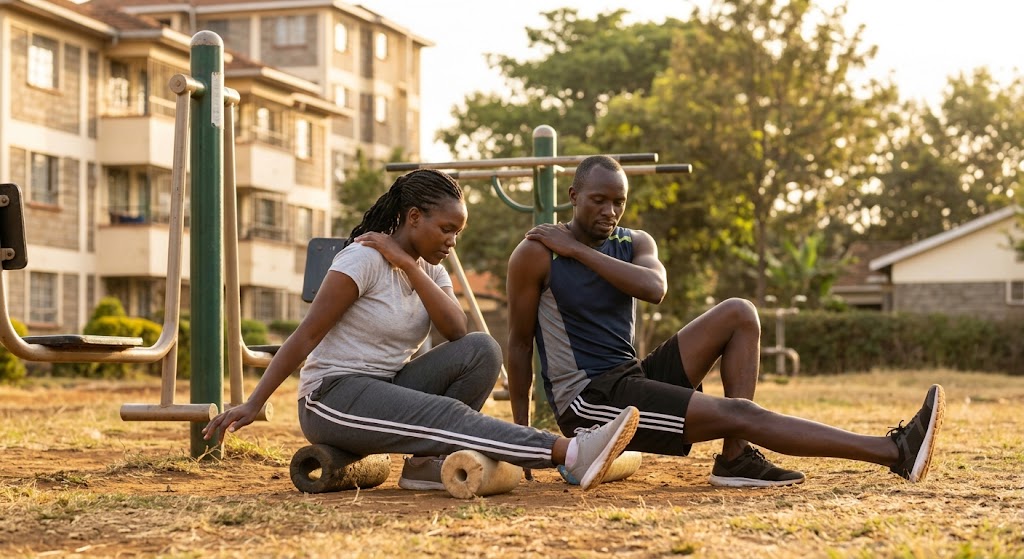
Pay close attention to how your body responds during and after movement. Sudden dizziness, unusual shortness of breath, sharp joint pain, or an elevated heart rate are clear signs to stop immediately.
Increase your exercise load gradually over 7 to 10 days rather than trying to make up for lost time in a single workout. Drinking plenty of water and eating balanced meals with local staples like fresh vegetables and lean protein will help rebuild your energy reserves safely.