Advertisement
How to build up to your first full push-up, step by step
14th September, 2026 09:29 PM
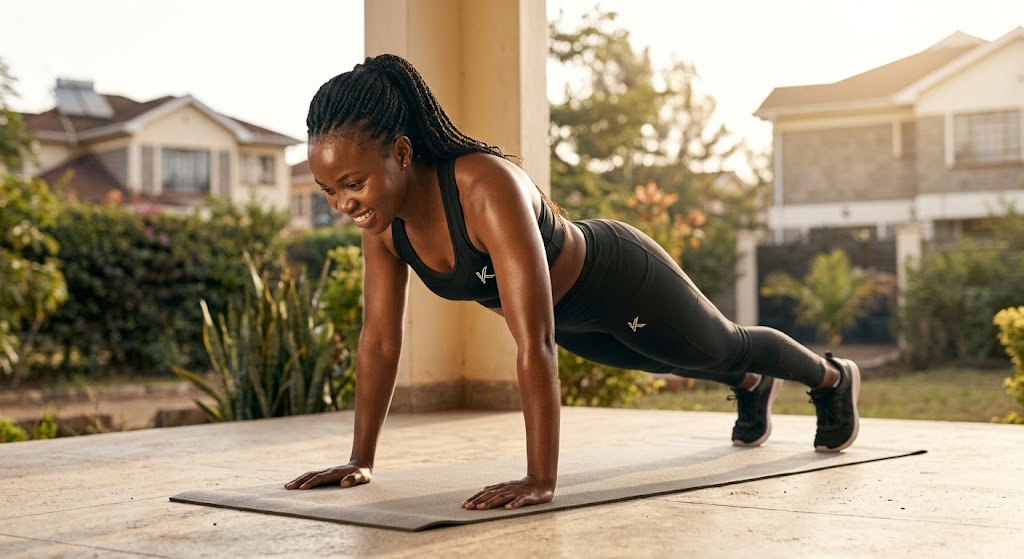
The push-up is one of the most effective bodyweight exercises for building upper body strength. It targets your chest, shoulders, triceps, and core without requiring any gym equipment.
However, dropping straight onto the floor and trying to complete a standard push-up can feel impossible if your muscles are not used to supporting your weight.
Pushing too hard without preparation often leads to poor form or wrist and shoulder strain. The key to mastering the movement is progressive strength building.
By starting with easier variations and gradually increasing the resistance, anyone can transition from zero to a full floor push-up.
Start with elevated variations
Your journey begins at the wall. Stand facing a wall at arm’s length, place your palms flat against it at shoulder height, and step your feet back slightly.
Keep your body in a straight line as you bend your elbows to lower your chest toward the wall, then push back to the start position.

Wall push-ups place minimal strain on your joints while teaching your body the basic motion and engaging your core. Aim for three sets of 10 to 12 controlled repetitions.
Once wall push-ups feel comfortable, move to an incline using a sturdy table, kitchen counter, or bench. Placing your hands on an elevated surface increases the amount of body weight your arms must press.
A study published in the Journal of Strength and Conditioning Research noted that “Push-ups with hands elevated and push-ups from the flexed knee position produced a lower GRF than all other push-up variations,” confirming that raising your upper body lowers the ground reaction force and makes the load manageable for beginners.
As your strength improves, lower the height of the incline, moving from a high counter to a coffee table or a low bench.
Transitioning to the floor
When low incline push-ups become manageable, move down to the floor for knee push-ups. Rest your knees on a mat or soft surface, place your hands slightly wider than shoulder-width apart, and keep a straight line from your head to your knees.
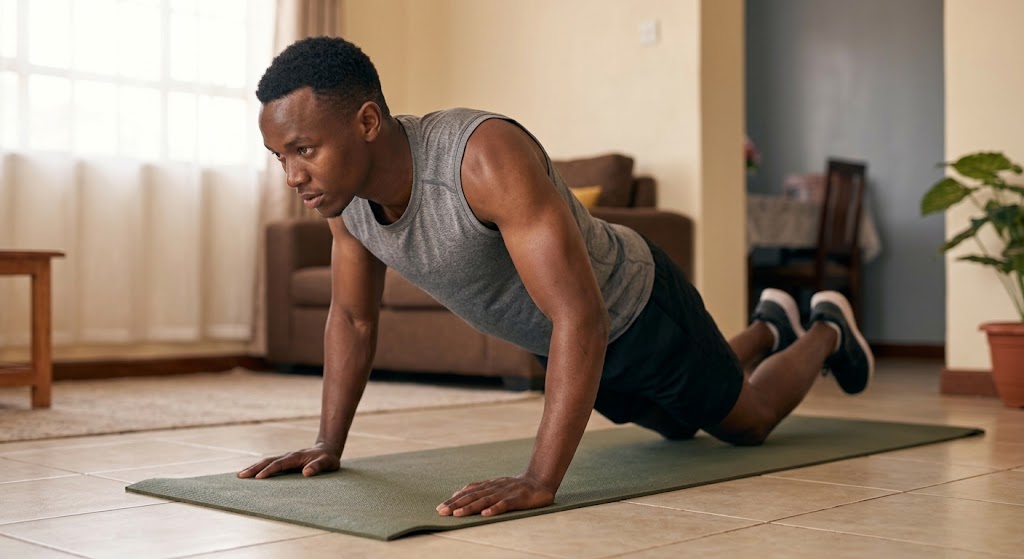
Lower your chest until your elbows form a 90-degree angle, then press back up. Knee push-ups shorten the lever length of your body, allowing you to lift roughly 60 percent of your body weight while maintaining proper chest and arm alignment.
After mastering knee push-ups, you are ready for the standard push-up. Set up in a full plank position on your hands and toes, keeping your core tight, glutes engaged, and back flat.
Lower your chest toward the floor without letting your hips sag or your lower back arch. If you can only manage one or two reps initially, that is completely normal. Consistent practice three times a week with proper rest between sessions will build the strength needed for full sets.