Advertisement
Dr Joe Njagi reveals body organs endometriosis can affect
21st August, 2026 12:13 PM
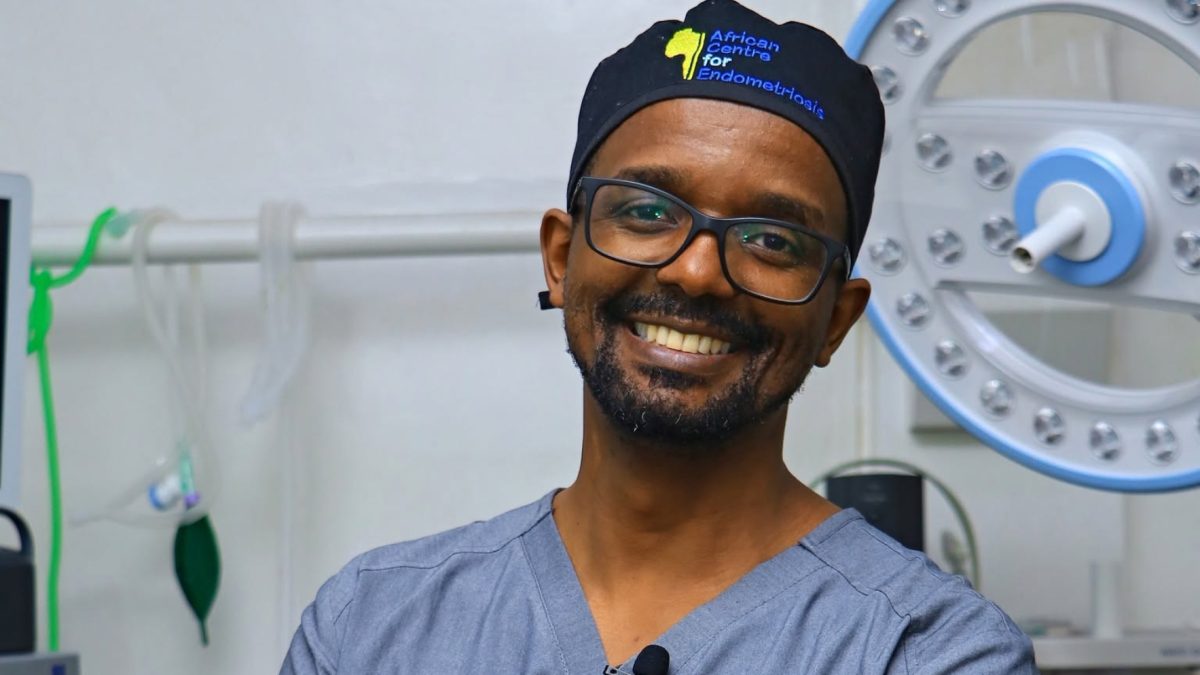
Endometriosis can affect several organs beyond the reproductive system, with severe cases potentially involving the intestines, diaphragm and chest, Kenyan gynaecologist and endometriosis specialist Dr Joe Njagi has said.
Speaking during an educational session on Friday, August 21, 2026, Dr Njagi explained that the condition can range from minimal disease to extensive endometriosis that infiltrates surrounding tissues and organs.
“In terms of the disease, endometriosis can be a minimal disease, or it can extend, whereby we know that it can infiltrate into tissues, including intestines, and we also know that endometriosis can spread to other places like the diaphragm, chest and so forth,” Dr Njagi revealed.
Organs affected by endometriosis
According to Dr Njagi, doctors need to establish how the disease is presenting in each patient because the symptoms and organs affected can vary.
He explained that endometriosis may cause severe pain that affects a person’s quality of life or interfere with fertility. In more extensive cases, the disease can infiltrate other organs and cause serious complications.

Dr Njagi also explained that endometriosis affecting the diaphragm or chest can cause breathing difficulties.
“What we need to figure out is what the patient’s presentations are. What are the most devastating symptoms? Is it pain, which, of course, is going to affect the quality of life and fertility, or is endometriosis affecting other organs?” he said.
“For example, do you have endometriosis that is causing obstruction because it has infiltrated the intestine? Does it have a problem with breathing because it has infiltrated the diaphragm, or is the disease in the chest?”
He added that some patients may develop a collection of fluid in the chest as a result of bleeding, which can cause the lung to collapse.
“Are you having a collection of fluid from bleeding from the chest that is making the lung collapse? All these symptoms are very important,” he added.

Additionally, Dr Njagi said managing complex endometriosis cases often requires specialists from different medical fields depending on the organs affected.
He explained that a colorectal surgeon may be required when the intestines are affected, while a urologist may be needed when the bladder or ureter is involved.
“Endometriosis is not a one-person condition; even I, who am a gynaecologist, I work with a team. If there is one in the intestines, I need to have a colorectal surgeon; if there is one in the bladder or ureter, I need a urologist; and if there is one in the chest, I need a cardiothoracic team, but the person who is going to lead this team needs to be a gynaecologist because endometriosis is a gynaecological condition,” he explained.
Severity of symptoms
Dr Njagi cautioned against assuming that the severity of symptoms always reflects how extensive the disease is.
“Symptoms of endometriosis do not correlate with the severity of the disease; some patients have extensive disease, they have minimal symptoms, and some patients have minimal disease and they have extensive symptoms,” he noted.

Stages of endometriosis
Dr Njagi also sought to clarify the commonly used classification of endometriosis into stages.
He explained that while different classification systems are used to describe the extent of the disease, doctors generally recognise varying levels of severity.
“I want to clarify that we do not have consensus in terms of staging of endometriosis, so there is no record of stage 1, stage 2, stage 3, or stage 4,” Njagi stated.
“However, we know there is different severities of endometriosis, and endometrium is a progressive disease, so there is early disease, there is intermediate disease, and there is late or extensive disease. This can actually be considered as stage 4 of endometriosis, where there is really no consensus on that.”
Additionally, the award-winning gynaecologist noted that late or extensive disease can sometimes be described as Stage 4 under certain classification systems, although there is no universal consensus that makes the term applicable across all cases.
“There are different classifications that really are like stages, as in stage 4,” he explained.