Hands off! Why women are tired of uninvited touching in Nairobi’s CBD
By Ascah Mwango, March 18, 2026“Usikasirike madam, ni salamu tu.” That statement has been said so many times in the CBD that it almost feels like background noise. It usually comes after a hand has been grabbed, a shoulder has been touched, or a wrist has been held without permission. The tone is often calm, sometimes even friendly, as though the problem is not the touch itself but the woman’s reaction to it. And that is exactly why the conversation keeps coming back. Women have spoken against this behaviour over and over again, yet it continues in public spaces that should feel neutral and safe.
Space of movement, not access
CBD is busy, fast, and full of life. People are rushing, trading, boarding buses, carrying bags, negotiating prices. In that environment, interaction is unavoidable. But interaction does not mean access to someone’s body. A greeting does not require physical contact. A sale does not require grabbing a customer.
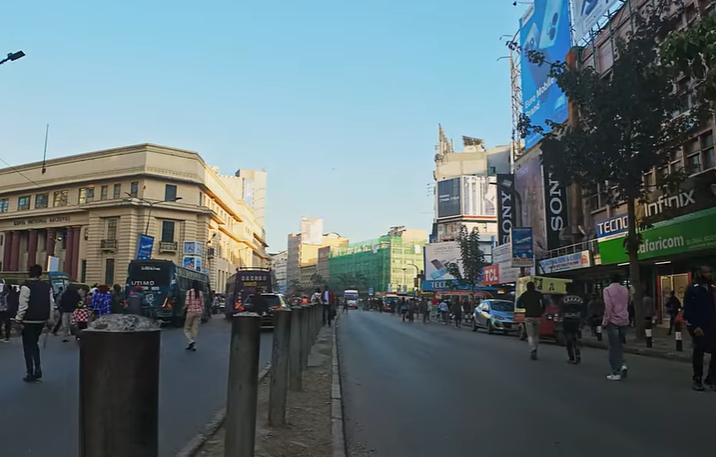
A crowd does not erase consent. Yet in many cases, women report being touched in ways that are unnecessary, unexpected, and uncomfortable, followed by the same explanation: “It was just a greeting.”
Familiar pattern
The pattern is easy to recognise. A man reaches out to hold a hand or place a hand on a shoulder. When the woman steps back or expresses discomfort, the response shifts quickly into jokes, smiles, or reassurance that there is no reason to be upset.
Sometimes the behaviour is brushed off as friendliness. Other times, it is framed as guidance through a crowd. But when the same experience is described by countless women in different locations and situations, it stops looking accidental and starts looking like a culture.
Gaslighting and shifting of blame
What makes it more frustrating is the gaslighting that often follows. Instead of acknowledging the boundary, some responses focus on the woman’s reaction. She is told not to get angry. She is encouraged to relax. She is made to feel as though her discomfort is an overreaction. Yet boundaries are not anger. Boundaries are basic. When someone says they do not want to be touched, that should be the end of the discussion.
Public spaces
This behaviour is not limited to one setting. Women report it near matatu stages, inside crowded buses, in informal markets, at thrift stalls, and along busy walkways. In some cases, bus conductors may lean too close or touch unnecessarily while giving directions. In trading spaces, some sellers use physical contact to attract attention. In crowded areas, others take advantage of proximity as an excuse. But professionalism and respect do not disappear because a place is busy.
Public space does not mean public access. A woman walking through CBD is there to work, shop, travel, or live her life, not to serve as an opportunity for unwanted contact. When she must constantly guard her space, adjust her movement, or anticipate hands that are not invited, it creates unnecessary stress. Over time, that stress becomes exhaustion. And exhaustion is often the result of having to defend boundaries that should already be respected.

This is not an issue of hostility or division; rather, it is about consent. Consent applies in public just as it does in private. It applies in crowded streets and in quiet offices. It applies during greetings and during transactions. Respecting personal space is not complicated, but it requires awareness and accountability.
Women have raised this concern repeatedly because it keeps happening. The repetition is not attention-seeking; it is reality. When the same complaint surfaces again and again, it signals that behaviour has become normalised. And when something becomes normalised, people stop questioning it. That is why conversations like this matter not to shame, but to reset expectations.
Standard of Respect
The solution does not require a dramatic change. It requires simple discipline: keep greetings verbal, avoid unnecessary touch, accept correction without defensiveness, and understand that a woman’s discomfort is valid. When someone says “do not touch me,” the appropriate response is not a joke or a lecture. It is respect.
CBD will always be busy. It will always be loud. It will always be full of movement. But it should not be full of excuses for crossing boundaries. A culture of respect begins with small decisions repeated consistently. Hands can stay where they belong, greetings can remain friendly without contact, and public interaction can be professional without being intrusive.
Because at the end of the day, “ni salamu tu” should never override consent. And women should not have to hear that statement as a justification for feeling uncomfortable in spaces they have every right to occupy safely.