Why your peanut stew turns oily every time and the 2-minute fix
By Dan Kauna, August 12, 2026Adding groundnut paste straight into a boiling pot of chicken or vegetable stew often leaves a greasy layer of floating oil on top and gritty lumps at the bottom. It is a common frustration in many kitchens, but the cause comes down to simple food science.
Peanut paste contains fine particles of protein and starch held within natural oil. Dropping raw paste directly into a hot liquid subjects it to sudden heat, causing the proteins to shrink instantly.
This sudden contraction squeezes the oil out, splitting the soup and clumping the paste together.
The science of mixing groundnut paste
Preventing this oily separation requires making a smooth mixture where water and fat blend evenly. Groundnut proteins naturally contain components that bind with both water and oil.
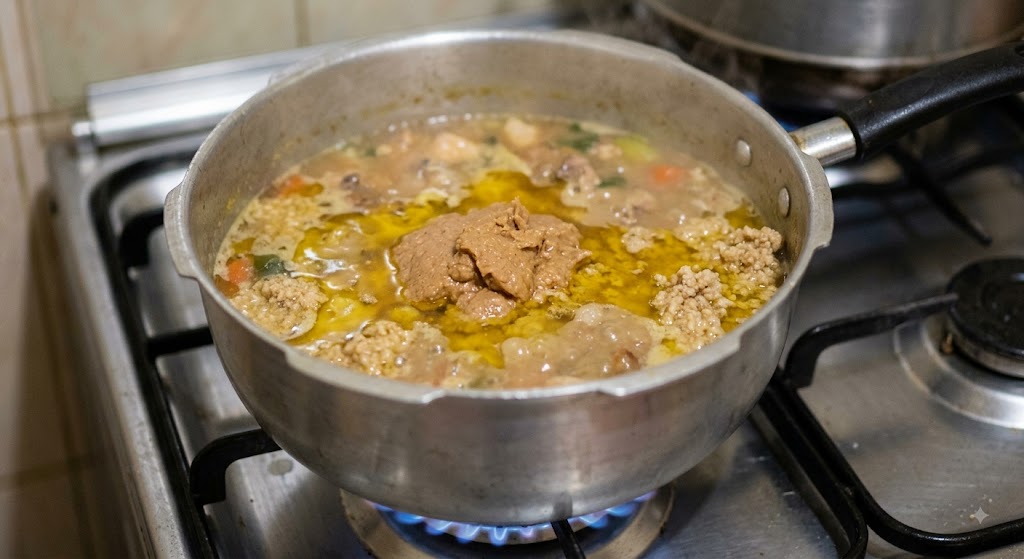
In a January 2025 study published in Foods, researchers noted that this “amphiphilic characteristic allows plant protein nanoparticles to effectively prevent oil separation” when mixed properly.
When you scoop your groundnut paste into a small bowl and whisk it with a ladle of warm stock before cooking, these proteins go to work. The warm liquid softens the dense paste gently without scorching the proteins.
As you stir, the oil breaks into tiny droplets that stay wrapped in a protective layer of water and protein.
Why pre-mixing gives you a smooth stew
Once this smooth liquid forms, pouring it into your main cooking pot allows it to blend right into the stew. The protein layer surrounding the oil droplets protects them from the sudden heat, stopping the oil from separating or forming hard clumps.
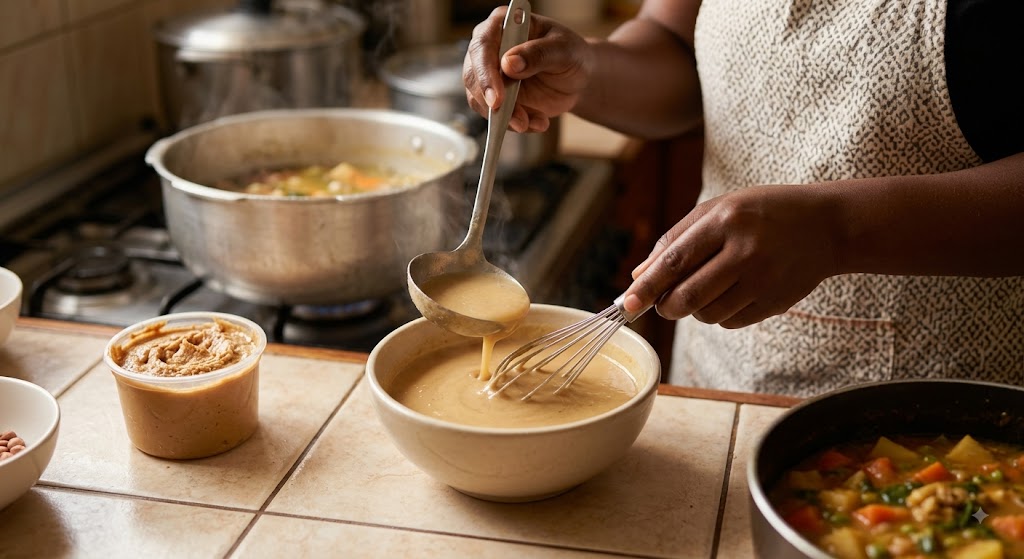
This simple pre-mixing step offers a practical trick for home cooks preparing peanut-based meals. Taking two extra minutes to whisk your groundnut paste in warm broth first gives you a rich, velvety sauce that coats every spoon smoothly without needing extra oil or thickeners.