Advertisement
The secret to making smooth, lump-free cassava porridge
06th August, 2026 09:57 AM
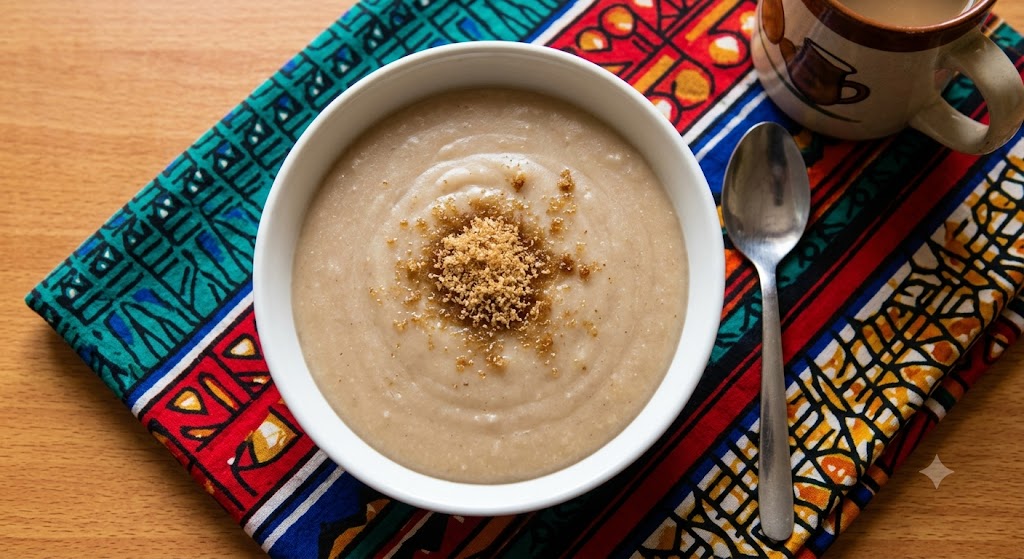
Preparing a warm pot of cassava porridge should be a quick breakfast routine. Yet for many home cooks, the morning starts with an exhausting battle against stubborn, gummy lumps.
Crushing those flour pockets with a wooden spoon rarely solves the problem, often leaving behind a gritty texture. Achieving a velvety batch comes down to basic kitchen science rather than hard physical effort.
Why cassava flour forms instant clumps
Lumps form because of how cassava starch reacts when exposed to sudden heat. Cassava flour has a high concentration of amylopectin, a starch molecule that absorbs liquid and expands at lower temperatures than maize or millet flour.
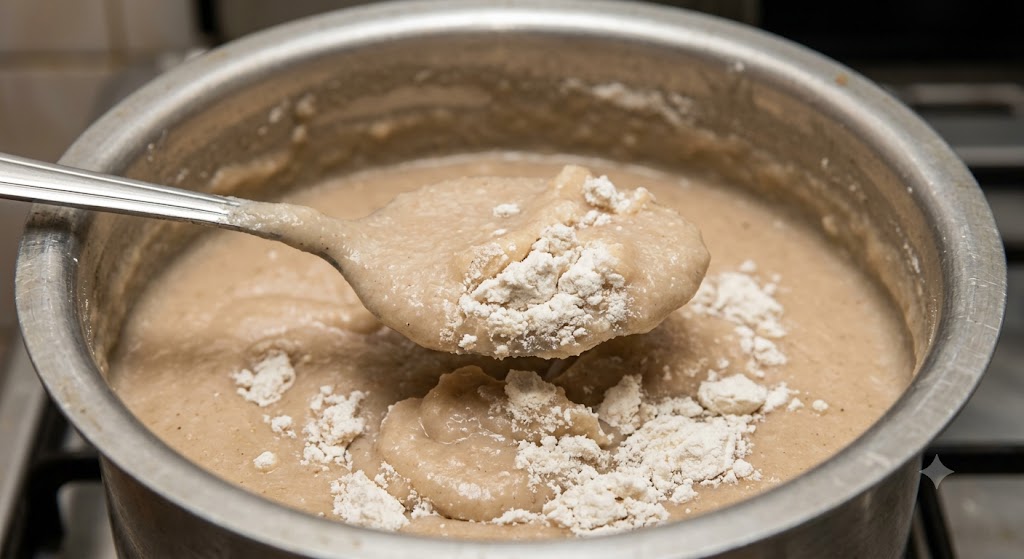
Dropping dry flour directly into boiling water causes the outer starch granules to hydrate instantly. This rapid heat exposure makes the outer granules burst and gelatinise on contact, sealing a thick, sticky layer around dry flour pockets.
Hot water cannot penetrate this gel coating, leaving raw flour trapped inside. Once these sticky shields form, no amount of heavy whisking can break them open.
In a study on porridge starch dynamics published in the African Journal of Food Science, researchers Calvin Onyango and George W. Wanjala noted that “the high content of branched-chain amylopectin polymers and low lipid content in cassava flour as compared to cereal flours enable it to swell more readily.”
Because cassava starch expands so rapidly, putting dry flour straight into a hot pot guarantees instant clumping.
How the cold water slurry method saves breakfast
Stopping lumps before they start requires a simple technique called cold water dispersion. Stirring dry cassava flour into room temperature water isolates each starch granule beforehand.
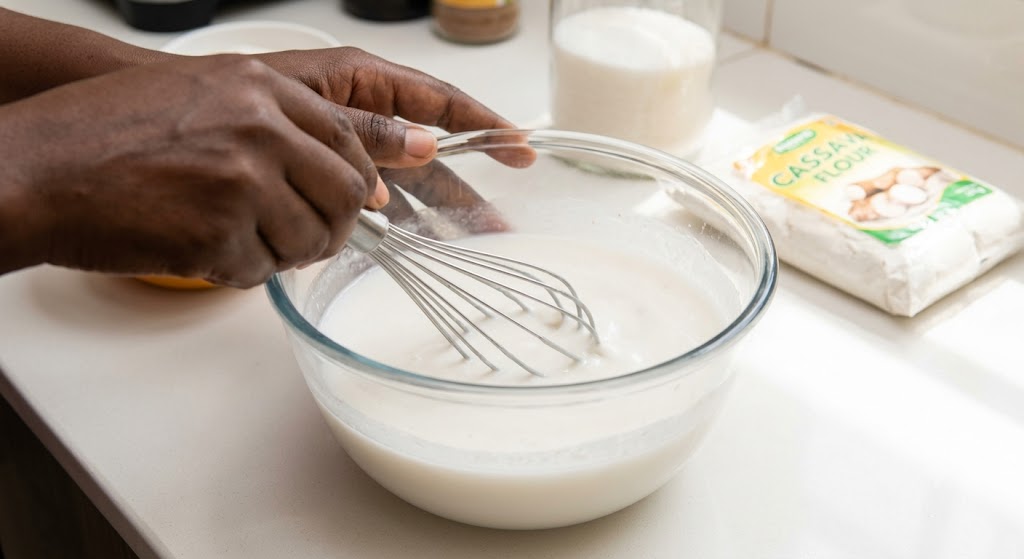
Water surrounds every particle evenly, creating a smooth liquid mixture without triggering heat activation.
Pouring this cold slurry steadily into boiling water while whisking allows thermal energy to spread uniformly across all granules. Because the starch particles are already separated, they expand at the same time instead of clinging together.
Understanding how starch swells helps cooks produce perfectly smooth uji wa muhogo every morning without endless manual beating.