Advertisement
Jackfruit: The superfood in your backyard that cooks just like meat
29th May, 2026 12:37 PM
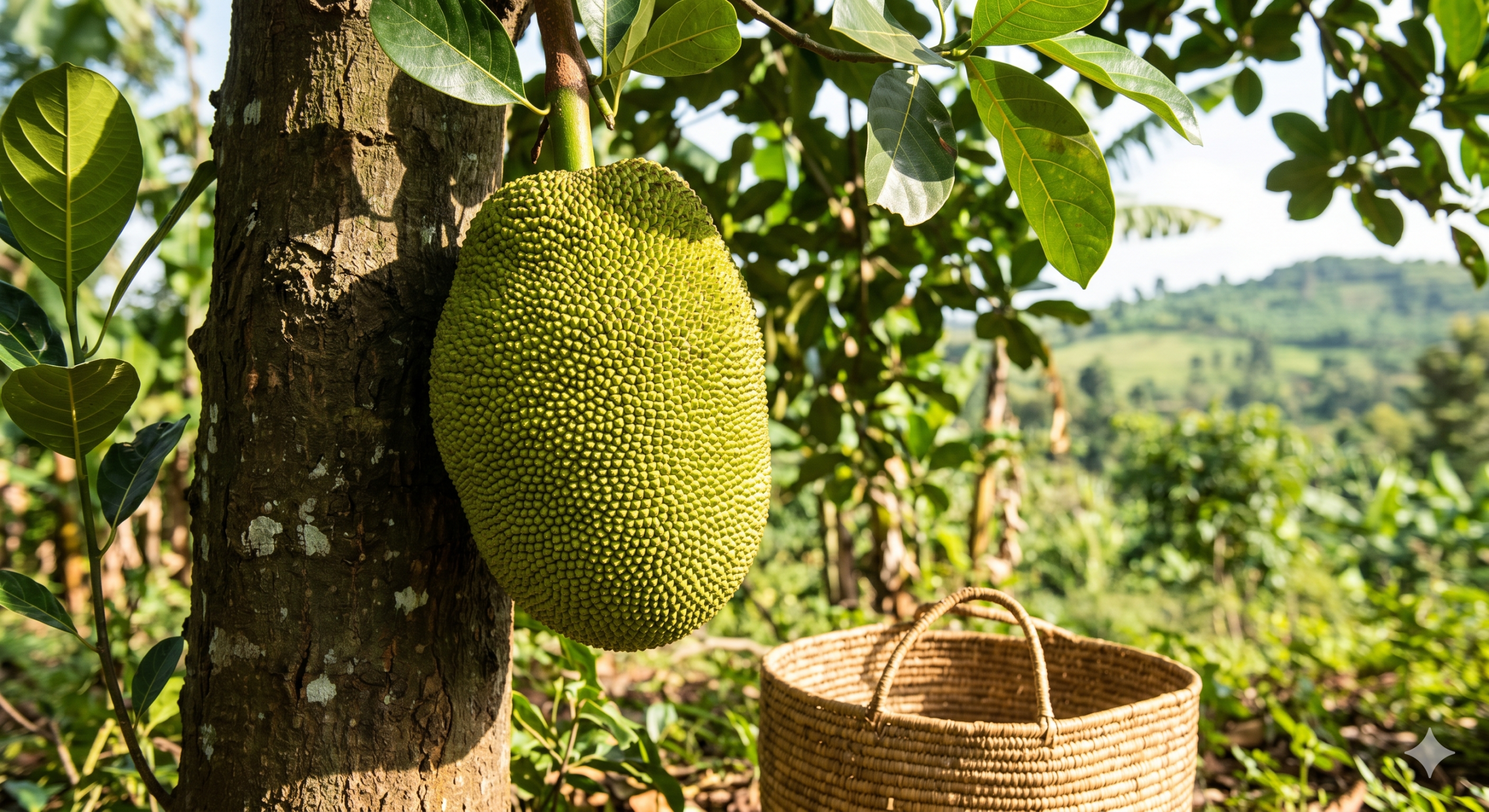
Drive through Kisii, Kakamega, or the coastal lowlands, and you will likely spot one without even trying – a massive, spiky green fruit hanging heavily from a trunk, so large it looks almost comical.
That is fenesi, known internationally as jackfruit (Artocarpus heterophyllus), and it is one of the most underused foods in the Kenyan kitchen.
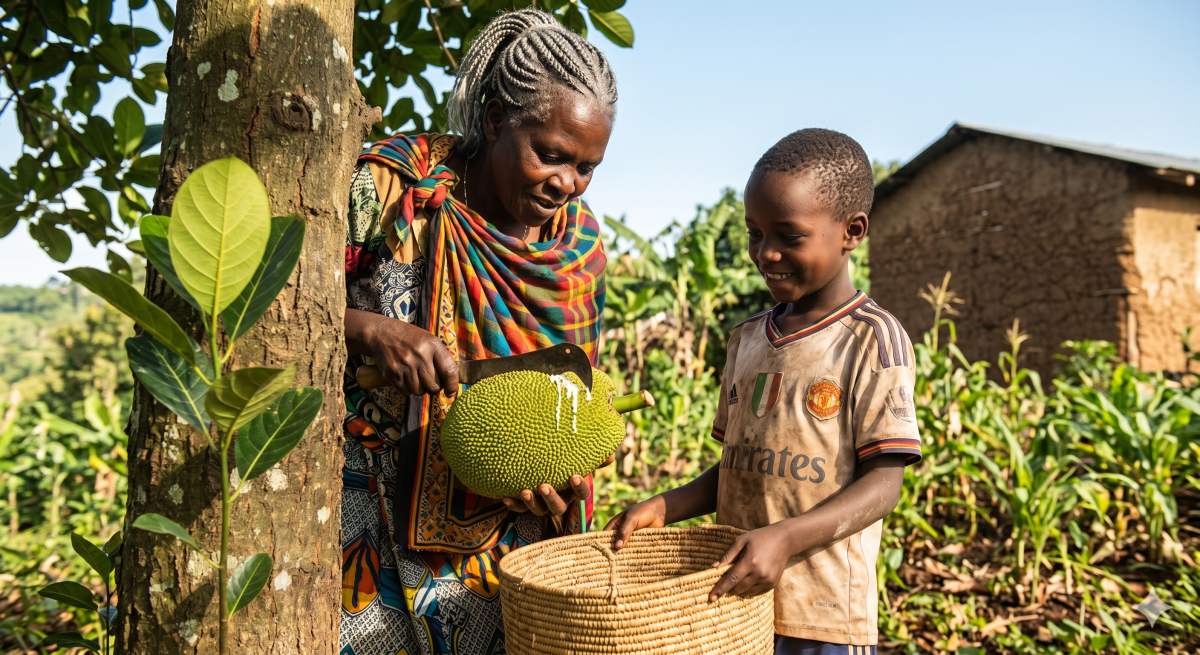
The gap between how widely jackfruit grows in Kenya and how rarely it appears on the dinner table is striking. In many rural homes, the fruit is eaten occasionally when ripe but rarely thought of as a cooking ingredient in its own right.
A 2022 study published in BMC Research Notes found that jackfruit’s magnesium and calcium content “were higher than those found in commonly consumed fruits, giving jackfruit a nutritional advantage with respect to these nutrients.”
The fruit also provides vitamin C, dietary fibre, and potassium, which competes comfortably with produce far more expensive and far less available.
The unripe fruit that cooks like meat
Here is where jackfruit earns its reputation as a meat substitute.
When harvested young and green, the flesh has a firm, fibrous texture that absorbs spices and sauces in the same way that slow-cooked beef or goat does.
The flavour on its own is neutral, which is precisely the point.
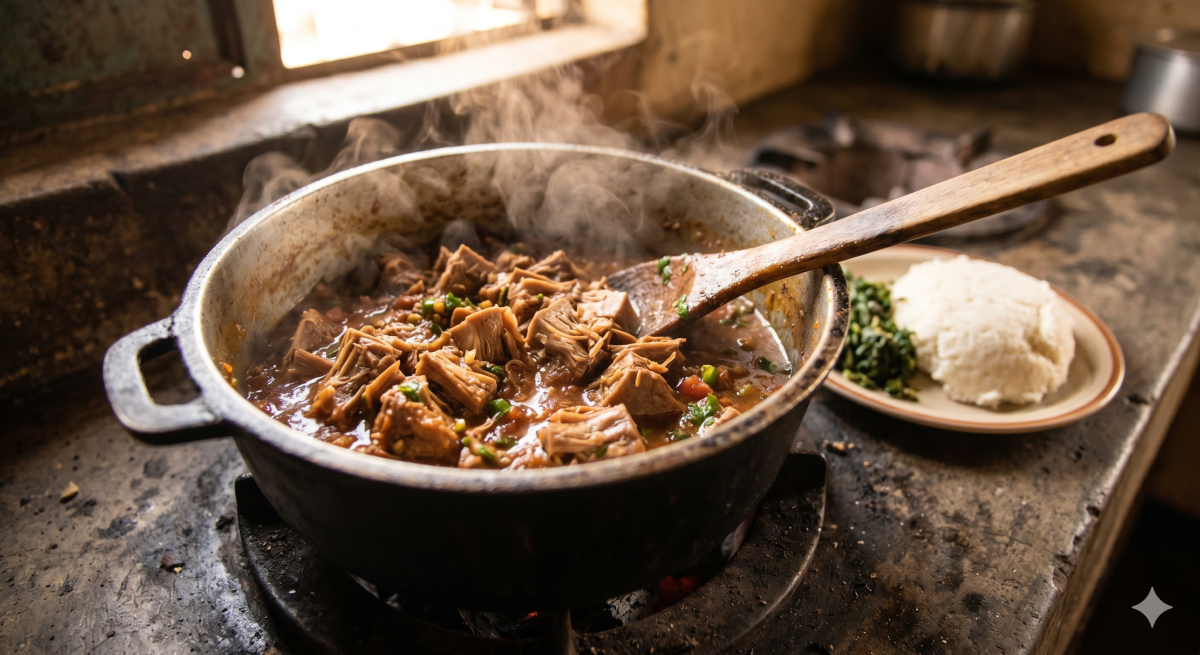
The most reliable method is to boil chunks of peeled, unripe jackfruit until tender, then fry them down in a pan with onion, tomato, garlic, cumin, and a little pilipili (chilli).
The fibres pull apart naturally as they cook, creating something that looks and eats remarkably like a braised meat stew.
Served with ugali or rice, it is a filling, affordable, and genuinely satisfying meal. Coconut milk added towards the end (particularly popular on the Coast) turns it into something richer and more fragrant.
The seeds, too, are edible: boil or roast them and they taste similar to chestnuts, adding a starchy, nutty element to any dish.
The ripe fruit – nature’s free dessert
A z entirely. The flesh turns golden-yellow, deeply sweet, and almost custardy in texture.
The smell is bold and tropical, unmistakable once you know it. Many Kenyan families in rural areas have access to ripe jackfruit for free simply by harvesting what grows nearby.
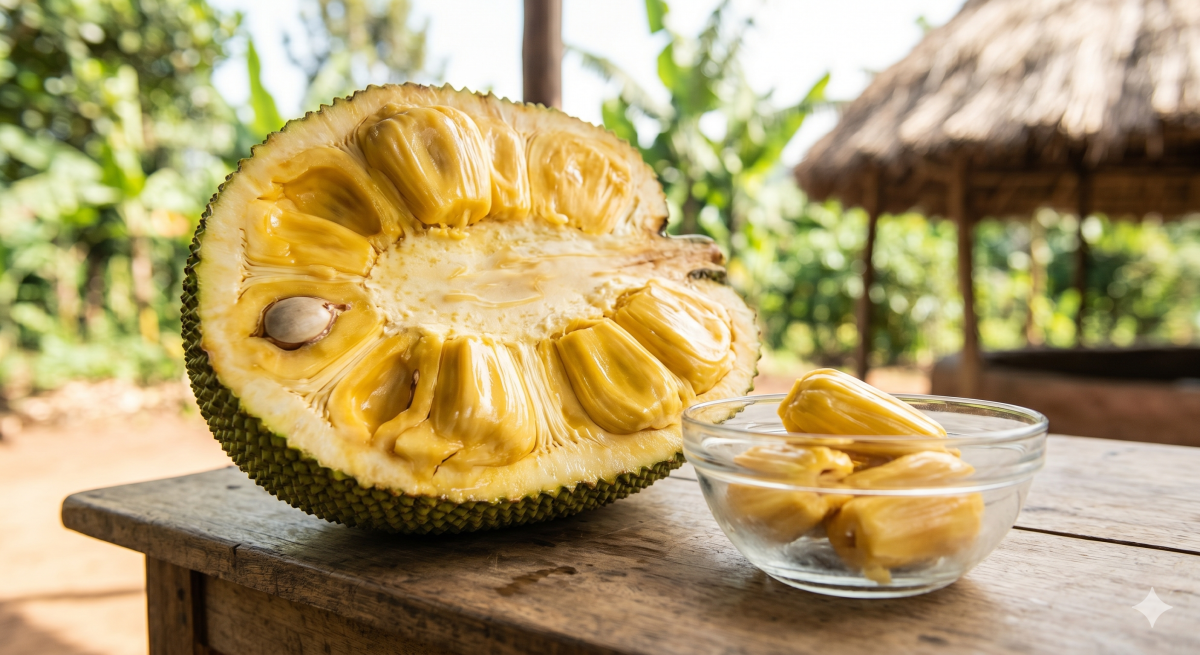
Preparation is minimal. Cut the fruit open, pull out the fleshy pods, remove the seeds, and eat. Chilled in a cool box or refrigerator for a couple of hours first, ripe jackfruit becomes one of the most satisfying natural desserts available – comparable in sweetness to mango at its best, with a denser, more complex flavour.
The pods can also be blended into a smoothie, frozen into a simple ice cream, or dried for a snack.
Kenya is sitting on a nutritional goldmine that requires no irrigation, no special cultivation, and in many cases no purchase.