How to prevent fish sticking to the pan during frying
By Dan Kauna, July 30, 2026Frying fresh tilapia at home often ends in frustration when delicate skin tears and sticks to the hot pan. While many blame low oil levels or improper stove heat, the real culprit is surface water reacting directly with fish protein.
Understanding this simple reaction helps home cooks prepare clean, beautifully browned fish every time.
The science behind pan sticking
Fresh fish fillets carry natural moisture on their surface. When wet, raw fish skin touches hot metal, the intense heat alters the structure of delicate fish proteins.
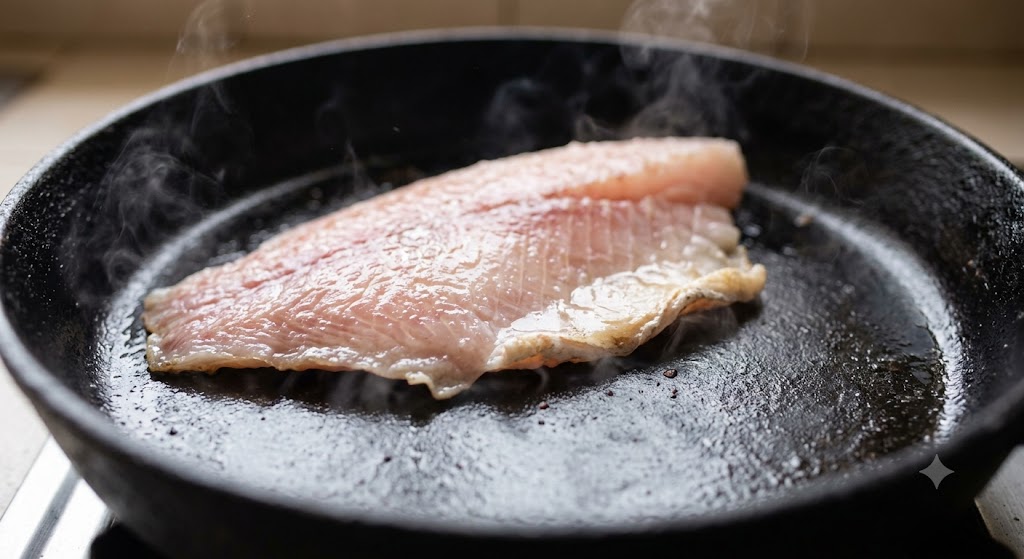
As these proteins change under high heat, they form strong chemical bonds with the pan surface. This process, known as protein adhesion, fuses the outer skin to the metal, causing the fillet to tear apart when flipped.
High surface moisture also drops the oil temperature quickly on contact. Steam bubbles form underneath the fish, preventing heat from searing the skin evenly and making the sticking problem worse.
How flour protects your fillet
Dusting raw fish lightly with dry wheat flour or cornstarch right before frying solves this problem completely. Fine starch granules absorb surface moisture immediately, creating a dry barrier between raw fish proteins and the hot pan.
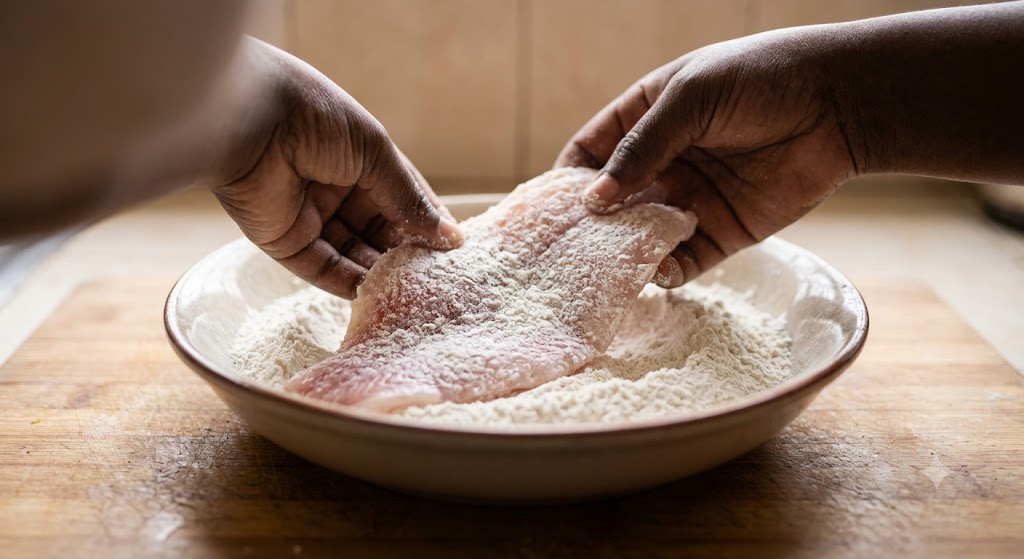
When the dusted fillet hits hot oil, the outer starch layer cooks first. The starch granules expand and set to form a crisp outer crust. Food science research shows that flour coatings “act as a protective layer, preserving the food’s moisture and flavor” while keeping delicate tissue off the hot metal surface.
Because raw fish proteins never touch the bare pan, chemical bonding cannot happen. The thin starch layer traps juicy moisture inside the fish, reduces oil splashing, and lets the fillet slide easily across the cooking surface.
For best results, pat raw tilapia dry with clean paper towels, add your favourite spices, and dust the fish lightly with dry flour. Shake off any excess before laying the fillet into hot cooking oil. A thin, barely visible coating is all you need for a perfectly intact finish.