Advertisement
Diamond and Zuchu’s baby celebration: Inside 40-day Muslim tradition
12th September, 2026 03:40 PM

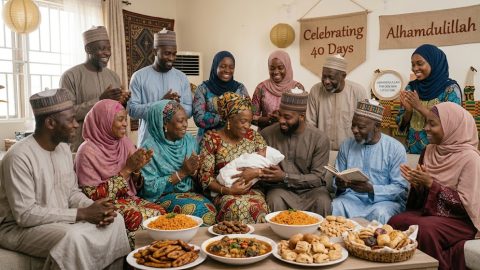
Diamond Platnumz and Zuchu have put a spotlight on the 40-day baby celebration after announcing a lavish event to mark their daughter’s first 40 days.
The Tanzanian music stars welcomed their daughter on August 2, 2026, and announced that they would celebrate the milestone on Saturday, September 12, 2026, in Dar es Salaam.
The occasion has attracted attention from fans across East Africa, with members of Diamond’s family travelling to Tanzania for the celebration. Zuchu also held a women-centred Singo Day gathering ahead of the main event as part of the celebrations surrounding the milestone.
But beyond the celebrity attention, the occasion has raised questions about why some Muslim families celebrate a baby after 40 days.
Why 40 days matter after childbirth
The 40-day period has a connection to nifas, the period of postpartum bleeding experienced by a woman after giving birth.
In Islamic jurisprudence, the majority view considers 40 days the maximum period for nifas, although the bleeding can stop earlier. When it stops, the woman can perform ghusl and resume religious practices such as prayer.
However, it is important to distinguish this religious rule from the celebration itself.
Islam does not require Muslims to hold a party when a baby reaches 40 days. The 40-day celebration observed by some Muslim families is largely a cultural practice, and customs differ between communities and families.

A celebration of the mother and baby
In communities where the tradition is observed, the 40-day milestone can provide an opportunity for relatives and friends to gather, welcome the newborn and celebrate the mother after her first weeks of recovery.
It can also be a time for women in the family and community to offer the new mother support and advice as she adjusts to life with a baby.
This is reflected in traditions such as Singo Day, which has been observed in some East African communities as a women-centred gathering around the end of the early postnatal period.
The practice should not, however, be confused with aqiqah, which is an established Islamic practice associated with welcoming a newborn. Egypt’s Dar al-Ifta explains that aqiqah is recommended and can be performed after birth, with the seventh, 14th or 21st day among the recommended timings mentioned by scholars.
Diamond and Zuchu’s celebration therefore offers a glimpse into how religious beliefs and cultural traditions can come together in East African Muslim families.