Advertisement
Simple tips to help you buy first car without breaking the bank in 2026
05th January, 2026 05:00 PM

Transitioning from walking to driving class is often a dream come true for many Kenyans hustling and trying to keep up with the ever-demanding life changes.
Although some people view cars as a luxury, the notion is now changing, with Kenyans embracing them for convenience at a time when the public transport sector is still struggling to keep up its game to meet modern demands.
Besides convenience, owning a car in Kenya is important for freedom and safety, as it bypasses unpredictability and unreliability in the public transport sector.
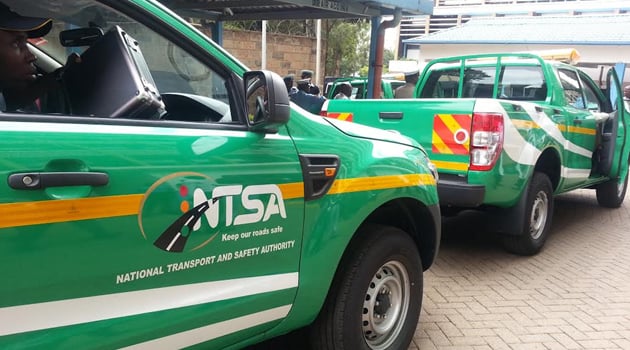
However, most people are struggling to buy and register cars due to the tough economic conditions in the country. According to a recent study, the National Transport and Safety Authority (NTSA) recorded a marginal drop in the number of newly registered vehicles between April and May 2025.
According to the Kenya National Bureau of Statistics (KNBS) in its quarterly Leading Economic Indicators survey report 2025, the National Transport and Safety Authority (NTSA) registered only 20,132 vehicles in May, a decrease from 21,056 vehicles in April 2025.

However, here are some ways to buy a car without breaking the bank
Local vs importing
Most social media platforms have been awash with information on how to buy a car directly from Japan or Germany, and in most cases at a much lower price.
Before choosing to pursue that option, it is crucial to conduct thorough market research and grasp the associated requirements. Importing a car entails selecting a vehicle from an international dealer, confirming that it complies with Kenyan import regulations, and paying the necessary duties, taxes, and shipping fees.
The process can take weeks, so a locally used car might be a better option. Also, locally used vehicles are usually cheaper and available immediately, but their condition depends on how well the previous owner maintained them.
Carry out proper market research
Carrying out proper market research can help a first-time buyer save hundreds of thousands. In the country, there are many car dealers with varying automobile prices.
In a car bazaar yard, a vehicle, for example, a Nissan Note or Demio, can be valued at Ksh1 million, yet in a different place, the same car goes for Ksh700,000. So, imagine saving Ksh300,000?

Instead of after-purchase regrets, doing proper research with the help of a trusted mechanic can save a buyer a lot.
Financing plan
If you are not paying in cash, deciding on a sustainable financing plan is very important. If it is a loan, then a buyer should understand what the interest rates are and any other hidden charges.
Making a reasonable down payment may qualify one for an affordable, low-interest loan, and one can drive their dream car sooner.
However, purchasing a car on loan can also come with risks, such as repossession when you default on payments. Repossession often comes with additional fees to you, such as the cost of sending a repossession agent, towing, storage, and auction fees.
Hire purchase is also gaining traction in the country, where most people walk into a washroom, negotiate for a car, make a down payment, and then agree on monthly installments.
After clearing the balance, the car is then surrendered. However, just like any loan, if one fails to clear the balance, even if it is Ksh300,000 from Ksh1.5 million, the risk of repossession is high.
Having a stable income flow is advisable before settling on any of the options.
Why you need the car
Deciding on how you want to use the car is also a key factor one needs to evaluate before buying a car. If one has limited finances, then buying a Prado or a Mercedes-Benz to go to work may not be a viable option.
Toyota Vitz/Platz, Nissan Note, Mazda Demio, and Honda Fit are favoured for low running costs and parts availability.
However, for businesspeople or farmers, picking the right model can also go a long way in saving finances. For farmers, it is often advisable to focus on ruggedness, reliability, and load capacity. At the moment, most farmers prefer the Toyota Hilux and Isuzu D-Max. But the Toyota Probox is also gaining prominence for its availability and affordability.
Reject add-ons
Most dealerships always try to convince a buyer to accept add-on offers while purchasing a car. The add-ons, such as extended warranties or paint protection, may significantly increase the cost of a car. If it is not a necessity, then rejecting them is the way to go.
Another most important aspect is finding out the value of insurance so that one does not end up splashing hundreds of thousands on getting a cover for the car.
How government is fueling car ownership dream
With demand for vehicles increasing, the government is also stepping up to boost the local manufacturing industry. The State has introduced incentives and tax regulations, such as the duty remission scheme, to regulate the importation of parts, including batteries, radiators, and brake fluids, among others.
Moreover, the recently approved Kenya National Automotive Policy marked a significant step toward transforming the country’s automotive industry.
The electric car industry is also being pushed by the government to help Kenyans get cars with no high maintenance costs.