Mosiria reflects on radical shift in healthcare system to protect patients
By Charles Ouma, March 18, 2026Nairobi County Chief Officer for Citizen Engagement and Customer Service, Geoffrey Mosiria, has shared his bold reflections on a radical shift in Kenya’s healthcare system to protect patients, support families, and strengthen trust in the country’s healthcare system.
In a statement on his X account on Wednesday, March 18, 2026, Mosiria unpacked the benefits that a radical shift in the country’s healthcare system would bring to stakeholders, government and patients.
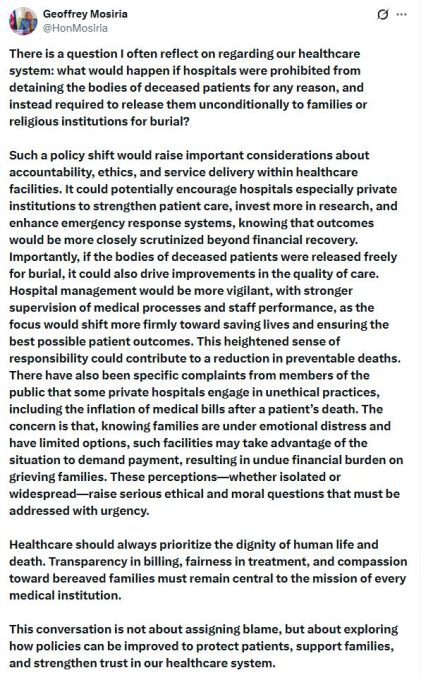
“There is a question I often reflect on regarding our healthcare system: what would happen if hospitals were prohibited from detaining the bodies of deceased patients for any reason, and instead required to release them unconditionally to families or religious institutions for burial?” Mosiria wrote on X on Wednesday, March 18, 2026.
Benefits of policy shift
According to him, a significant policy shift of this magnitude would not only enhance service delivery but also entrench accountability and ethics in the healthcare system and encourage medical facilities to focus on saving lives, as losing a patient would expose them to more scrutiny beyond recovering costs of treatment.
“Such a policy shift would raise important considerations about accountability, ethics, and service delivery within healthcare facilities. It could potentially encourage hospitals, especially private institutions, to strengthen patient care, invest more in research, and enhance emergency response systems, knowing that outcomes would be more closely scrutinised beyond financial recovery,” he stated.

He added that the emphasis on saving lives would benefit patients as the management of various hospitals would deploy every available resource, with closer supervision and vigilance.
“Importantly, if the bodies of deceased patients were released freely for burial, it could also drive improvements in the quality of care. Hospital management would be more vigilant, with stronger supervision of medical processes and staff performance, as the focus would shift more firmly toward saving lives and ensuring the best possible patient outcomes,” he said.
Mosiria lamented that while many health facilities are doing a great job saving lives, there is room for improvement and appealed to lawmakers to examine the current practice and consider introducing a law that will block medical facilities from detaining bodies of patients who die during treatment.
Bills burden
@HonMosiria
He noted that unlike public hospitals that have structures for waivers, most private facilities lack such structures with grieving families compelled to pay huge amounts of money to obtain the bodies of their loved ones for burrial.
“There have also been specific complaints from members of the public that some private hospitals engage in unethical practices, including the inflation of medical bills after a patient’s death. The concern is that, knowing families are under emotional distress and have limited options, such facilities may take advantage of the situation to demand payment, resulting in undue financial burden on grieving families,” he added.