International Women’s Day: Adelle Onyango calls for fair treatment and inclusivity
By Paulette Mboga, February 21, 2026Media personality Adelle Onyango has called on organisers of International Women’s Day events to be more inclusive and fair to all women.
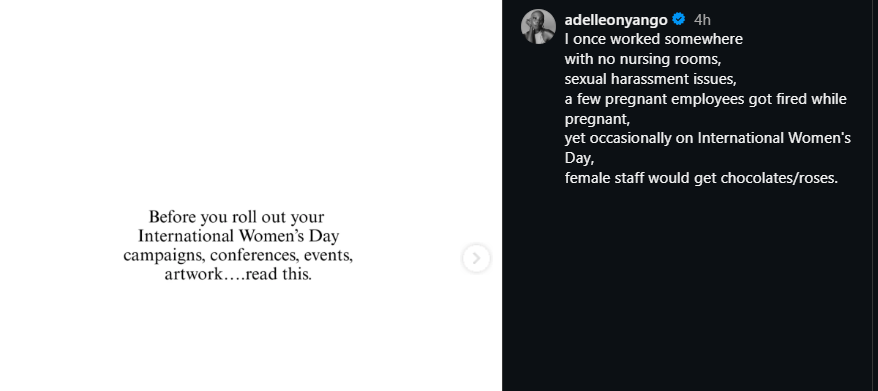
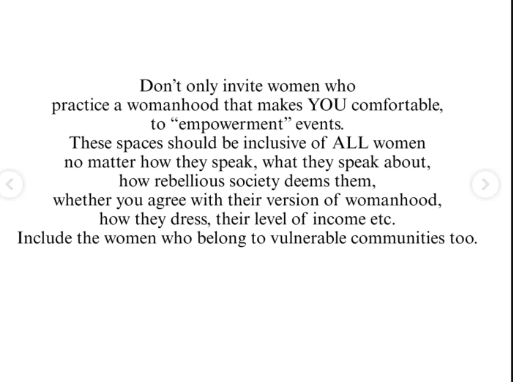
In a post on Saturday, February 21, 2026, she says campaigns, conferences, events, and artwork should not only feature women who fit a version of womanhood that makes the organisers comfortable.
Onyango emphasises that empowerment events must represent women from all backgrounds, voices, and experiences.
She warns that many events tend to exclude women who are seen as rebellious or different.
“These spaces should be inclusive of ALL women, no matter how they speak, what they speak about, how rebellious society deems them, whether you agree with their version of womanhood, how they dress, their level of income, etc. Include the women who belong to vulnerable communities, too,” Onyango says.
She stresses that empowerment should never be selective or limited to a few voices.
Fairness and inclusion
Onyango also calls for proper compensation for women who contribute their knowledge and expertise. She says organisers should not ask women to speak or offer services for free.
“Do not ask women to share their knowledge and expertise on your panels or render their services to your events without compensating them,” she adds.
The reminder comes as a push to recognise the value of women’s work in both public and professional spaces.
She adds that true empowerment means celebrating all forms of womanhood. It is not about creating a space that only comforts certain people or aligns with traditional expectations. Onyango urges event planners to think critically about who they include and how their contributions are valued.
The call comes as a response to a history of exclusion in social and professional gatherings. Many women from marginalised communities often do not get opportunities to participate or be recognized in mainstream empowerment initiatives. Onyango stresses that this must change for events to be meaningful and truly representative.
She concludes by reminding organisers that inclusion and fair treatment are central to empowerment. Without them, International Women’s Day campaigns risk becoming symbolic gestures rather than platforms for real change.
“Before you roll out your International Women’s Day campaigns, conferences, events, artwork…read this,” Onyango says, urging people to take her advice seriously.