From street stories to soulful reflection: The themes behind Mejja’s first album

Mejja’s long-awaited debut album, Mtoto wa Khadija, released on Friday, March 6, 2026, is more than a Genge project; it’s a personal sonic autobiography spanning 13 tracks and 41 minutes.
Titled after his single mother, who raised him in Majengo, Nyeri, the album consistently returns to core themes: gratitude to family, personal growth through struggle, toxic relationships, street resilience, aspiration, and authentic Kenyan life.
You might also like



It also serves as a reflective milestone for the veteran artist who helped shape Genge alongside Calif Records classics and The Kansoul group anthems, marking his two decades in the industry.
Love, toxicity and street reality
The opening track “Toxic” (feat. Shee) sets a bold tone on poisonous romantic situations and emotional boundaries. “Ntampata Wapi” (with Jay Melody) dives into the search for genuine love and the confusion of modern dating in Nairobi.
“Kale Ka Uoga” (feat. Scar Mkadinali) brings gritty street energy, addressing fear, survival, and the harsh realities of block life. Mid-album tracks like “Mboka” further explore identity, belonging, and connection to roots.
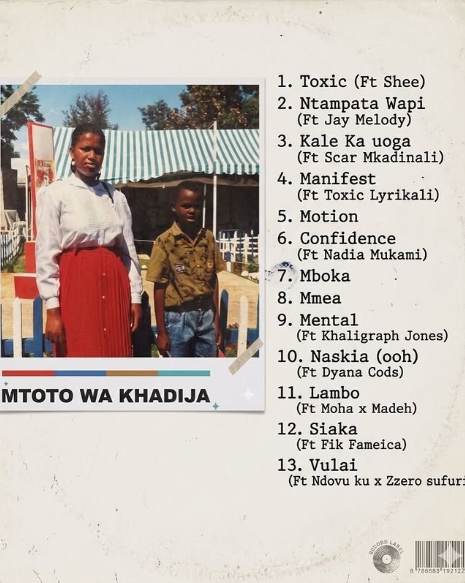
“Manifest” (feat. Toxic Lyrikali) shifts to empowerment and speaking success into existence, reflecting Mejja’s journey from near-military enlistment to chart success. “Motion” reinforces themes of consistency, hustle, and refusing to stay stagnant.
The album also opens up emotionally, with some songs recorded during periods of voice loss and heartbreak. Tracks like “Naskia Oh” (feat. Diana Cods) blend humour with social observation, while revealing deeper personal layers.
“Lambo” (feat. Moha & Madeh) captures the rewards of perseverance, celebrating success and ambition. These moments balance the heavier themes with energy and optimism.
Reflection, lessons and growth
Later tracks such as “Siaka” and “Vulai” lean into reflective storytelling, touching on loss, life lessons, and closing chapters. Mejja’s signature witty Sheng wordplay and influenced humour remain present throughout.

Produced mainly by Krome, the album blends classic Genge with Afrobeat, Bongo, and urban dancehall influences.
While some tracks revisit party vibes, many reveal a more mature artist navigating pressure, anxiety, and legacy.
By naming the project after his mother, Mejja ties the album together as a story of identity, resilience, and gratitude.
In an industry often driven by virality, Mtoto wa Khadija stands out for its honesty. Every track contributes to a larger narrative of growth and staying true to one’s roots.
Author
William Muthama
William Muthama is a digital journalist with a focus on entertainment, human interest, and current affairs. Share stories: [email protected]/ [email protected]
View all posts by William Muthama