Why some Muslims celebrate 40 days after childbirth
By Valerian Khakayi, September 10, 2026The birth of a child is an important occasion for Muslim families, with different communities having their own ways of welcoming a newborn and supporting the mother.
One practice observed in some Muslim communities is marking 40 days after childbirth, sometimes with a family gathering, prayers, food or gifts.
However, the 40-day celebration is not an Islamic requirement, and not all Muslims observe it.
What does 40 days mean?
The significance of the 40-day period is mainly linked to nifas, the postpartum bleeding that may occur after childbirth.
In Islamic jurisprudence, nifas refers to bleeding following delivery. According to Hanafi scholars, the maximum period of nifas is generally considered to be 40 days, although it can end earlier. If the bleeding stops before 40 days, a woman does not have to wait until the 40th day to resume acts of worship that require purification.
This is why the number 40 has become associated with the period after childbirth in some Muslim communities.
The 40 days, however, do not mean that every woman experiences postpartum bleeding for exactly that long.
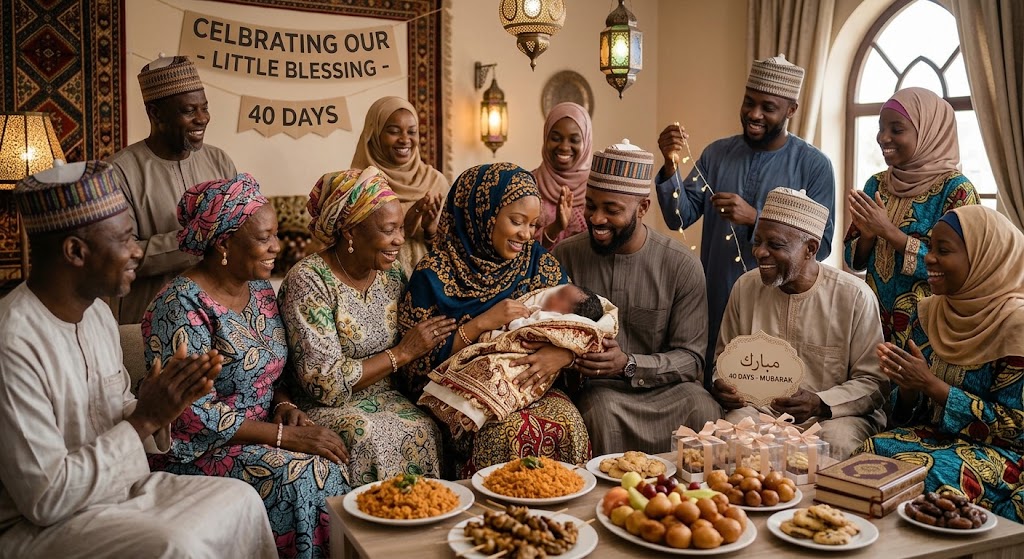
Why do some families celebrate?
For families who follow the tradition, completing 40 days can mark the end of an important period of recovery for the mother and adjustment to caring for the newborn.
Relatives and friends may gather to see the baby, share a meal, offer gifts or spend time with the mother and child.
The way the occasion is observed varies widely between communities and cultures. Some families may hold a large gathering, while others may simply mark the occasion privately or not celebrate it at all.
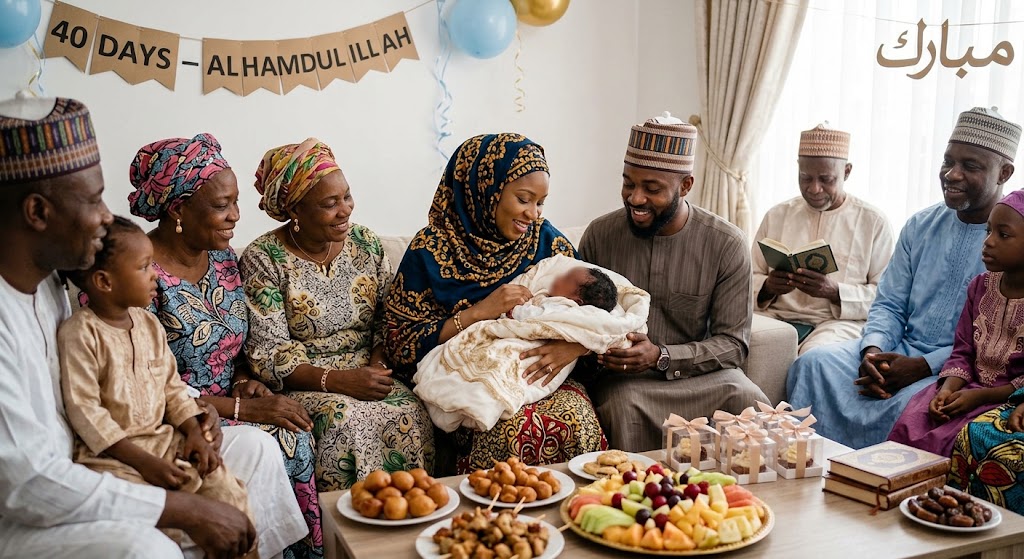
Is the celebration required in Islam?
No. Islamic scholars have distinguished between the 40-day period associated with nifas and the cultural celebrations that some families hold afterwards.
There is no universal Islamic requirement for a woman to remain indoors for 40 days after giving birth, nor is there a specific religious ceremony that Muslims are required to hold on the 40th day.
Therefore, the 40-day celebration is better understood as a cultural tradition observed by some Muslim families, rather than a practice that applies to all Muslims.
Other established Islamic practices connected to childbirth include Aqiqah, which involves a sacrifice in connection with the birth, and naming the child.
Ultimately, how a family marks the first 40 days after childbirth depends on its religious understanding, culture and family traditions.