Advertisement
Geoffrey Mosiria calls for alternative power providers after nationwide blackout
30th July, 2026 03:52 AM

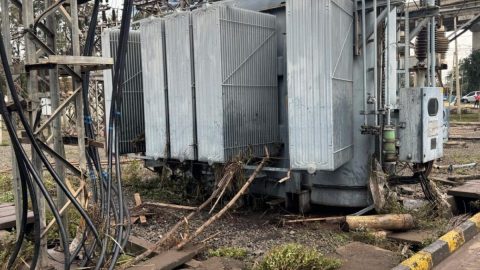
Nairobi County Chief Officer for Citizen Engagement and Customer Service Geoffrey Mosiria has called for Kenya to open up its electricity distribution sector to more players following the nationwide power blackout that left homes, businesses and critical services in darkness.
In a statement shared through his X account on Thursday, July 30, 2026, Mosiria questioned why a single technical failure could plunge the entire country into a blackout, saying the incident had exposed the dangers of relying on one electricity distributor.
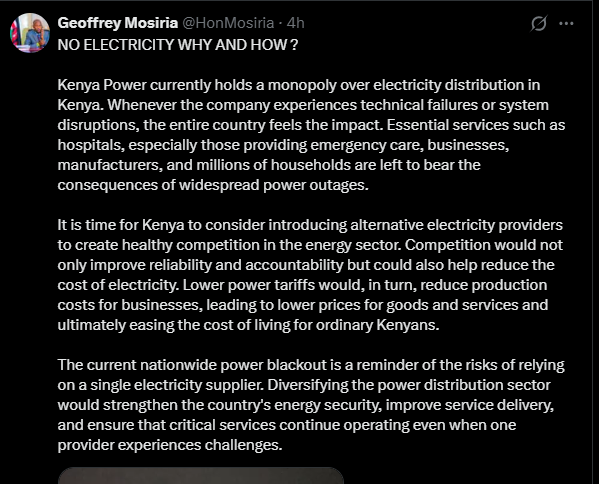
“NO ELECTRICITY WHY AND HOW?” Mosiria posed at the beginning of his statement.
The county official pointed out that Kenya Power currently enjoys a monopoly over electricity distribution, arguing that this leaves the country vulnerable whenever the company experiences technical problems. According to him, every major outage has a ripple effect that stretches far beyond switched-off lights and silent television screens.
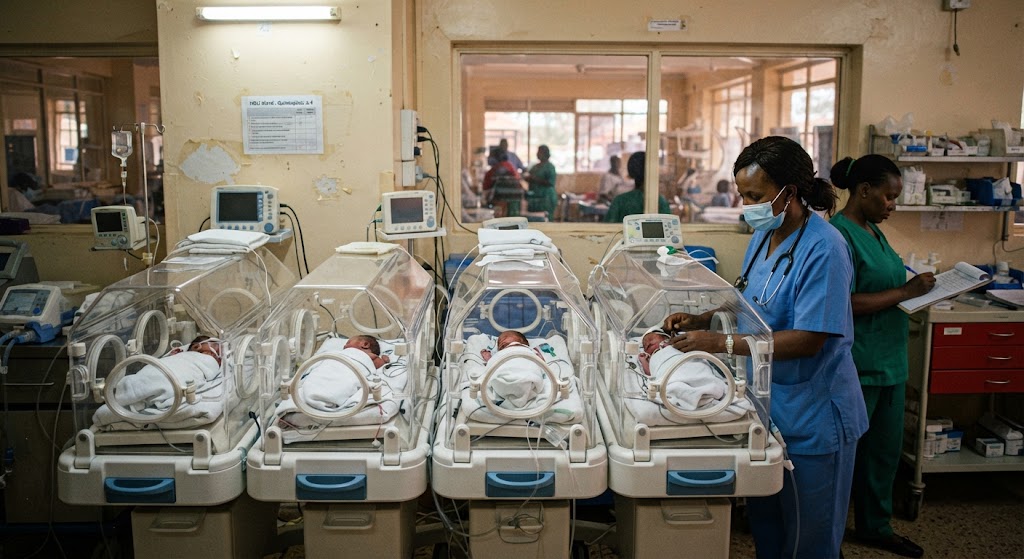
“Kenya Power currently holds a monopoly over electricity distribution in Kenya. Whenever the company experiences technical failures or system disruptions, the entire country feels the impact. Essential services such as hospitals, especially those providing emergency care, businesses, manufacturers, and millions of households are left to bear the consequences of widespread power outages,” he said.
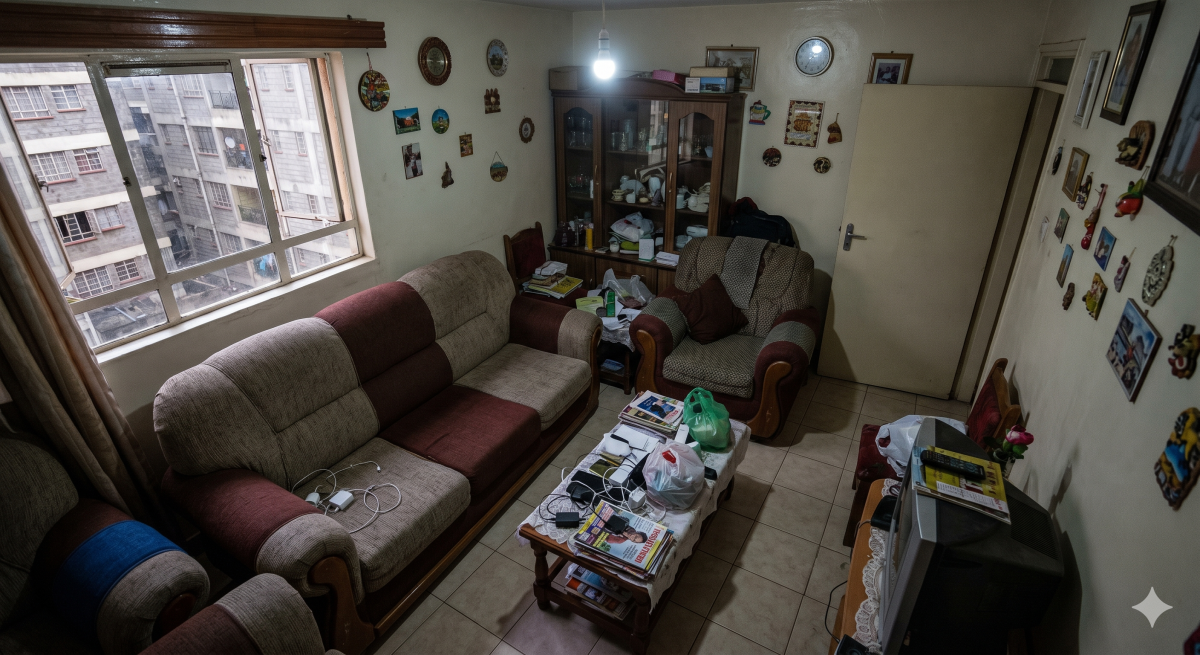
For many Kenyans, the blackout meant much more than an inconvenience. Businesses were forced to halt operations, shops scrambled to protect perishable goods, and offices found themselves staring at computer screens that suddenly went black. In some homes, the unexpected silence was only broken by the familiar sound of neighbours jokingly asking whether someone had forgotten to buy electricity tokens before realising the outage was nationwide.
Mosiria believes the solution lies in introducing competition into the electricity distribution sector. He argued that allowing alternative providers into the market would improve service delivery while giving consumers more reliable options.
“It is time for Kenya to consider introducing alternative electricity providers to create healthy competition in the energy sector. Competition would not only improve reliability and accountability but could also help reduce the cost of electricity,” he stated.
He further noted that cheaper electricity would benefit not only households but also businesses, many of which continue to struggle with high operating costs. Lower energy bills, he said, could eventually translate into lower prices for goods and services, easing pressure on consumers already grappling with the rising cost of living.
“Lower power tariffs would, in turn, reduce production costs for businesses, leading to lower prices for goods and services and ultimately easing the cost of living for ordinary Kenyans,” Mosiria added.
The county official said the blackout should serve as a wake-up call for policymakers to rethink the country’s electricity distribution model. In his view, depending on a single provider creates unnecessary risks that could be minimised through diversification.
“The current nationwide power blackout is a reminder of the risks of relying on a single electricity supplier. Diversifying the power distribution sector would strengthen the country’s energy security, improve service delivery, and ensure that critical services continue operating even when one provider experiences challenges,” he said.