Boniface Mwangi slams court ruling on matatu graffiti, calls it backward
By Katemarthason Okudo, April 29, 2026Activist and photojournalist Boniface Mwangi has criticised a recent High Court decision upholding a directive by the National Transport and Safety Authority (NTSA) that bans graffiti and tinted windows on matatus, warning that the move could affect Kenya’s vibrant urban art scene.
In a social media post shared on Wednesday, April 29, 2026, Mwangi described the ruling as backward, retrogressive, and lacking basic common sense, arguing that matatu graffiti is not just decoration but a vital part of Kenya’s creative identity.
“Graffiti is beautiful art, and the High Court ruling declaring graffiti on matatus illegal is backward, retrogressive,” he wrote.
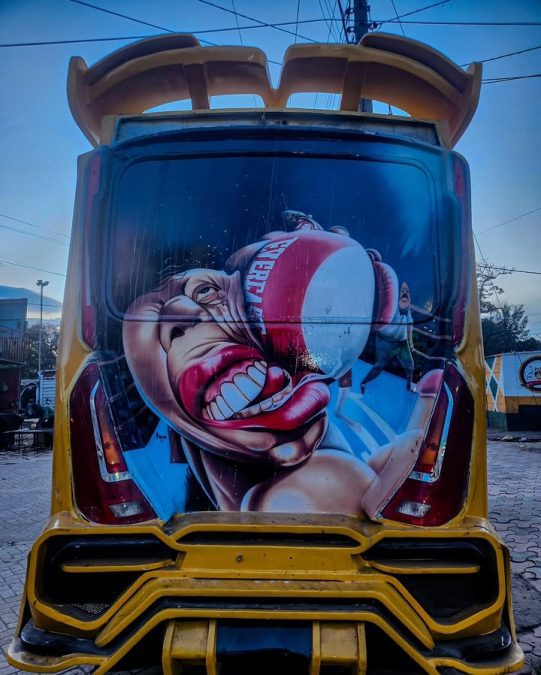
The High Court’s decision effectively reinforces NTSA regulations that require public service vehicles to maintain uniform colours and clear windows, a move authorities say is aimed at improving safety and restoring order in the public transport sector. However, Mwangi said the ruling ignores the cultural and economic value tied to the matatu industry.
“As a creative who has mentored graffiti artists since 2010, I have helped a number of them secure opportunities to travel the world and showcase their work. Kenyan graffiti artists are among the best in our continent,” he said.
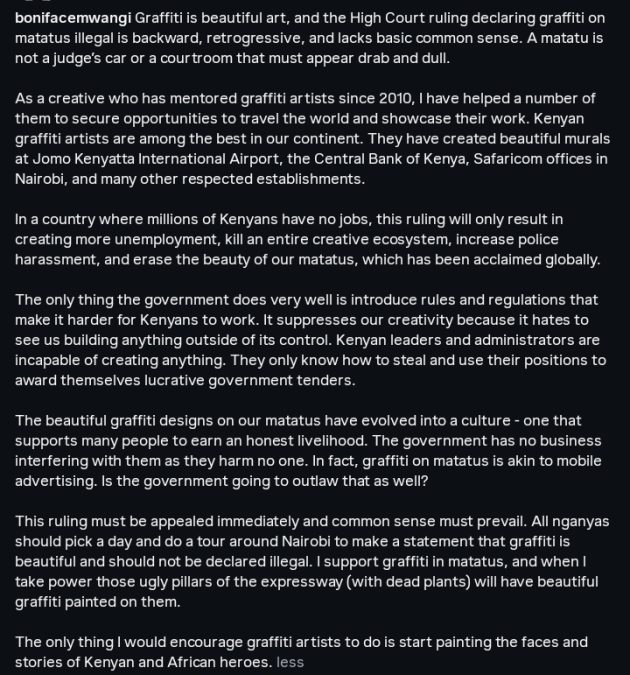
He pointed out that graffiti artists have contributed to major projects in the country, including murals at key institutions and corporate offices, building careers out of what began as matatu art. According to Mwangi, the ban risks shutting down a whole ecosystem that supports young creatives.
“In a country where millions of Kenyans have no jobs, this ruling will only result in creating more unemployment, killing an entire creative ecosystem, increasing police harassment, and erasing the beauty of our matatus,” he stated.
Matatus, especially in Nairobi, have long been known for their bold graffiti, loud music, and pop culture references, turning them into moving pieces of art that attract both locals and tourists. For many artists, these vehicles have served as a canvas and a stepping stone into the wider creative industry.
Mwangi also took issue with what he described as excessive government control, saying, “The only thing the government does very well is introduce rules that make it harder for Kenyans to work. It suppresses our creativity.”
He is now calling for the ruling to be challenged, urging Kenyans to defend the culture.
“This ruling must be appealed immediately, and common sense must prevail,” he said.