Advertisement
Annastacia Mukabwa urges artistes to follow copyright law or risk legal trouble
12th February, 2026 11:31 PM
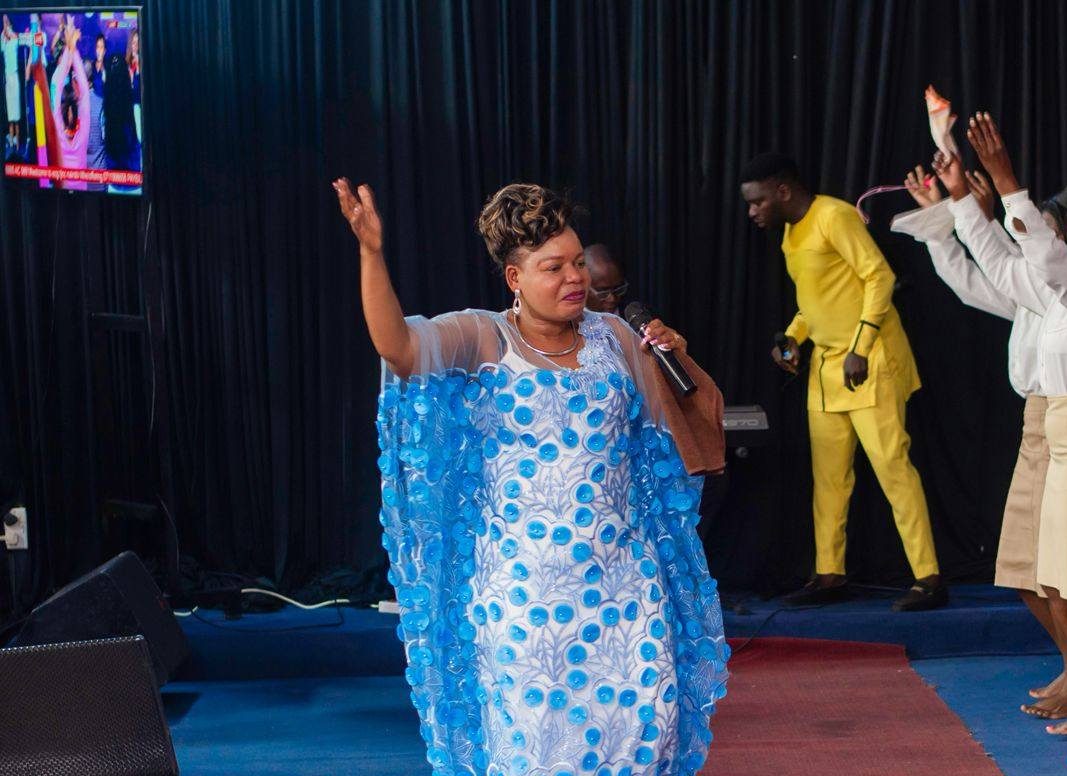
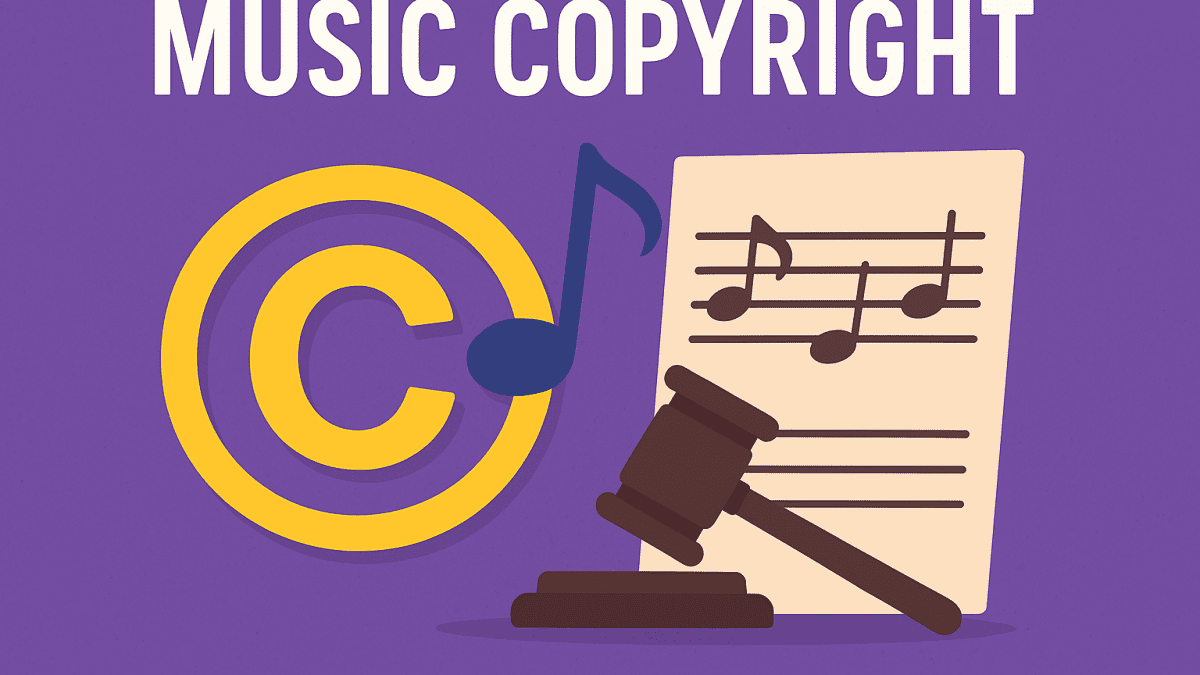
Gospel singer Annastacia Mukabwa has cautioned fellow artistes against uploading cover songs on YouTube without first seeking proper permission from the original owners, warning that failure to do so could result in serious legal consequences.
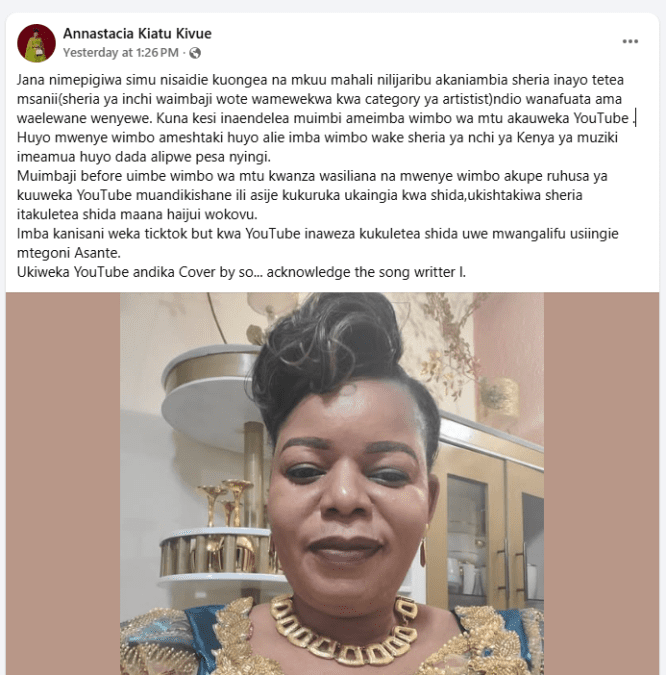
In a Facebook post on Thursday, February 12, 2026, the ‘Kiatu Kivue’ hitmaker revealed that she had recently received a phone call from an individual seeking her intervention in an ongoing dispute involving a musician who uploaded another artiste’s song to YouTube without authorisation.
According to Mukabwa, efforts to intervene proved difficult after she was informed that the matter was already being handled strictly under Kenya’s copyright laws.
“Yesterday I received a call asking me to help speak to someone in authority, but I was told that the law protecting artistes must take its course or the parties resolve the issue themselves,” she explained.
Mukabwa disclosed that the case involves a singer who performed and uploaded another musician’s song on YouTube, prompting the original owner to file a lawsuit.
As a result, the Kenyan music copyright framework ruled in favour of the complainant, ordering that the singer who uploaded the song pay a substantial amount in compensation.
“There is an ongoing case where a singer performed someone else’s song and uploaded it to YouTube. The owner of the song sued her, and under Kenya’s music copyright law, the court ruled that the lady must pay a large amount of money,” she wrote.

Using the incident as a cautionary example, the gospel minister emphasised that artistes must always communicate with the original songwriter or rights holder before recording or uploading a cover version to YouTube.
She advised musicians to obtain clear consent and, where possible, formalise the agreement in writing to avoid misunderstandings that could escalate into legal battles.
“Before you sing someone else’s song, first contact the owner and ask for permission to upload it on YouTube. Put your agreement in writing so that they do not bypass you and get you into trouble. If you are sued, the law will deal with you accordingly because it does not recognise salvation,” she warned.
Mukabwa further reminded singers that once a case is filed in court, the law does not consider whether someone is a gospel minister or a born-again Christian.
“If you are sued, the law will deal with you accordingly. It does not recognise salvation,” she noted, underscoring the seriousness of copyright compliance.
She encouraged artistes who wish to minister through other people’s songs to do so within church settings or on platforms such as TikTok, where risks may differ, but urged heightened caution when it comes to monetised platforms like YouTube.
Additionally, Mukabwa advised that whenever a cover is uploaded, the artiste should clearly indicate that it is a “cover” and properly acknowledge the original songwriter in the description to give due credit.
“You can sing in church or post on TikTok, but YouTube can bring you serious problems. Be careful not to fall into a trap. When uploading to YouTube, write ‘Cover by…’ and acknowledge the original songwriter,” Mukabwa wrote.
Author
Steve Ireri
Steve is a senior writer with over four years of experience in digital journalism. His focus is on the showbiz and human interest stories. Emails: [email protected] , [email protected]
View all posts by Steve Ireri