Volcano erupts after lying dormant for 12,000 years
By The Guardian, November 25, 2025A volcano in Ethiopia’s north-eastern region has erupted for the first time in nearly 12,000 years, sending thick plumes of smoke up to 9 miles (14km) into the sky, and across the Red Sea toward Yemen and Oman.
The Hayli Gubbi volcano, located in Ethiopia’s Afar region about 500 miles north-east of Addis Ababa near the Eritrean border, erupted on Sunday, November 23, 2025, for several hours.
A local official, Mohammed Seid, said there were no casualties, but the eruption could have economic implications for the local community of livestock herders.
Seid said there was no previous record of an eruption by the Hayli Gubbi volcano, and that he fears for the livelihoods of residents.
“While no human lives and livestock have been lost so far, many villages have been covered in ash, and as a result, their animals have little to eat,” he said.
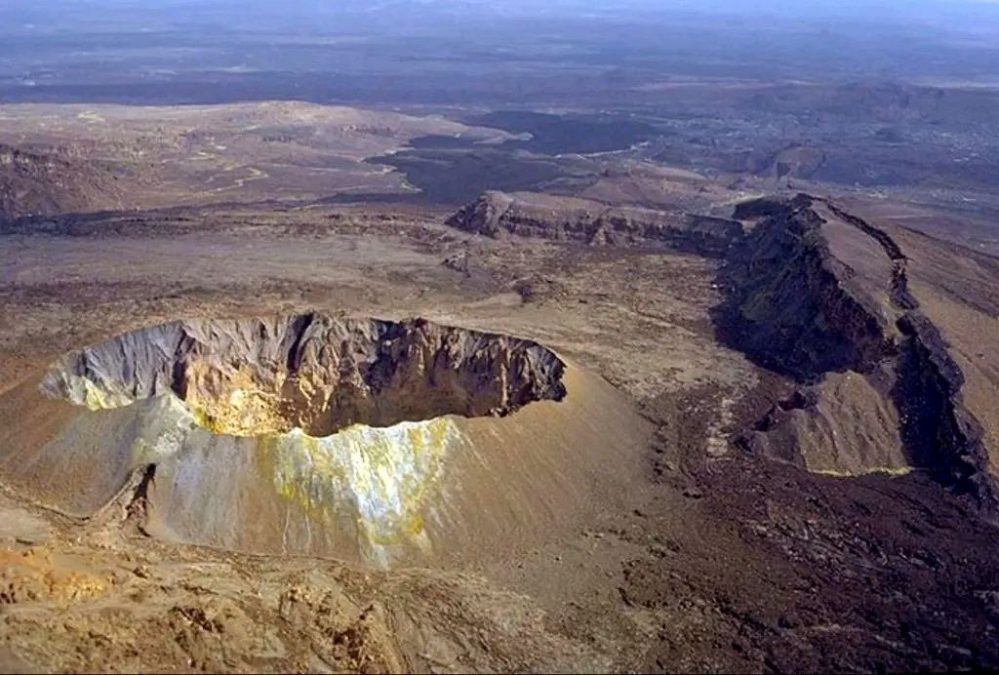
The volcano, which rises about 500 metres in altitude, sits within the Rift Valley, a zone of intense geological activity where two tectonic plates meet.
Ash clouds from the volcano drifted over Yemen, Oman, India, and northern Pakistan, the VAAC said.
The Afar region is prone to earthquakes, and a resident, Ahmed Abdela, said he heard a loud sound and what he described as a shock wave. “It felt like a sudden bomb had been thrown with smoke and ash,” he said.
In videos shared on social media, which AFP could not immediately verify, a thick column of white smoke could be seen rising.
The Smithsonian Institution’s Global Volcanism Program said Hayli Gubbi has had no known eruptions during the Holocene, which began about 12,000 years ago at the end of the last ice age.

Simon Carn, a volcanologist and professor at Michigan Technological University, confirmed on Bluesky that Hayli Gubbi “has no record of Holocene eruptions”.
Afar authorities have not yet reported casualties.
The plumes are expected to rapidly move eastwards, the IMD added.
It rises about 500 meters in altitude and sits within a zone of intense geological activity where two tectonic plates meet.
In India, flag carrier Air India cancelled several domestic and international flights to carry out “precautionary checks on those aircraft which had flown over certain geographical locations after the Hayli Gubbi volcanic eruption,” it said on X.
Delhi, which is experiencing a wave of severe air pollution, is not expected to be significantly affected because the ash is drifting at a high altitude, India’s Meteorological Department (IMD) said.