Advertisement
PS Oluga warns health officials against inflated budget proposals
29th August, 2025 12:16 PM
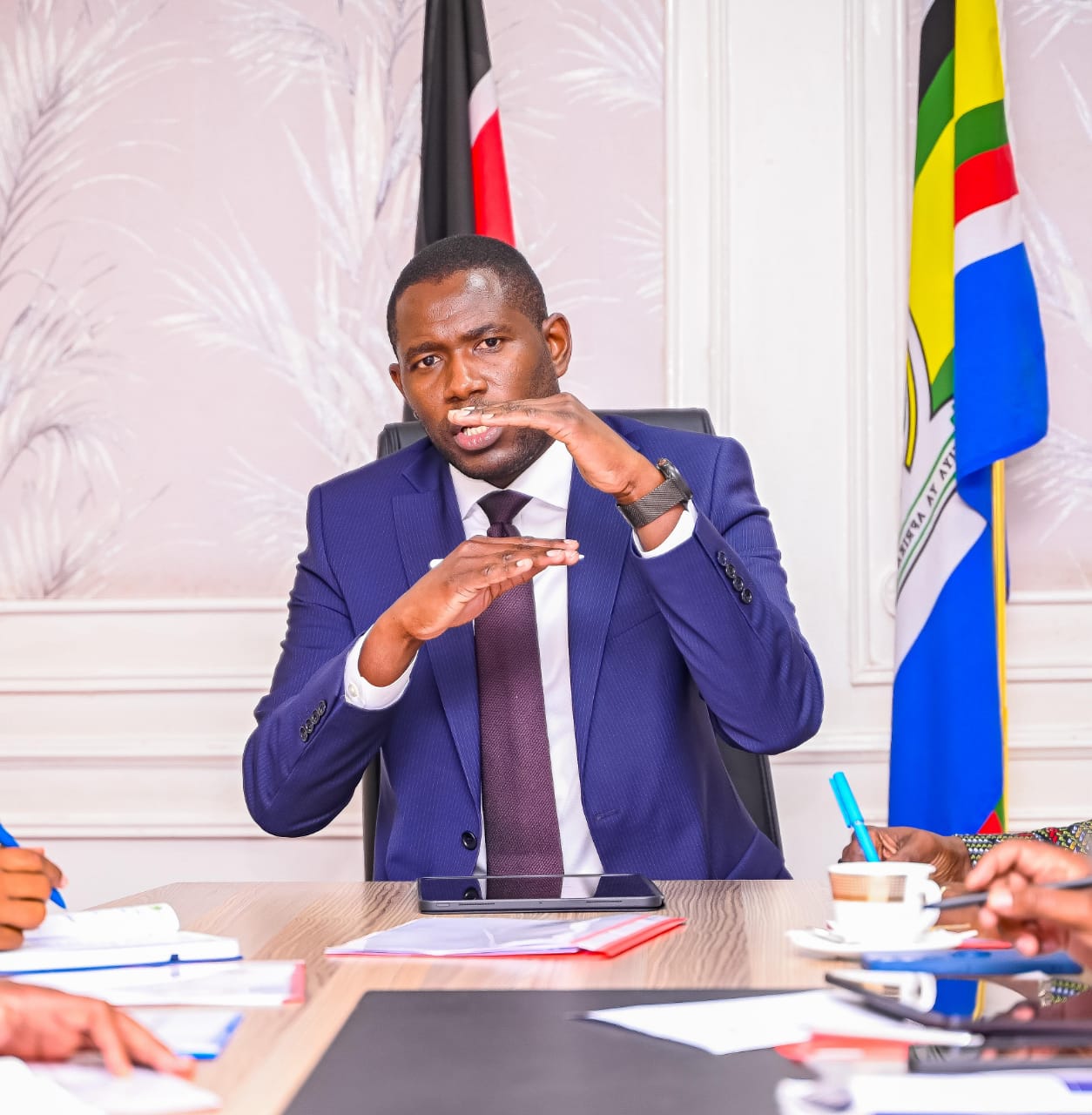
Principal Secretary for Medical Services, Dr. Ouma Oluga, has called out health officials against submitting unrealistic budget proposals while demanding the health officials to make every shilling count for better health.
The Health PS, while underscoring the importance of efficiency and accountability in health sector budgeting, urged institutions to ensure every resource delivers value for Kenyans.
In a report by the Ministry of Health on Friday, August 29, 2025, PS Oluga made his remarks while highlighting the importance of submitting realistic budget proposals and also added that all proposals by the health officials must align with the government’s Bottom-Up Economic Transformation Agenda.
In addition, he called on health officials to also align their budget proposals to the Medium-Term Expenditure Framework (MTEF) and the goal of achieving Universal Health Coverage (UHC).
“He called on health officials to submit realistic, well-justified proposals aligned to the Medium-Term Expenditure Framework (MTEF), the Government’s Bottom-Up Economic Transformation Agenda (BETA), and the goal of achieving Universal Health Coverage (UHC),” PS Oluga said.
Likewise, the PS, while cautioning the health officials, also added that the budget is not just numbers on paper but a reflection of our collective commitment to better health outcomes for Kenyans.
“The budget is not just numbers on paper; it is a reflection of our collective commitment to better health outcomes for Kenyans,” Dr. Oluga said.
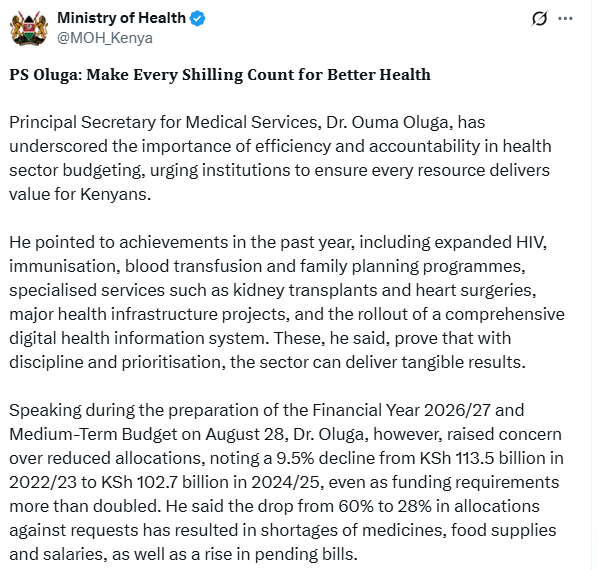
Health reduced allocation
Meanwhile, the Health PS, speaking during the preparation of the Financial Year 2026/27 and Medium-Term Budget on Thursday, August 28, 2025, raised concerns of reduced allocations in the health sector, which has led to shortages of supplies.
“…noting a 9.5% decline from KSh 113.5 billion in 2022/23 to KSh 102.7 billion in 2024/25, even as funding requirements more than doubled,” Oluga said.
On his part, the Health PS said the drop from 60% to 28% in allocations against requests has resulted in shortages of medicines, food supplies, and salaries, as well as a rise in pending bills.
At the time, he also pointed to achievements in the past year, including expanded HIV, immunization, blood transfusion, and family planning programs; specialized services such as kidney transplants and heart surgeries; major health infrastructure projects; and the rollout of a comprehensive digital health information system.