Pharmacy and Poisons Board warns Kenyans against using antibiotics to treat cold or flu
By Valerian Khakayi, August 28, 2025The Pharmacy and Poisons Board (PPB) has issued a public advisory urging Kenyans to refrain from using antibiotics to treat common viral infections such as the cold and flu.
In an advisory issued on Thursday, August 28, 2025, the PPB emphasised that antibiotics are ineffective against viruses and should not be used unless prescribed by a healthcare professional for bacterial infections.
The board stated that antibiotics only treat bacterial infections and not the flu or cold, which is caused by a virus.
According to the board, an individual can easily manage the symptoms of flu by getting adequate rest and ensuring regular hydration.
It further urged Kenyans suffering from cold and flu to consistently eat nutritious food and seek advice from their healthcare professionals on the best symptom-relief mechanisms.

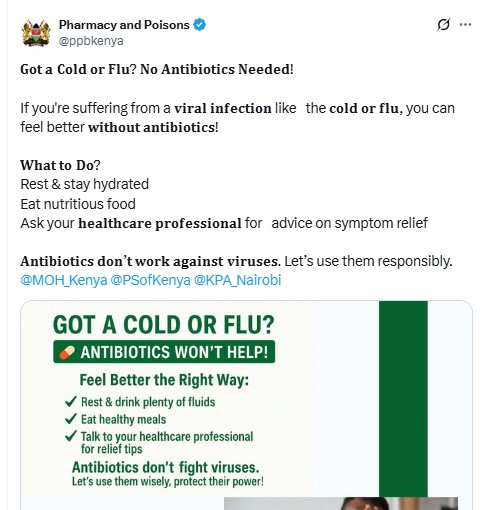
“Got a cold or flu? No antibiotics needed. If you’re suffering from a viral infection like the cold or flu, you can feel better without antibiotics, “PPB stated.
“What to do? Rest and stay hydrated, eat nutritious food and ask your healthcare professional for advice on symptom relief. Antibiotics don’t work against viruses. Let’s use them responsibly.
Cold and Flu
The warning comes with the onset of the cold season, and there has been a noticeable increase in flu-related illnesses across the country. Many individuals have resorted to self-medicating with antibiotics in an attempt to alleviate symptoms.
However, the PPB warns that this practice is not only ineffective but also contributes to the growing problem of AMR, where bacteria become resistant to the effects of medications
The World Health Organisation (WHO) has also highlighted the seasonal nature of flu infections, noting that they tend to increase during colder months.
As the country continues to grapple with the surge in flu cases, individuals must adhere to the PPB’s guidelines and avoid the misuse of antibiotics. By doing so, they can contribute to the global effort in combating antimicrobial resistance and ensure the effectiveness of antibiotics for future generations.