Advertisement
Parliament pushes for public servants to use govt hospitals only
23rd July, 2025 04:17 PM

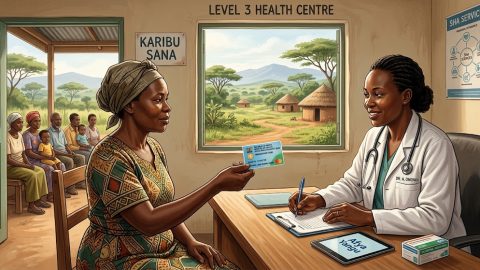
Members of Parliament have thrown their weight behind a motion that seeks to fast-track the implementation of Universal Health Coverage (UHC) in Kenya and make it mandatory for public officers to seek treatment in public hospitals.
The motion, tabled by Nominated MP Sabina Wanjiru Chege, directs the Ministry of Health to fully implement the Kenya Universal Health Coverage Policy 2020–2030 and introduce a new framework requiring all civil servants, public officers, and state officers to exclusively use public healthcare facilities.
“The Government is committed to accelerating the attainment of Universal Health Coverage (UHC) to ensure all Kenyans have access to essential quality health services. This must start with public servants themselves,” Chege said.
Addressing MPs on Wednesday, July 23, 2025, she argued that while the government already provides comprehensive medical cover to public officers, the majority opt for private healthcare, diverting funds that could strengthen public institutions.
“Civil servants, public officers, and state officers are accorded a comprehensive medical cover by their respective government agencies. Using that cover in public hospitals would guarantee sufficient funding and accountability,” she noted.
Chege stressed that mandating public officers to use public facilities would not only promote confidence in the healthcare system but also improve service delivery through increased investment and scrutiny.
Dagoretti North MP Beatrice Elachi supported the motion, calling for a mindset shift among both leaders and the public.
“The same doctors working in private hospitals also serve in Kenyatta National Hospital and other public institutions. The problem isn’t quality; it’s perception,” Elachi said.
She also urged the government to regulate the often-exorbitant fees charged by private medical institutions, which many Kenyans cannot afford.
“Healthcare must be accessible to all, not just the wealthy,” she explained.
Chair of the Health Committee and Seme MP, James Nyikal, echoed the call for leadership by example.
“We must commit, as Members of Parliament, to use public services, flawed as they may be. Only then can we genuinely fix them,” Nyikal argued.
On her part, Caroline Ng’elechei (Elgeyo Marakwet County) emphasised that while health is a devolved function, county governments must do their part in upgrading hospitals and maintaining high standards.
“Cleanliness, equipment, and human resources must be top priority if we want people to trust and use public hospitals,” she said.
The MPs said improving healthcare worker welfare is key to retaining talent in public hospitals.
“If we want world-class services, we must offer competitive pay and good working conditions,” warned that brain drain to private facilities would continue unless public healthcare was made more attractive.
Kiharu MP Ndindi Nyoro highlighted healthcare’s critical role in economic development.
“Education builds the workforce, but healthcare sustains it. Without a healthy population, there’s no economic growth,” he stated, citing the UK’s National Health Service (NHS) as a model where even the Prime Minister uses public hospitals.
“That builds confidence and dignity in the system,” he added.

Health devolution clash
However, Suba South MP Caroli Omondi took a different stance, opposing health devolution and advocating for a centralised Universal Health Coverage model.
“For UHC to work, it must be a unified insurance scheme with central pooling of resources and expertise,” Omondi argued.
He proposed the creation of a single national employer for all health workers to ensure standardised care across all counties.
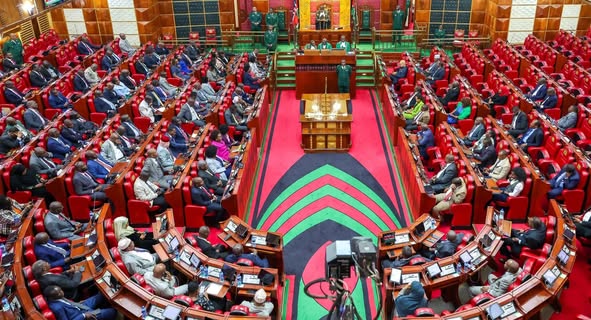
The motion sparked robust debate in the House, with lawmakers united in their desire to reform the public healthcare system, though divided on whether centralisation or devolution is the most effective structure.
Debate on the motion is set to continue next week as Parliament considers the far-reaching implications of making public healthcare mandatory for all public servants.