Advertisement
Parliament invites Kenyans to submit opinions on Privatisation Bill
06th August, 2025 08:19 PM
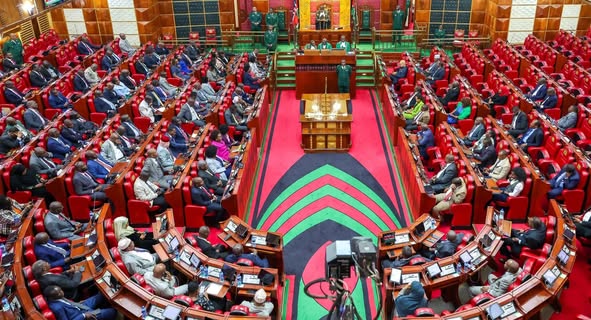
Kenyans have been invited to submit their views on the Privatisation Bill, 2025 (National Assembly Bill No. 36 of 2025), which seeks to overhaul the legal framework governing the privatisation of public entities.
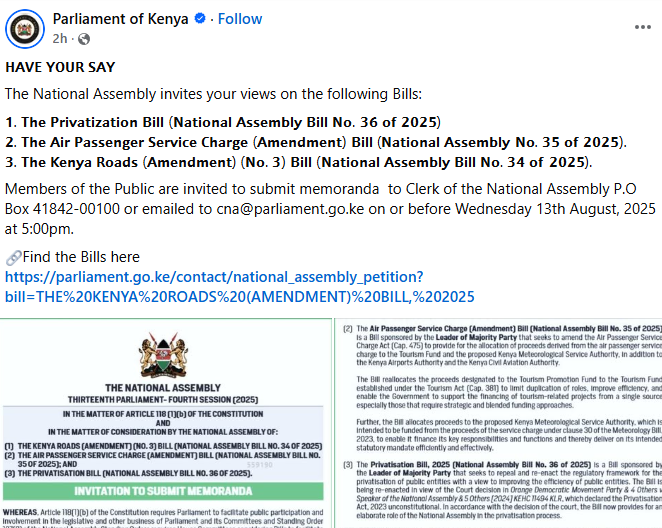
In a public notice on Wednesday, August 6, 2025, the National Assembly stated that the bill seeks to reenact the regulatory framework for the privatisation of public entities with a view to improving the efficiency of public entities.
“NOW THEREFORE, in compliance with Article 118(1)(b) of the Constitution and the National Assembly Standing Order 127(3), the Clerk of the National Assembly hereby invites the public and stakeholders to submit memoranda on the Bills to the respective Departmental Committees,” the notice read.
According to the notice, the views on the bill are to be submitted to the Public Debt and Privatisation Committee on or before Wednesday, 13th August 2025, at 5.00 pm.
It follows a High Court ruling in the case Orange Democratic Movement Party & 4 Others v Speaker of the National Assembly & 5 Others [2024] KEHC 11494 KLR, which declared the Privatisation Act, 2023, unconstitutional.
The ruling
Justice Chacha Mwita ruled on September 24, 2025, that the government had passed the legislation without proper public participation, adding weight to opposition claims that the bill should have faced a referendum.
The Act was signed into law by President Ruto on 9 October 2023, forming a new Privatisation Authority to replace the previous Privatisation Commission, with greater power to push ahead with the sale of state-owned entities, removing layers of approval from the National Assembly but motivating opposition groups to express concern about the loss of oversight.
“According to the court, the National Assembly did not meet the constitutional standards required under Articles 10 and 118, which mandate public participation as a critical part of governance. The court was particularly concerned that engagement was limited to a small group of stakeholders, excluding the broader public,” an email from a group of lawyers led by Jared Kangwana of Kenyan law firm Jared Kangwana & Co, which works in association with international firm Clyde & Co, said.