Advertisement
NACADA moves alcohol licensing to digital platform to boost transparency
26th August, 2025 11:23 AM

The National Authority for the Campaign Against Alcohol and Drug Abuse (NACADA) has announced that alcohol import and export licensing will be moved to a digital platform in a bid to boost transparency and streamline trade processes.
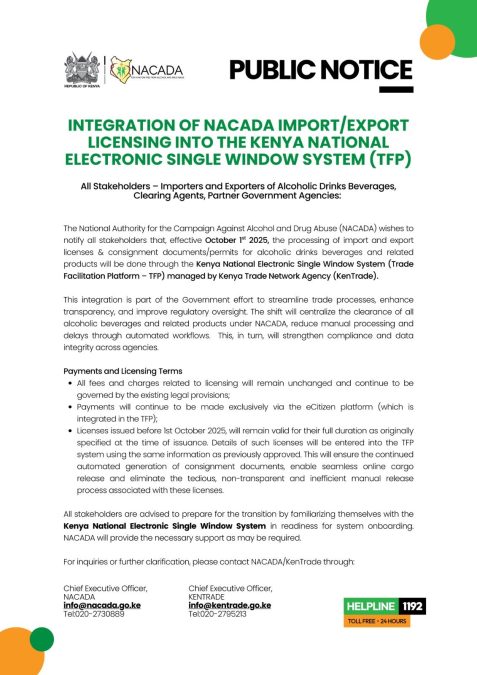
In a statement released on Tuesday, August 26, 2025, the agency said that effective October 1, 2025, the processing of import and export licenses as well as consignment permits for alcoholic drinks and related products will be done through the Kenya National Electronic Single Window System, also known as the Trade Facilitation Platform, managed by the Kenya Trade Network Agency (KenTrade).
“The National Authority for the Campaign Against Alcohol and Drug Abuse (NACADA) wishes to notify all stakeholders that, effective October 1, 2025, the processing of import and export licenses and consignment documents or permits for alcoholic drinks, beverages and related products will be done through the Kenya National Electronic Single Window System (Trade Facilitation Platform – TFP) managed by Kenya Trade Network Agency (KenTrade). This integration is part of the Government’s effort to streamline trade processes, enhance transparency, and improve regulatory oversight,” NACADA stated.
The authority explained that the shift will centralise the clearance of all alcoholic beverages and related products under NACADA while reducing delays that come with manual processing. It said automated workflows will improve compliance and data integrity across agencies.
NACADA assured stakeholders that all fees related to licensing will remain unchanged and will continue to be governed by the existing laws. Payments will still be made exclusively through the eCitizen platform, which has already been integrated into the Trade Facilitation Platform.
“Licenses issued before October 1, 2025, will remain valid for their full duration as originally specified at the time of issuance. Details of such licenses will be entered into the TFP system using the same information as previously approved. This will ensure the continued automated generation of consignment documents, enable seamless online cargo release and eliminate the tedious, non-transparent and inefficient manual release process associated with these licenses. All stakeholders are advised to prepare for the transition by familiarising themselves with the Kenya National Electronic Single Window System in readiness for system onboarding. NACADA will provide the necessary support as may be required,” the statement added.
Proposed alcohol policies
This development comes just weeks after the Ministry of Interior unveiled a tough national policy aimed at tackling the rising cases of alcohol and drug abuse across the country.
The proposed policy seeks to ban online sales and home deliveries of alcohol. It will also prohibit hawking and vending machines as means of alcohol distribution. Supermarkets, petrol stations, restaurants, and residential areas, as well as spaces near learning institutions, will no longer be allowed to sell alcohol if the proposals are passed into law.
The legal drinking age is set to be raised from 18 to 21. Under the new rules, anyone below 21 years will not be allowed into alcohol-selling establishments, even when accompanied by an adult. In addition, anyone accompanied by a child or found carrying offensive weapons will be barred from purchasing alcohol.
The policy also proposes strict regulations on advertising and marketing. NACADA wants to ban the use of celebrities such as musicians, actors, athletes, media personalities, and influencers in alcohol promotions. Only individuals aged 25 and above will be allowed to feature in alcohol adverts, and campaigns will be restricted from portraying alcohol consumption as glamorous or aspirational.
Alcohol advertisements will not be allowed during watershed hours between 5:00 am and 10:00 pm on all platforms, including television, radio, digital media, and foreign broadcasts. Music videos, films, and live performances that depict alcohol or drug use in a positive light will also be restricted from being aired or published.
The proposed law will prohibit alcohol advertising and sponsorship at events targeting young people under the age of 21, including schools, universities, and youth-centred sports, entertainment, and arts competitions. Outdoor alcohol advertisements will also face tighter control and will be banned within 300 metres of schools, hospitals, residential areas, and government offices.
Alcohol manufacturers will be required to display clear health warnings and full ingredient lists on packaging. A minimum packaging size of 250 millilitres will also be introduced to discourage the sale of cheap ,high-alcohol sachets and small bottles that are popular among low-income consumers.
The policy further proposes a complete overhaul of Kenya’s alcohol licensing system. The national government will be the sole authority allowed to issue licenses for the manufacture, import, export, and distribution of alcohol. The number and location of alcohol outlets will also be strictly controlled, especially in residential areas and near schools.