Advertisement
Kigame questions Ruto’s moral compass over shoot-to-kill order
11th July, 2025 11:15 AM

Renowned gospel musician, author, and former presidential aspirant Reuben Kigame has openly criticised President William Ruto over his controversial shoot-to-kill directive, questioning the moral and spiritual counsel guiding the Head of State.
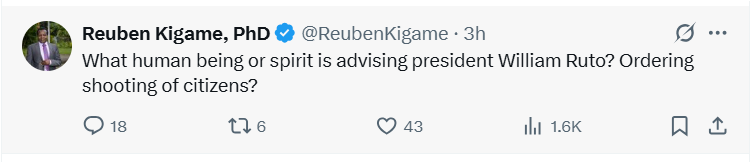
In a sharply worded post on X, July 11, 2025, Kigame wrote, “What human being or spirit is advising President William Ruto? Ordering the shooting of citizens?”
The post, which quickly gained traction online, reflects growing alarm over the government’s escalating use of force against protesters.
The criticism comes just days after Ruto ordered police to shoot demonstrators “in the leg” if they attacked property or security forces. “The government will not stand by and watch businesses and lives destroyed by sponsored rioters,” the president stated during a July 9 address.
Speaking during the commissioning of a police housing project in Nairobi’s Kilimani area on Wednesday, July 9, 2025, the president issued an alarming directive that police should shoot protesters in the leg if caught looting or destroying property.
“Anyone who burns down someone else’s business and property, let them be shot in the leg and go to the hospital as they head to court,” Ruto said. “Yes, let them not kill, but shoot and break the legs. Destroying people’s property is not right.”
Kigame’s remarks follow weeks of unrest that began in 2024 after the introduction of a deeply unpopular Finance Bill proposing sweeping tax increases. The protests intensified during the July 7, 2025, Saba Saba commemorations—marking 35 years since the historic pro-democracy movement—with demonstrations spreading nationwide.
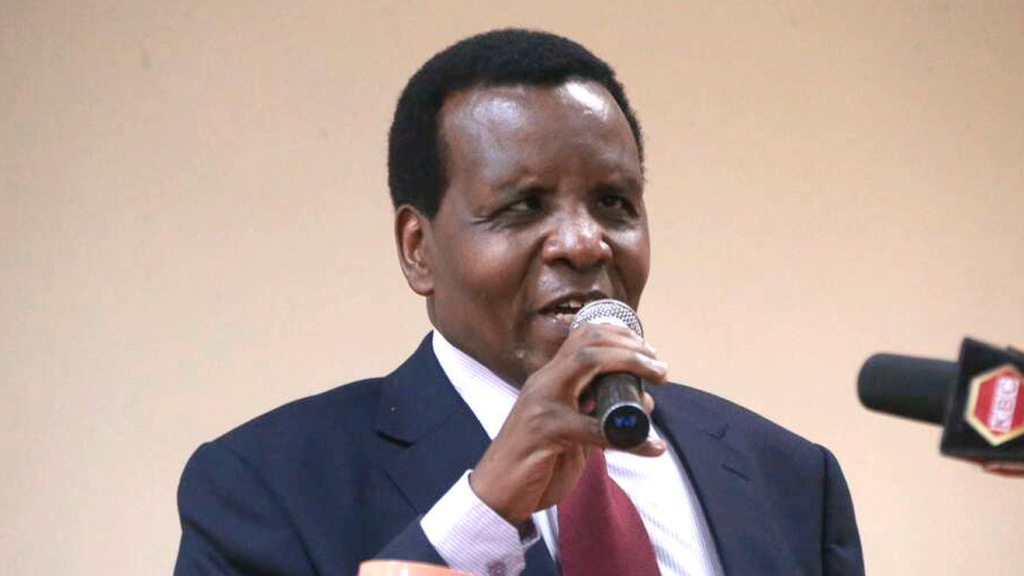
Interior CS Kipchumba Murkomen had earlier warned that protesters approaching police stations “with criminal intent” would be shot. President Ruto’s remarks appeared to reinforce this stance, further deepening fears of state-sanctioned violence.
Kigame’s rhetorical question about the “spirit” advising the president sparked mixed reactions online. While some users interpreted it as a cultural or spiritual critique referencing moral decay, others blamed the president’s advisory team for failing to offer wise counsel during a national crisis.
Kigame’s post adds to a growing chorus of voices—including lawyers, clergy, and opposition leaders—demanding accountability, restraint, and a return to dialogue amid Kenya’s worsening political crisis.