Daddy Owen calls for nationwide civic education campaign ahead of 2027 polls
By Ascah Mwango, November 4, 2025Gospel artiste and disability-rights advocate Daddy Owen has called for a fully sponsored nationwide civic education campaign ahead of the 2027 General Election.
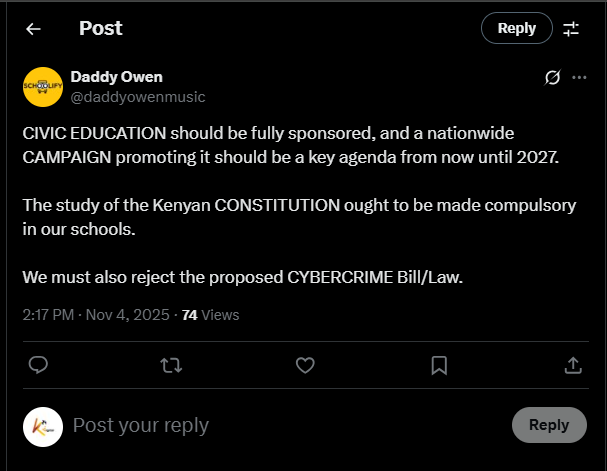
In a statement shared on his X account on Tuesday, November 4, 2025, Daddy Owen urged the government to make civic education a key national agenda and ensure the study of the Constitution becomes compulsory in schools.
The activist also urged Kenyans to reject President William Ruto’s signed Computer Misuse and Cybercrimes (Amendment) Act, 2024.
“CIVIC EDUCATION should be fully sponsored, and a nationwide CAMPAIGN promoting it should be a key agenda from now until 2027. The study of the Kenyan CONSTITUTION ought to be made compulsory in our schools. We must also reject the proposed CYBERCRIME Bill/Law,” Daddy Owen stated.
Tribal politics
His remarks follow an earlier post on October 24, 2025, in which he called on Kenyans to move beyond ethnic divides in politics and unite against a self-serving political class.
“People here act woke, saying they’re tribeless, but during election talk, it’s back to Kalenjin 91%, Kikuyu 92%, Luo 76%. For 2027, it should be the people vs the political class, not tribe vs tribe. Or Gen Z/Millennials vs the political class. That’s how you drain the swamp,” he said.
Daddy Owen urged Kenyans to unite and focus on civic awareness and accountability rather than tribal alliances, saying the 2027 election should be about citizens standing together to challenge political elites.
His call comes amid public debate over the recently signed Computer Misuse and Cybercrimes (Amendment) Act, 2024, which President William Ruto assented to in mid-October 2025. The law expands the definition of cyber offences, introduces new crimes such as SIM-swap fraud, and grants authorities broader powers to block websites or digital platforms accused of spreading illegal content.
Members of the public and rights groups argue that while the law aims to curb cybercrime, it also poses a threat to freedom of expression and digital rights by allowing the government to remove online content without a court order.