Worry as Bungoma’s historical Masinde Muliro Stadium rots away
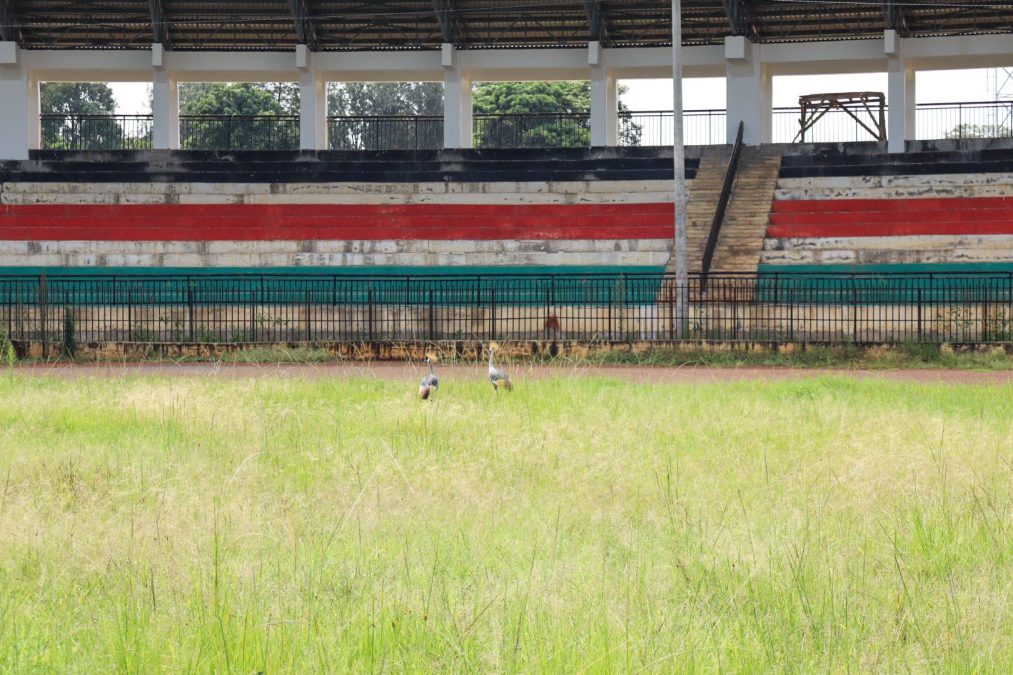
By Joel Masibo, May 12, 2026Overgrown grass now lines the playing surface and walkways of the historic Masinde Muliro Stadium in Bungoma, iron rails stand silently around deserted sections, while visible signs of neglect continue to eat away at a facility once envisioned as a hub for nurturing sporting talent in Western Kenya.
The worrying state of the stadium that staged the 2024 Madaraka Day celebrations on June 1, 2024, has once again brought into sharp focus the long-standing problem of poor management and maintenance of sports infrastructure in Kenya, a challenge that continues to deny thousands of young athletes access to quality training and competition grounds.
Game changer
What was expected to become a vibrant center for football, athletics, and youth development now paints a picture of abandonment. Parts of the facility appear unused, with weeds spreading around the premises, while sections of the structure show signs of deterioration despite the huge public investment made in its construction.
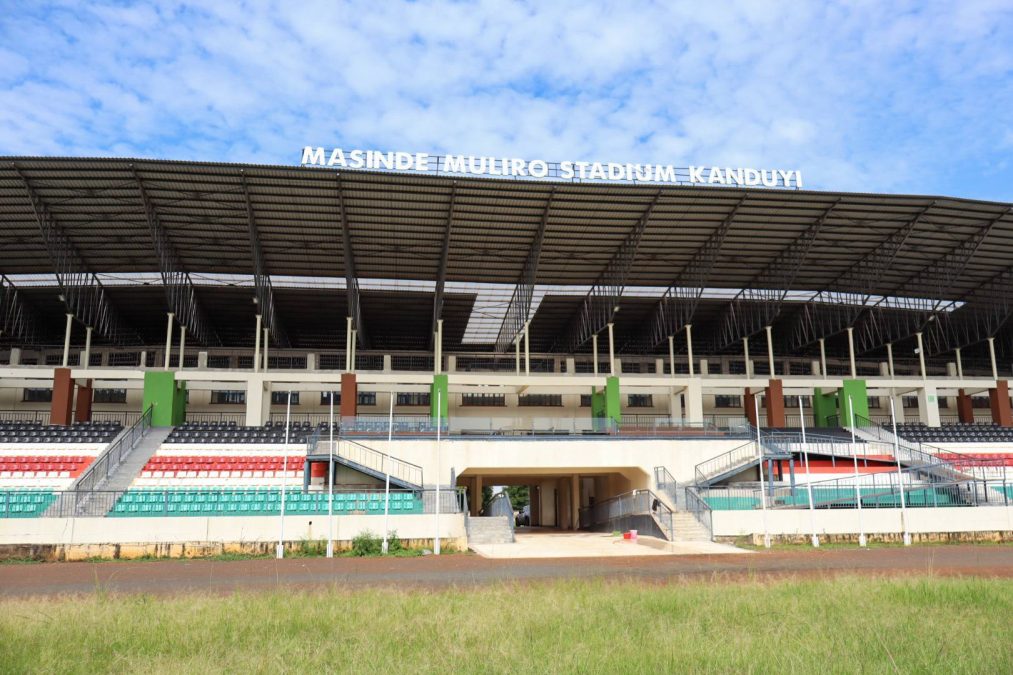
Masinde Muliro – Kanduyi Stadium, was contracted a rehabilitation sum amounting to Ksh799.1 million, a project that Auditor General Nancy Gathungu exposed Sports Kenya for issuing irregular tenders for the refurbishment of stadiums amounting to Ksh1.96 billion in 2024. The irregular tenders, involving Masinde Muliro Stadium, also relate to the refurbishment of Kericho Green Stadium, Bukhungu Stadium in Kakamega.
Wakoli shares concern
The Masinde Muliro Stadium’s sad state has prompted Bungoma County Senator David Wakoli to visit the stadium, raising concerns over its current condition, accusing authorities of failing to protect a key public resource meant to benefit the people of Bungoma.
According to the senator, the facility has slowly drifted away from its intended purpose of developing sports and empowering local youth. Instead, he lamented, the stadium has become inaccessible to the public and risks being converted into office space rather than serving as a sporting arena.
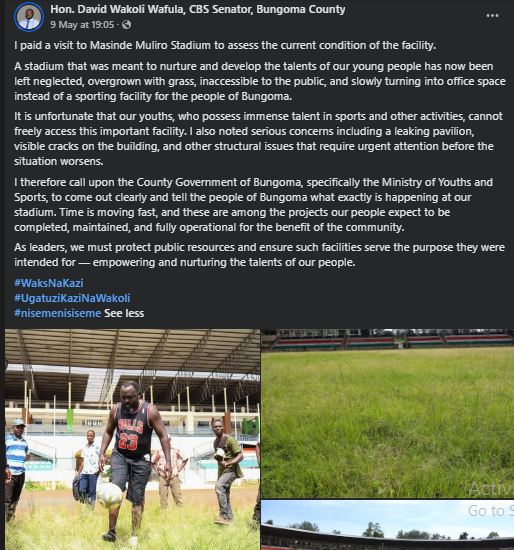
”A stadium that was meant to nurture and develop the talents of our young people has now been left neglected, overgrown with grass, inaccessible to the public, and slowly turning into office space instead of a sporting facility for the people of Bungoma,” Wakoli said.
Wakoli further pointed out several structural concerns within the stadium, including a leaking pavilion, cracks on parts of the building, and other defects that could worsen if urgent repairs are not undertaken.
His concerns reflect a broader national problem where many sports facilities across Kenya are launched with great excitement but later fall into disrepair due to poor planning, lack of maintenance culture, and weak accountability systems.
In many counties, modern stadiums have increasingly become symbols of stalled promises. Once construction is completed, or partially completed , proper management often takes a back seat. Grass goes unattended, drainage systems fail, seats get damaged, and facilities remain locked to the very youths they were meant to serve.
Lost opportunity
For young athletes in Bungoma, the neglect of Masinde Muliro Stadium represents more than just a damaged building. It is a lost opportunity.
At a time when Kenya continues to produce talented footballers, athletes, rugby players, and other sportsmen and women from grassroots communities, the absence of accessible and well-maintained facilities threatens to cripple talent development pathways.
Sports stakeholders have repeatedly argued that counties must move beyond simply constructing infrastructure and instead invest in long-term maintenance, professional facility management, and sustainable operational models.
Without proper care, even multi-million-shilling projects quickly deteriorate, leading to wastage of taxpayers’ money and denying communities the benefits such investments were intended to deliver.
Wakoli has now called on the Bungoma County Government and the Ministry of Youth and Sports to explain the status of the stadium and outline plans for restoring the facility before the damage becomes irreversible.
His remarks also reignite questions about how county governments across the country prioritise sports development despite frequently promising to empower young people through talent and recreation programs.