Advertisement
Lionel Messi’s extraordinary Argentina story
02nd September, 2026 07:19 PM

After more than two decades representing Argentina, Lionel Messi has finally closed the book on an international career filled with spectacular victories, painful defeats and unforgettable moments.
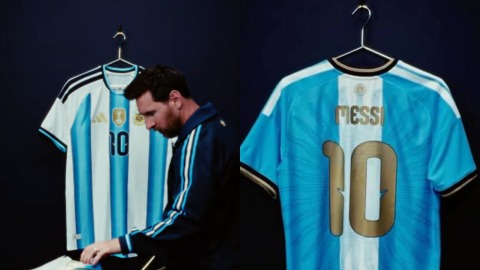
The Argentina captain chose a remarkably personal way to announce the end of his journey. Rather than making the announcement through a press conference or social media post, Messi wrote a three-page farewell by hand, reflecting on his time with the national team and bringing an emotional conclusion to one of football’s greatest international stories.
Messi’s association with Argentina was never straightforward. His career with the national side included periods of intense criticism, heartbreaking defeats and moments when he questioned whether continuing was worthwhile. Yet, despite everything, he repeatedly returned to represent the country.
His first appearance for the senior team came on 17 August 2005 against Hungary in Budapest. He was only 18 and had recently helped Argentina win the FIFA World Youth Championship in the Netherlands.
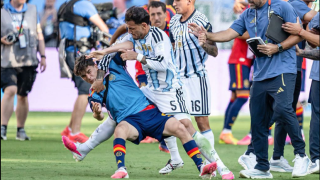
His senior debut lasted just 47 seconds. After receiving the ball and attempting to get away from Hungary defender Vilmos Vanczak, Messi was shown a red card.
Few could have predicted that the teenager involved in such an unusual debut would eventually become Argentina’s most decorated footballer.
The teenager who announced himself to the world
Messi had already given Argentina supporters a glimpse of his extraordinary potential at the 2005 FIFA World Youth Championship.
Initially used from the bench, he quickly became the tournament’s standout player. He scored six times, including both goals in Argentina’s final victory over Nigeria, and collected the Golden Ball and Golden Boot alongside the championship medal.
His senior-team debut followed only weeks later.

At the 2006 FIFA World Cup in Germany, Messi made his first appearance at football’s biggest tournament. He scored against Serbia and Montenegro, contributed during Argentina’s dramatic extra-time victory over Mexico and watched helplessly as the hosts eventually eliminated his side on penalties.
Argentina suffered another major disappointment the following year, losing the Copa America final to Brazil.
Messi’s first major international title with the senior side would have to wait. At the 2008 Beijing Olympics, however, he won gold with a talented Argentina squad featuring Sergio Aguero, Angel Di Maria, Javier Mascherano and Juan Roman Riquelme.
The painful years
As Messi’s reputation at club level continued to soar, expectations surrounding his performances for Argentina became enormous.
The 2010 World Cup in South Africa proved particularly difficult. With Diego Maradona managing the team and Messi carrying much of the attacking responsibility, Argentina were comprehensively beaten 4-0 by Germany in the quarter-finals.
The disappointment continued at the 2011 Copa America, hosted in Argentina. Uruguay eliminated the hosts on penalties in Santa Fe, denying Messi another opportunity to win a major senior international trophy.
Three years later, Argentina came agonisingly close to World Cup glory.
At Brazil 2014, Messi scored four goals during the group stage and played a central role as Argentina progressed all the way to the final. Germany, however, claimed the trophy after Mario Gotze scored in extra time to secure a 1-0 victory at the Maracana.
Messi was named the tournament’s best player and received the Golden Ball, but the award provided little consolation after another missed opportunity to lift the World Cup.
Three straight final defeats
The most difficult period of Messi’s international career came between 2014 and 2016.

Argentina reached the 2015 Copa America final against hosts Chile but lost on penalties. A year later, the two nations met again in the Copa America Centenario final in the United States.
Once more, the match ended goalless before going to a penalty shoot-out.
Messi missed his attempt as Chile eventually prevailed again.
It was Argentina’s third successive major final defeat after the 2014 World Cup and 2015 Copa America. The repeated heartbreak proved too much for Messi.
Following the 2016 defeat, he announced that he was stepping away from international football.
However, his retirement lasted only a short time.
Messi returned to the Argentina setup and helped secure qualification for the 2018 World Cup. The tournament in Russia produced another frustrating ending, with eventual champions France defeating Argentina 4-3 in an entertaining last-16 encounter.
A new Argentina takes shape
The appointment of Lionel Scaloni in 2018 marked the beginning of a transformation.
A number of players who had shared the Argentina dressing room with Messi for years gradually moved out of the picture. They were replaced by a younger generation that had grown up idolising the Barcelona superstar.
Rodrigo De Paul, Lautaro Martinez, Leandro Paredes, Emiliano Martinez, Cristian Romero, Julian Alvarez, Enzo Fernandez and Alexis Mac Allister became important pieces of the new-look side.
The 2019 Copa America offered the first indication that something special was developing.
Argentina were eventually beaten by Brazil in the semi-finals but recovered to finish third. More importantly, the team appeared increasingly united around Messi.
The relationship between the captain and his younger team-mates was different from what had existed previously. Argentina no longer seemed to depend entirely on Messi to solve every problem.
Scaloni gradually established a settled team, while Argentina developed greater confidence, resilience and collective strength.
For Messi, the national-team experience began to feel enjoyable again.
The breakthrough at the Maracana
The moment Messi had waited years for finally arrived at a stadium that had previously been the scene of one of his deepest disappointments.
On July 10, 2021, Argentina faced Brazil in the Copa America final at the Maracana.
Angel Di Maria scored the decisive goal, giving Argentina a 1-0 victory.
When the final whistle sounded, Messi fell to the ground as his team-mates surrounded him. After nearly 15 years of trying, he had finally won a major senior international trophy with Argentina.
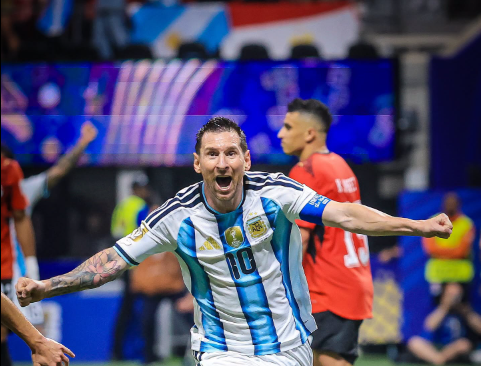
The victory also ended Argentina’s 28-year wait for a major title.
That success transformed the team’s mentality.
In June 2022, Argentina added another trophy by defeating Italy 3-0 at Wembley in the Finalissima.
They entered the Qatar World Cup later that year as continental champions and on an extended unbeaten run.
The campaign did not begin as expected. Saudi Arabia stunned Argentina in their opening match, but Messi and his team-mates recovered immediately.
Messi scored against Mexico and Australia before finding the net again against the Netherlands and Croatia as Argentina advanced to the final.
Messi finally gets his World Cup
The final in Lusail became the defining chapter of Messi’s international career.
Argentina and France produced a remarkable 3-3 draw after extra time. Messi scored twice and converted his penalty during the shoot-out.
When Gonzalo Montiel converted the decisive kick, Messi dropped to his knees before looking towards the sky.
Moments later, he finally lifted the World Cup trophy — the one prize that had eluded him throughout his extraordinary career.
Messi finished Qatar 2022 with seven goals, three assists and another Golden Ball.
After years of comparisons with Argentina legend Diego Maradona and relentless questions about his international legacy, Messi had finally achieved the ultimate prize.
One final chapter
Winning the World Cup might have provided the perfect ending, but Messi continued playing for Argentina.
In 2023, he moved beyond the 100-goal mark for his country. The following year, he helped Argentina win another Copa America.
The final against Colombia provided another reminder of the changing Argentina team.
Messi was forced off through injury and left the field in tears, but his team-mates carried on and secured victory, giving Argentina another continental championship.
Messi then entered the 2026 World Cup at 39, embarking on his sixth appearance at the tournament.
Despite his age, he continued to produce outstanding performances and helped Argentina reach another final. He also extended his record to 34 World Cup appearances.
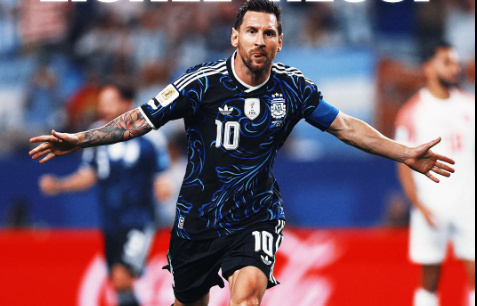
One of the most memorable moments came against England in the semi-finals, when Messi delivered another outstanding performance against a nation with such a deep connection to Argentina’s football history.
Argentina ultimately fell short in the final, with Spain securing a 1-0 victory through an extra-time goal in New York/New Jersey.
For Messi, however, the tournament represented much more than another attempt to win a trophy.
He was also motivated by a deeply personal desire to continue creating special memories for his father, who died on 8 August, only weeks after the World Cup final.
At 39, with an unprecedented collection of individual and team honours behind him and the physical demands of football becoming increasingly difficult, Messi still found reasons to continue.
The farewell
Shortly after the 2026 World Cup final, Messi officially brought his Argentina career to a close.
There was no packed stadium, trophy ceremony or dramatic farewell match.
Instead, he sat down and wrote three pages by hand.
That simple gesture brought an end to a remarkable journey that had begun with a 47-second senior debut in 2005.
Over more than 20 years, Messi experienced almost every emotion possible while wearing Argentina’s famous blue-and-white shirt — early promise, criticism, repeated final defeats, retirement, redemption, Copa America glory and ultimately World Cup triumph.
His international career may have ended, but the impact of Lionel Messi on Argentina football will remain for generations.
From a teenager who was dismissed from the field within seconds of his debut to a world champion who lifted the biggest trophy in football, Messi’s story with Argentina became one of perseverance, redemption and sporting greatness.