Mourinho explains what the Ballon d’Or should represent as 2026 ceremony approaches
By Joel Masibo, August 30, 2026Real Madrid head coach José Mourinho has offered a strong opinion on what should determine the winner of the Ballon d’Or, arguing that the prestigious individual prize should recognise players whose brilliance leaves a lasting mark on football rather than simply rewarding those who lift major trophies.
Mourinho was speaking ahead of Real Madrid’s LaLiga meeting with Málaga on Sunday, August 30, 2026, when he was asked about the Ballon d’Or and the growing debate surrounding the leading contenders.
The 2026 Ballon d’Or ceremony is scheduled for Monday, October 26, 2026, in London, with the event moving away from its traditional Paris setting for the 70th anniversary of the award. UEFA and France Football confirmed that London would host the ceremony, with the decision also serving as a tribute to Stanley Matthews, the first-ever Ballon d’Or winner in 1956.
Mourinho believes the award should go beyond the success of a particular team during a single season.
“It’s a very beautiful individual achievement that enters the individual history of a particular player. And I think it’s normal for there to be candidates, there aren’t many- about a dozen top-level players, among whom we have three or four. It’s natural for it to be an ambition.”
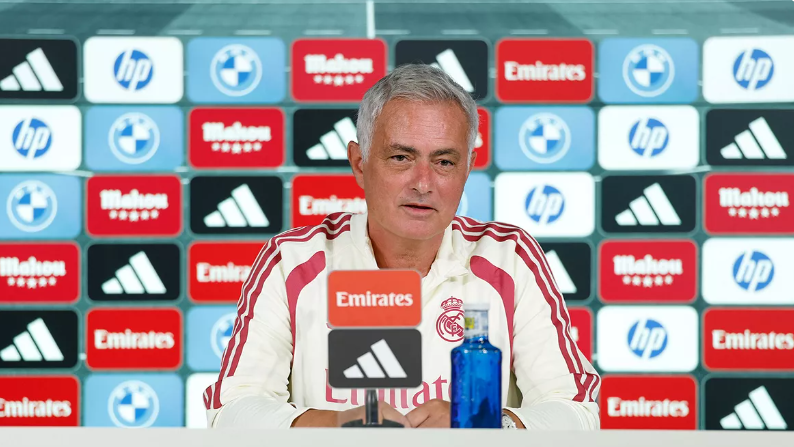
The Portuguese coach then explained his personal criteria for deciding who deserves the game’s most prestigious individual honour.
“For me, the Ballon d’Or should go to one of those players who, when they stop playing, we miss them for eternity.”
Mourinho pointed to some of football’s most iconic figures as examples of players whose influence transcended individual seasons and trophies.
“I miss Maradona, Ronaldinho, Ronaldo, Cristiano, Messi, Zizou, Lothar Matthäus… I miss these players.”
His comments come at a time when the 2026 Ballon d’Or race is particularly difficult to predict. The season has included the Champions League campaign as well as the 2026 World Cup, meaning players have had opportunities to strengthen their claims on both the club and international stages.
Mourinho, however, rejected the idea that winning the biggest team trophies should automatically guarantee the individual award.
“You can’t give the Ballon d’Or to a player just because he won the Champions or the World Cup.”
Collective success
The Real Madrid manager suggested that team achievements should instead be recognised through awards specifically designed for collective success.
“If you want to reward the Champions League, then give the Ballon d’Or to Luis Enrique. The Ballon d’Or for managers, to represent the team. Or to the Spanish national team, surely coach De la Fuente deserves the Ballon d’Or for managers.”
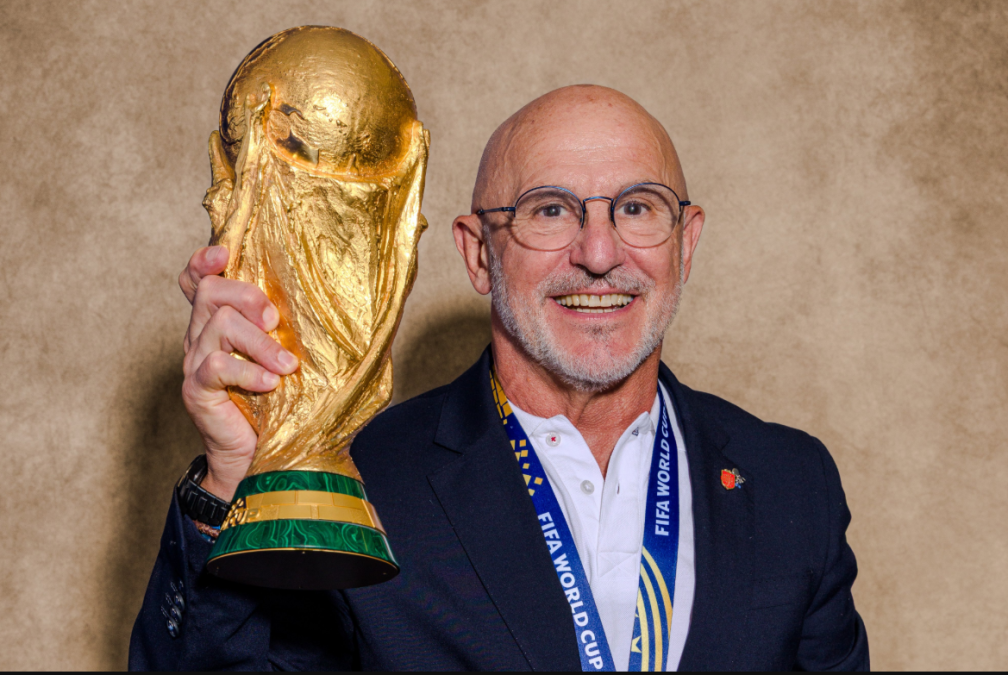
His argument is that there should be a clear distinction between celebrating a team’s achievements and identifying the world’s outstanding individual footballer.
“That is the great tribute to a team that enters history. But being the best player in the world is another thing.”
Mourinho also refused to limit the discussion to players from the teams that enjoyed the greatest collective success during the campaign.
“And he doesn’t necessarily have to be from Paris Saint-Germain or the Spanish national team. The best player in the world is among two, three, or four, and we know who they are and where they are.”
The manager also highlighted the possibility of factors outside football influencing the final outcome, although he made clear that he would prefer the award to remain focused on sporting merit.
“Then, the Ballon d’Or may also have some political aspects to it. And when politics come into play, I don’t like it as much.”
Mourinho’s comments add another layer to an already intriguing 2026 Ballon d’Or debate. With the ceremony taking place in London on October 26, 2026, attention will now turn towards the eventual shortlist and the performances that will ultimately separate the leading contenders.
The award’s 70th edition will also see the successor to 2025 winner Ousmane Dembélé crowned. The French forward won the men’s Ballon d’Or at the 2025 ceremony in Paris, while Aitana Bonmatí claimed the women’s award.
For Mourinho, however, the central question is not simply which player won the biggest trophy. His philosophy is that the Ballon d’Or should honour a footballer whose individual quality is so exceptional that their absence will be felt long after their playing career has ended.