Ex-Harambee Stars players differ on utilisation of artificial turfs in local estates
By Joel Masibo, February 20, 2026Former national team players Musa Otieno and Abdulaziz Beneah Watitwa have expressed varied opinions regarding the use of synthetic pitches in local estates amid the shrinking natural playgrounds.
Ex-Harambee Stars captain Musa Otieno has thrown his weight behind the installation and utilisation of artificial turfs in Nairobi estates, despite the scientific risks associated with it.
In a local TV interview on Thursday, February 19, 2026, Otieno revealed that even though the turfs are accepted scientifically, they remain the only available option to nurture talent at the grassroots level, after land grabbers have encroached on public spaces initially utilised as sports fields in most Nairobi estates.
Artificial football turfs provide consistent, all-weather, and low-maintenance surfaces, but are associated with higher injury rates (especially ACL tears), increased skin abrasions, and significantly higher surface temperatures. They pose environmental risks through microplastic pollution and contain hazardous chemicals in infill, such as PFAS.
Otieno backs the move
Otieno also highlighted the poor state of training grounds in most Nairobi estates as the reason he encourages the utilisation of artificial turfs, often installed by private investors and local leadership.
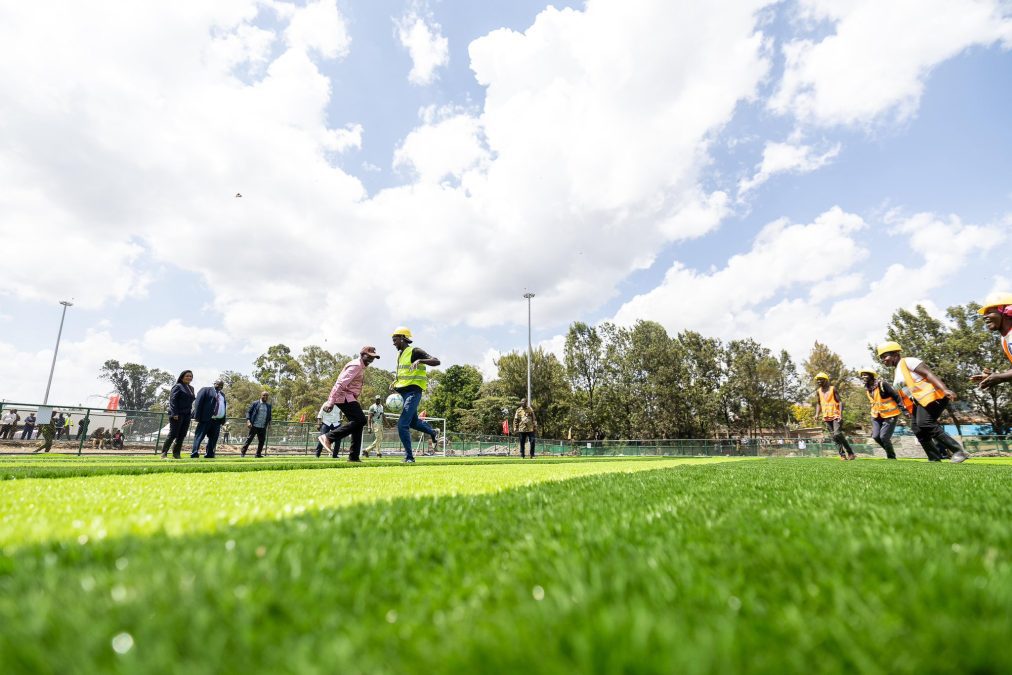
”Scientifically, they are rejected, but where we come from, we are grateful for the artificial turfs. Our fields are in poor condition, so they help a lot technically. Looking at Uhuru Sports Complex, where there is basketball, volleyball and netball, I would have liked these facilities to spread across all estates,” Otieno said.
”Looking at our football structures, they can help us a lot, because they support 7 v 7 setups, others support 5 v 5. There are no natural pitches in these estates because of land grabbing, so I encourage the installation of these turfs even in schools. The maintenance aspect is important; looking at Camp Toyoyo, it is in poor shape because it was not properly maintained while being overused.
Contrary to Musa Otieno’s opinion, Ex-Harambee Stars international Abdulaziz Beneah Watitwa has been a vocal critic of this trend. While the switch to synthetic pitches may seem like a solution to maintenance challenges, Beneah warns that the consequences for both grassroots football and player health are far too significant to ignore.
Watitwa maintains firm stand
The Dytikos Sports Consultants Director argues that prioritising artificial turf over natural fields severely undermines the development of grassroots football. “In many local communities, young players often rely on open natural fields to hone their skills. These fields are free, accessible, and an essential platform for nurturing raw talent,” Beneah told K24 Sports.
He fears that replacing these fields with artificial turf will deny underprivileged youth, who can’t afford the fees often associated with using synthetic pitches, the opportunity to develop their footballing skills.
In many parts of the country, artificial turf is synonymous with commercialisation. Community football fields, once free and welcoming, are increasingly being turned into privately managed spaces that charge for access. According to Watitwa, this shift limits access to the sport and risks shutting out the next generation of football stars who lack the means to pay.
“The beauty of football is that it’s a universal sport. You don’t need much to start playing, just a ball and some space. But with these artificial pitches, the game becomes less inclusive, and those without financial resources are left behind,” Beneah added.
Beyond accessibility, Beneah raised significant concerns about the health risks associated with playing on artificial turf. “We’re seeing more players sustain injuries when playing on these synthetic surfaces,” he said.
Research backs up Beneah’s concerns, with studies showing that the hard surface of artificial turf can contribute to an increased risk of injuries, particularly to the knees and ankles.