Advertisement
Overnight millionaire: Amount of money Kenyan athletes could bag at Berlin Marathon 2026
27th September, 2026 11:06 AM
Kenyan marathoners have a chance to collect up to Ksh16.6 million if either of them wins the Berlin Marathon and breaks the women’s world record on Sunday, September 27, 2026.
The maximum prize available is €110,000 (about Ksh16.6 million), according to the organisers’ prize-money structure.
The amount consists of three separate rewards. Victory is worth €30,000 (Ksh4.53 million), while running under 2:15:00 earns another €30,000 (Ksh4.53 million).
A new world record would bring an additional €50,000 (Ksh7.55 million).
The organisers only allow athletes to claim one of the available time bonuses. The world-record incentive is separate from the time bonuses and can therefore be added to the other payments.
The same prize structure applies to the men’s race, although the time targets are 2:02:00 and 2:03:00.
Kenyan women elite athletes
Rosemary Wanjiru: Personal Best of 2:16:14; returning as the reigning champion to defend her title and target a sub-2:15 finish.
Evaline Chirchir: Personal Best of 2:20:33.
Pascaline Jelagat: Personal Best of 2:22:44; arrived in Berlin following a victory in Rome earlier in 2026.
Mary Munanu: Included in the competitive elite entry list.
Ludwina Chepngetich: Making her official marathon debut at the event.
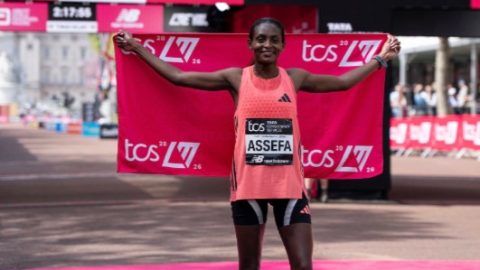
Assefa chasing Chepngetich’s world record
Assefa will not be attempting to improve her own current personal best in Berlin. Her fastest marathon remains the 2:11:53 she recorded in the German capital in 2023.

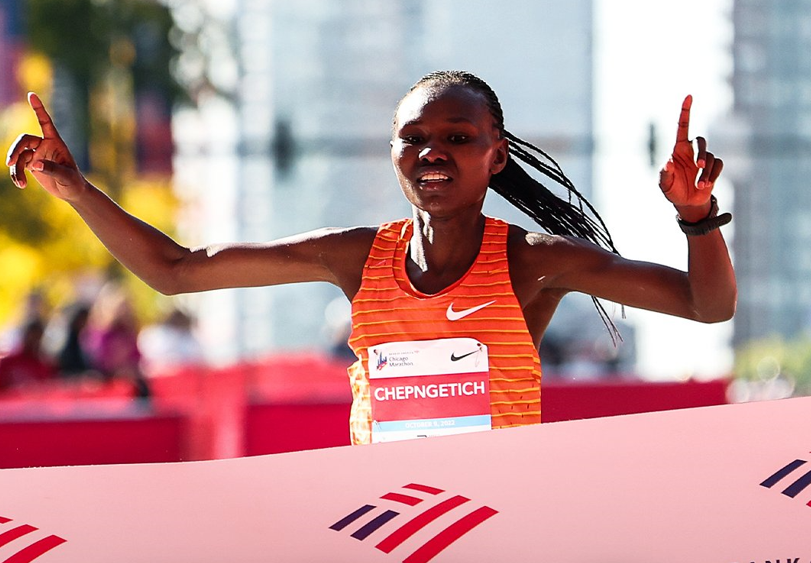
The world record she is targeting belongs to Kenya’s Ruth Chepngetich, who clocked 2:09:56 at the Chicago Marathon in October 2024.
World Athletics subsequently ratified Chepngetich’s performance as a world record.
To break the mark, Assefa must run at least 2:09:55, meaning she would need to improve her personal best by 1:58.
That would require an average pace of just under 3:05 per kilometre throughout the marathon.
Assefa has openly expressed her ambition to attack the record on her return to Berlin.
“It is a great pleasure for me to return to the streets of Berlin three years after setting my world record here in 2023. I am excited to once again try to break the world record,” she said when the elite field was announced.
Prize money drops sharply without a record
The financial reward decreases considerably if Assefa falls short of the world record.
A victory in 2:12:00 would earn her €60,000 (Ksh9.06 million), while winning in 2:16:00 would bring €45,000 (Ksh6.80 million).
If she wins but records a time slower than 2:17:00, her prize would be limited to the €30,000 (Ksh4.53 million) winner’s payment.
Second place is worth €15,000 (Ksh2.27 million), although a runner-up who finishes inside 2:17:00 can earn €30,000 (Ksh4.53 million).
The top 10 finishers in each race will share €85,000 (Ksh12.84 million), giving the men’s and women’s open races a combined basic purse of €170,000 (KSh25.67 million) before bonuses.
London offered Assefa a bigger payday
The potential Berlin earnings are significantly lower than the amount Assefa collected at the London Marathon earlier this year.
Her 2:15:41 performance, which set a women’s-only world record, earned her a combined US$205,000, equivalent to approximately Ksh26.45 million.
That included US$55,000 (Ksh7.10 million) for winning, US$125,000 (Ksh16.13 million) for the world record and US$25,000 (KSh3.23 million) for the course record.
Kenyan Sabastian Sawe earned an even larger payday in London, taking home US$355,000 (about Ksh45.80 million) after running 1:59:30.
Chepngetich received US$150,000 (approximately Ksh19.35 million) for her Chicago victory and world record.
The Valencia Marathon went even further in 2025, offering a €1 million (about Ksh151 million) reward for a new world record.
Kipchoge’s Berlin record bonus
Eliud Kipchoge also benefited handsomely from Berlin’s record incentives in 2022.
The Kenyan legend collected €120,000 (about Ksh18.12 million) after setting a new men’s world record, according to reports from the Austrian news agency APA.
Kipchoge ran 30 seconds faster than his previous world record in that race.
Assefa was also victorious in the women’s event that year, finishing in 2:15:37.
Sawe’s withdrawal changes men’s race
The men’s world-record bonus appears unlikely to be claimed in this year’s race after Sawe pulled out because of injury in August.
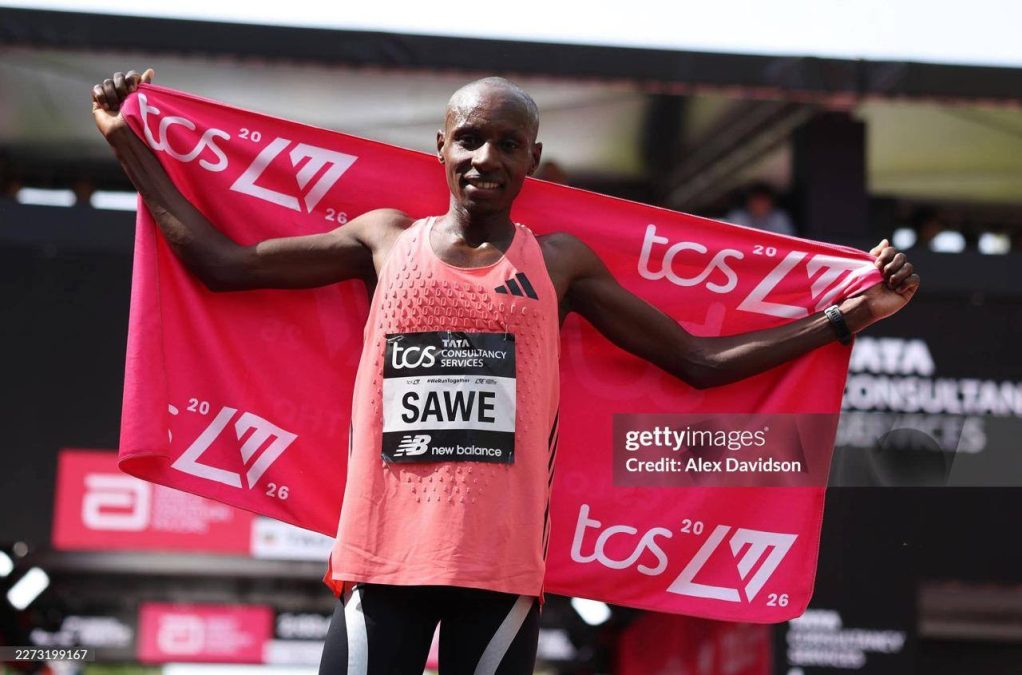
No other athlete remaining in the field has a personal best within two minutes of Sawe’s 1:59:30 mark.
Veteran Ethiopian Kenenisa Bekele has the fastest remaining personal best at 2:01:41, recorded in Berlin in 2019.
Assefa leads women’s field
Assefa enters Sunday’s women’s race as one of the leading contenders.
The Paris Olympic silver medallist and last year’s World Championships runner-up has a personal best of 2:11:53, more than four minutes faster than the next-best mark among the elite entrants.
Kenya’s Rosemary Wanjiru has the second-fastest personal best at 2:16:14.
Wanjiru won last year’s Berlin Marathon in 2:21:05 and will return to Germany hoping to retain her title.
For Assefa, however, the biggest incentive will be the chance to reclaim the women’s marathon world record while potentially taking home Ksh16.6 million in prize money.