UN: About 35% of women experience intimate partner violence
By Nancy Marende, February 27, 2026The United Nations has revealed that women in Eastern and Southern Africa continue to face disproportionate levels of violence and exclusion, with about 35 per cent experiencing intimate partner violence.
Speaking during the Ministerial Meeting on Women, Peace, and Security on Friday, February 27, 2026, in Machakos, UN Women Deputy Regional Director for the Eastern and Southern Africa Regional Office, Adama Moussa, said gender-disaggregated evidence shows that women and girls face systematically higher risks of violence, exploitation, and exclusion, particularly in humanitarian, security, and peacebuilding responses.
He noted that when decisions on ceasefires, aid delivery, and post-conflict recovery are made without women at the table, existing gender inequalities are often reproduced and intensified.
“Approximately 35 per cent of women in the region experience intimate partner violence, and conflict-related sexual violence continues to devastate communities in Ethiopia, Somalia, South Sudan, and Sudan.”
He revealed that in Sudan alone, an estimated 12.2 million women and girls are at risk of gender-based violence.
“These are not abstract statistics. They are lives disrupted, rights violated, and futures constrained,” he said, adding that women’s bodies have repeatedly become battlefields in conflict situations.
The concerns were echoed by the Intergovernmental Authority on Development (IGAD) Deputy Executive Secretary, Mohamed Ware, who said the region continues to grapple with cross-border security threats that do not respect national boundaries.
Ware observed that in nearly every crisis, women and young people shoulder a burden far greater than the influence they are afforded in shaping responses.
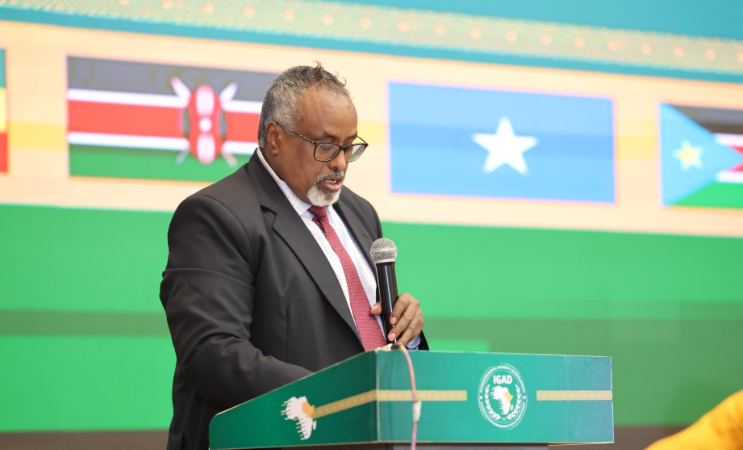
“They broker local ceasefires at community checkpoints when the formal process has fallen silent. They hold the social fabric together when institutions cannot reach far enough. That work is real, and it warrants far more than our recognition alone,” he said.
Ware declared that the debate about whether women and youth belong at the peace table is settled.
“It was settled by evidence. It was settled by principle. And perhaps most decisively, by the lived experience of communities across our region who already understand this to be true. The more pressing question is whether our institutions have kept pace,” he said.
IGAD Interventions
The ministerial meeting follows a two-day technical meeting that brought together ministers responsible for gender and related portfolios from IGAD member states.
Following their deliberations, the ministers resolved to formally establish the IGAD Women’s Mediation Advisory Board and endorse a roadmap for its creation as an independent advisory mechanism to provide strategic, technical, and inclusive expertise to IGAD-led mediation and preventive diplomacy efforts.
They directed the IGAD Secretariat to operationalise the Board within twelve months, including developing its Terms of Reference, appointing between seven and nine eminent regional women professionals, and establishing a Technical Support Unit within the Secretariat.
Further, the ministers resolved to ensure women’s leadership across all structures of the advisory board and related coordination mechanisms.
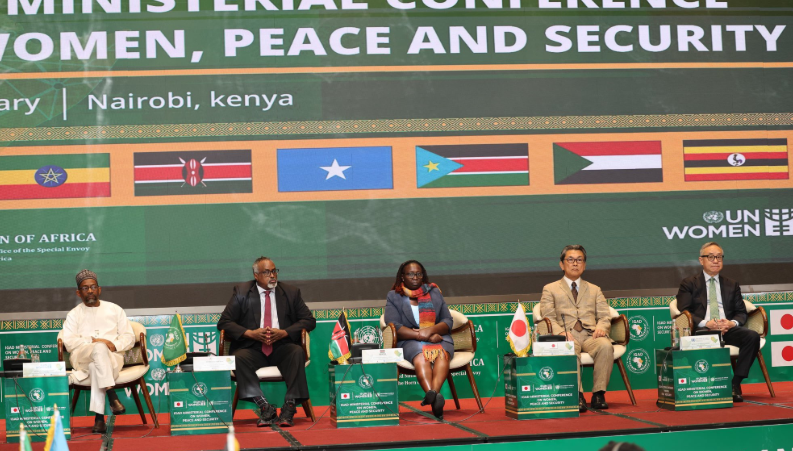
The meeting also agreed that the Advisory Board will be engaged in all IGAD-led mediation processes and that minimum participation benchmarks will be developed to guarantee women’s representation in formal peace negotiations.
In addition, the Board’s work will be integrated with the Conflict Early Warning and Response Mechanism (CEWARN) to strengthen inclusive preventive mediation across the region.
On data and accountability, the ministers adopted the IGAD Gender Statistics Strategy (2026–2030) as the regional framework for strengthening the production, harmonisation, dissemination, and use of gender-disaggregated data, including within peace and security sectors.
Member States were urged to strengthen national statistical systems, invest in gender data capacity, and align with harmonised regional indicators and reporting frameworks.
The meeting also marked the launch of the Gendered Intersectionality Toolkit, described as a practical instrument for applying intersectional analysis in policy development, programming, and monitoring across IGAD institutions and Member States.