Surplus mangoes in Murang’a at risk of ruin before last-minute rescue
By Wangari Njuguna, February 11, 2026Mango farmers in Murang’a have received a much-needed reprieve after arrangements were made to buy surplus fruits, easing the losses that have plagued them in recent weeks.
For several weeks, farmers had reported large quantities of ripe mangoes left uncollected by contracted processors, which had left the fruit to rot on the ground. Many feared significant financial losses as their hard work went to waste.
Farmers voice concerns
Speaking to K24 Digital correspondent from Murang’a on Wednesday, February 11, 2026, Simon Kamande, a farmer from Maragua, said he had harvested nearly all the fruit on his farm, but the delay in collection led to spoilage.
“I got worried that nearly all my produce would go to waste, and this would have made me incur huge losses, but I’m relieved there is now a solution,” he said.
Farmers explained that they were previously told to harvest their mangoes, only for the produce to remain uncollected for several days.
“The fruits started going bad before we could even sell them,” another farmer noted, highlighting the pressure on producers during the peak season.
New arrangements
The challenge arose due to a surplus of mangoes in the market, leaving processors unable to purchase all the fruit.
To address this, a pact has been signed with the non-governmental organisation Food for Education to buy the mangoes and distribute them to schools in Murang’a, Kiambu, and Nairobi counties.
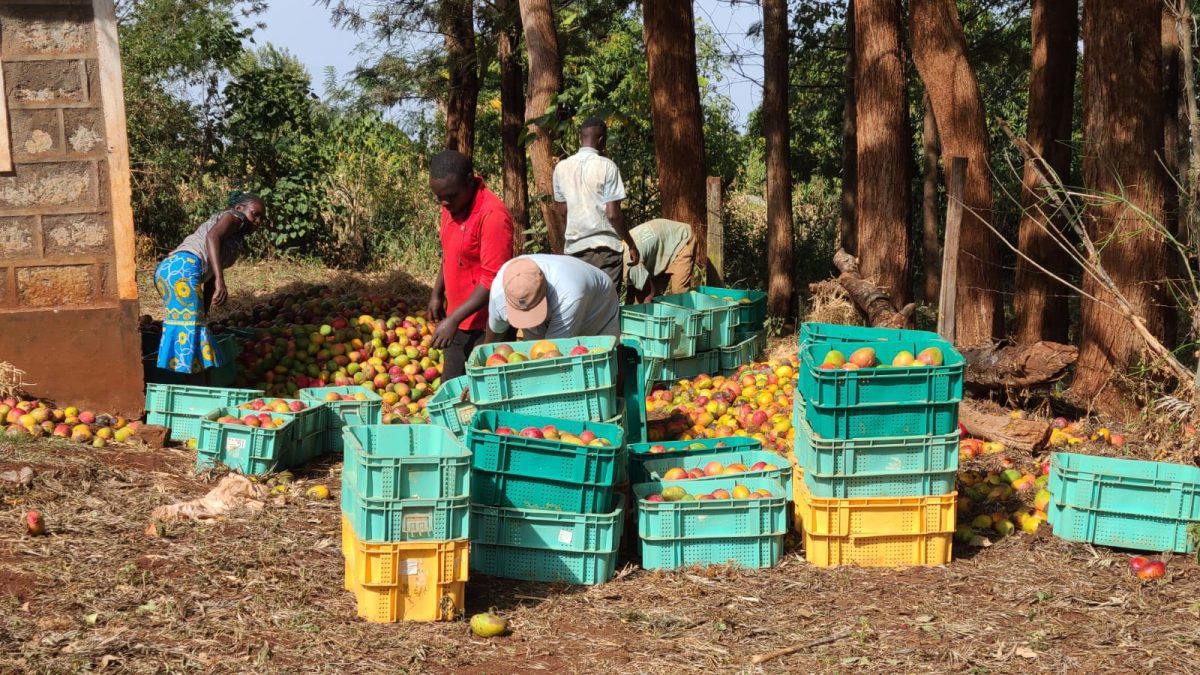
Rufus Kimotho, an officer at Food for Education, said the mangoes will be distributed as part of school meals for over 600,000 learners across 13 counties.
“We also provide bananas to complement the diet, and now the mangoes, which are in season, will be added,” he said.
Apollo Maina, chief officer in the department of agriculture, said weather patterns contributed to high production, while hot conditions accelerated ripening and reduced shelf life.
“We got more mangoes than the processors could take, which is why a different channel was needed to prevent losses,” Maina explained.
Relief for farmers
Farmers have welcomed the move as a practical solution that prevents waste and cushions them against financial losses.
Many hope that such arrangements will continue in future seasons to protect their livelihoods.
With this pathway, surplus mangoes are now reaching schoolchildren, while farmers are able to salvage part of their harvest, marking a temporary reprieve after weeks of uncertainty.