No Ebola-free certificate required for travel, Uganda Health Ministry says
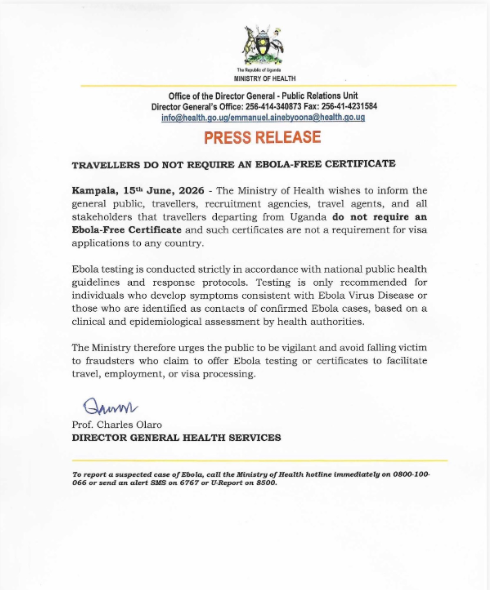
By William Muthama, June 15, 2026The Ministry of Health has moved to reassure the public that travellers departing from Uganda do not require an Ebola-Free Certificate for travel, employment, or visa applications to any country.
In a statement on Monday, June 15, 2026, the Ministry addressed growing public concern and misinformation circulating about travel requirements linked to the ongoing regional Ebola situation. It emphasised that no such certification is recognised or issued as part of Uganda’s public health response.
“Travellers departing from Uganda do not require an Ebola-Free Certificate and such certificates are not a requirement for visa applications to any country,” the Ministry of Health said.
The Ministry further clarified that Ebola testing in Uganda is carried out strictly under established national public health guidelines and response protocols.
It stressed that testing is not conducted as a routine travel requirement, but only under specific medical and epidemiological conditions.
“Ebola testing is conducted strictly in accordance with national public health guidelines and response protocols. Testing is only recommended for individuals who develop symptoms consistent with Ebola Virus Disease or those who are identified as contacts of confirmed Ebola cases, based on a clinical and epidemiological assessment by health authorities,” the statement added.
Health officials warned that individuals attempting to sell or promote Ebola-Free Certificates are engaging in fraudulent activity. The Ministry urged the public, travellers, recruitment agencies, and travel operators to remain vigilant and avoid falling victim to such scams.
“The Ministry urges the public to be vigilant and avoid falling victim to fraudsters who claim to offer Ebola testing or certificates to facilitate travel, employment, or visa processing,” the statement warned.
The clarification comes amid heightened regional concern following the Ebola outbreak (Bundibugyo strain) that began in eastern DRC in May 2026 and later spilt into Uganda.
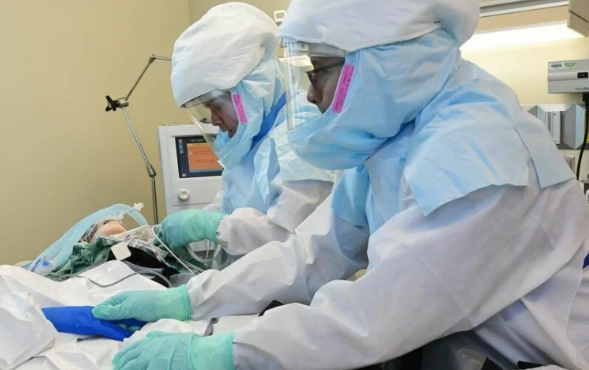
The World Health Organisation (WHO) declared the situation a Public Health Emergency of International Concern (PHEIC) on May 17, 2026, but advised against blanket travel bans or mandatory certification, stating that such measures lack a scientific basis and may encourage unsafe movement.
Some countries, including the United States and Canada, introduced temporary entry restrictions or enhanced screening measures for travellers who had recently been in Uganda, the Democratic Republic of Congo, or South Sudan within a 21-day window.