Nepal floods: More than 1,300 missing after deadly waters sweep away villages
By CNN, August 27, 2026More than 1,300 people are missing after catastrophic flash floods swept through mountainous areas along the Nepal-China border, killing at least 177 people and destroying villages, bridges and other critical infrastructure.
The disaster, which struck on Wednesday, also left hundreds of foreign nationals unaccounted for as search and rescue operations continued in difficult conditions.
Authorities said at least 1,384 people remained missing across the two countries, including more than 700 foreigners who had been visiting the mountainous region.
In Nepal, the number of people reported missing rose to 826, including 517 foreigners. On the Chinese side, at least 558 people were still missing, among them 260 foreigners.
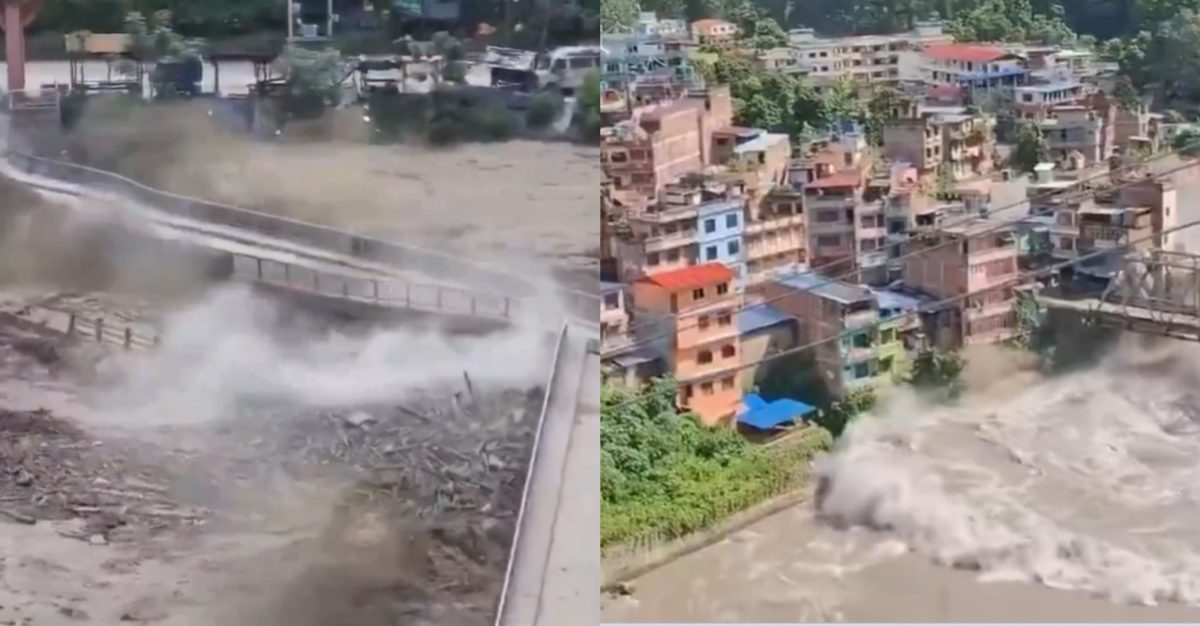
The devastating floodwaters crashed through the valley, submerging villages, sweeping away bridges and cutting off roads, making it difficult for rescuers to reach some of the worst-hit areas.
Dramatic footage from the region showed a powerful torrent of water surging through the mountainous landscape, leaving widespread destruction in its wake.
Scientists believe a glacier avalanche may have triggered the disaster in Nepal’s Rasuwa district.
International experts said a huge section of ice could have plunged into the valley below, picking up sediment that had already been saturated by water during the ongoing monsoon season and creating the deadly floodwaters.
The US Geological Survey also said a glacial collapse, which occurs when a large section of ice breaks away from a glacier and falls down a slope, was behind the disaster.
Rescue efforts intensify
Search and rescue operations have intensified as families desperately wait for news of loved ones who have been unreachable for more than 24 hours.
Chinese emergency responders reached the core disaster zone near Gyirong Port, a hard-hit facility that handles nearly a third of trade between China and Nepal.
The first group of 141 rescuers arrived about 22 hours after the disaster, accompanied by a high-altitude Mi-171 helicopter.
However, rescue teams are facing major challenges as roads remain blocked by mud and debris.
In Nepal, rescue helicopters have also struggled to land in some affected areas because of high floodwaters and difficult conditions.
The European Union and India are among those that have announced plans to provide humanitarian assistance.
Fears of secondary disasters
Authorities have warned that the danger may not be over, with more rain expected in the region over the coming days.
China has warned of possible secondary disasters, including landslides, mudslides and further flash floods, particularly in Gyirong County.
Collapsed earth and debris have also formed unstable dams, raising fears of further flooding if they give way.
The region is already vulnerable to landslides and flash floods, while three more days of rain are forecast.
Meanwhile, the Dalai Lama offered his prayers to families who lost loved ones in the disaster, while pointing to climate change as a possible underlying factor behind the tragedy.
As rescue efforts continue, authorities are still working to establish the full scale of the devastation, with hundreds of families anxiously waiting for news of those still missing.