Advertisement
More than 70 livestock dead as drought bites hard in Mandera
13th January, 2026 10:05 AM
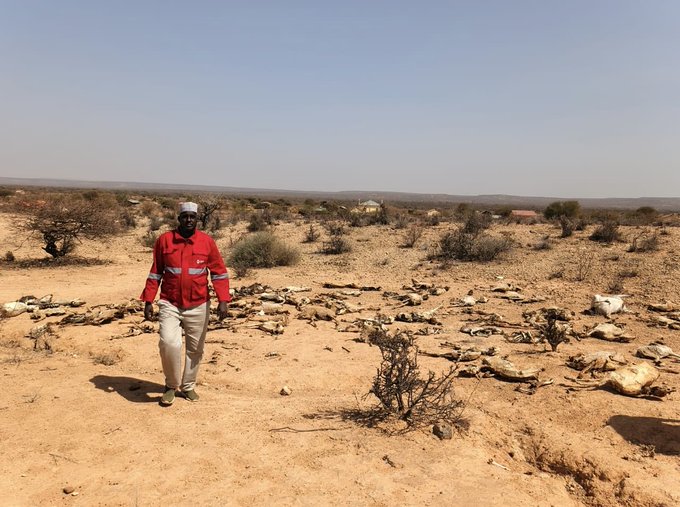
A severe drought sweeping through Mandera County has left devastating effects in its wake, with more than seventy head of cattle reported dead.
In an official report by the Kenya Red Cross on Tuesday, January 13, 2026, the Red Cross confirmed that Chabii Barr, Rhamu Sub-County, has been affected by the severe drought conditions.
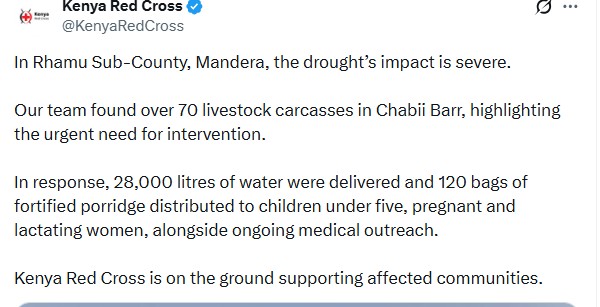
“In Rhamu Sub-County, Mandera, the drought’s impact is severe. Our team found over 70 livestock carcasses in Chabii Barr, highlighting the urgent need for intervention,” the Red Cross announced.
According to the Kenya Red Cross, the situation is rapidly worsening and poses a serious threat to both human and animal life.
On the other hand, in response to the escalating emergency, the Kenya Red Cross has mobilised humanitarian support, including the delivery of 28,000 litres of clean water to affected areas.
In addition, the Kenya Red Cross, in a move to address the rising malnutrition among vulnerable groups, has also distributed 120 bags of fortified porridge targeting children under five, as well as pregnant and lactating women.
“In response, 28,000 litres of water were delivered and 120 bags of fortified porridge distributed to children under five, pregnant and lactating women, alongside ongoing medical outreach. Kenya Red Cross is on the ground supporting affected communities,” Red Cross said.
Mandera Governor remarks on drought
The efforts by the Kenya Red Cross team come just days after the Mandera County government announced the depth of the drought crisis.
According to the county government, the area has slipped into a full-scale drought emergency, with more than 335,000 residents now in need of humanitarian assistance.
In a press statement issued on Tuesday, January 6, 2026, Governor Mohamed Khalif said the situation in the county remains critical, confirming that Mandera is currently classified under the alarm drought phase, with conditions continuing to deteriorate.
“The drought situation in Mandera remains critical. The county is currently classified in the alarm phase, and the trend is worsening,” Khalif said.
He attributed the crisis to successive seasons of below-average rainfall, which have severely affected pasture regeneration and water availability across the county.
“These conditions have significantly constrained the regeneration of pasture and water resources,” he said.
As a result, livestock are trekking longer distances in search of water and pasture, leading to poor body condition and declining milk production. This, the governor said, has weakened household purchasing power and undermined food and nutrition security.
The most affected groups include children under five years, pregnant and lactating women, older persons and persons with disabilities.
The drought has also triggered increased livestock migration within the county and into neighbouring Wajir county, raising concerns over growing pressure on scarce resources and the risk of conflict.