Advertisement
Historic milestone as Ilchamus woman becomes community’s first PhD holder
20th December, 2025 11:23 AM

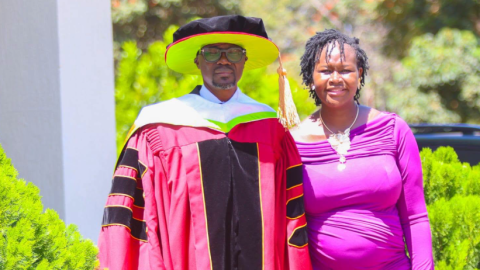
One of the smallest ethnic groups in Kenya, the Maa-speaking Ilchamus community has received great honour after its first female attained a Doctor of Philosophy award.
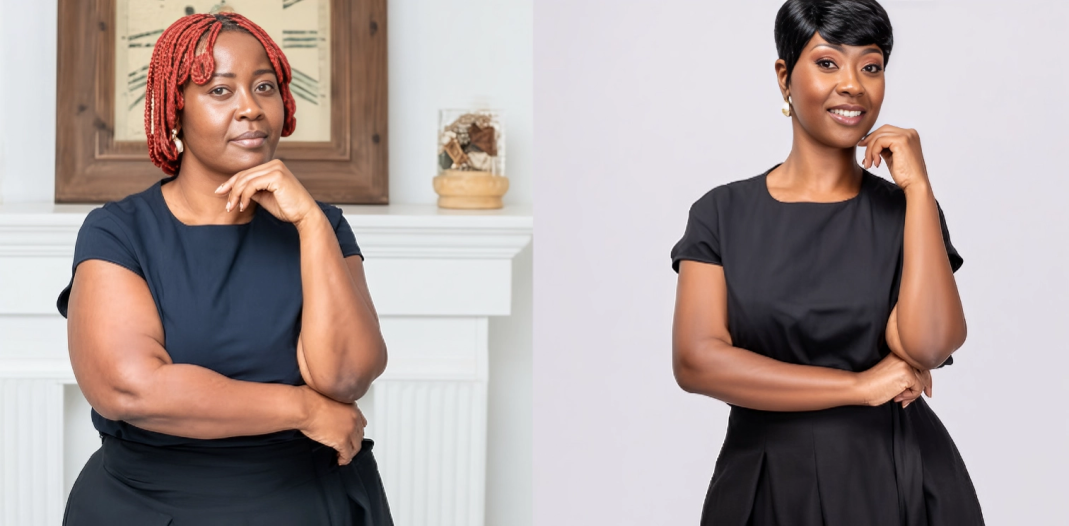
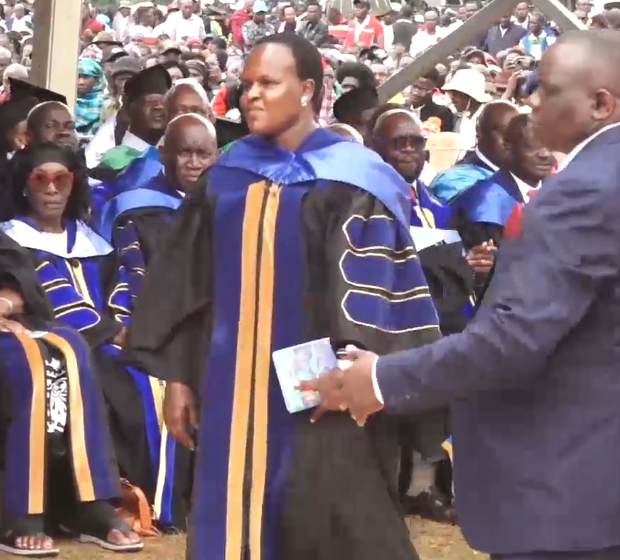
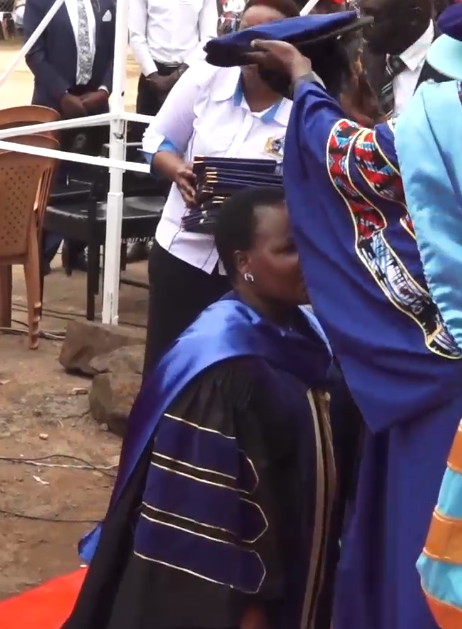
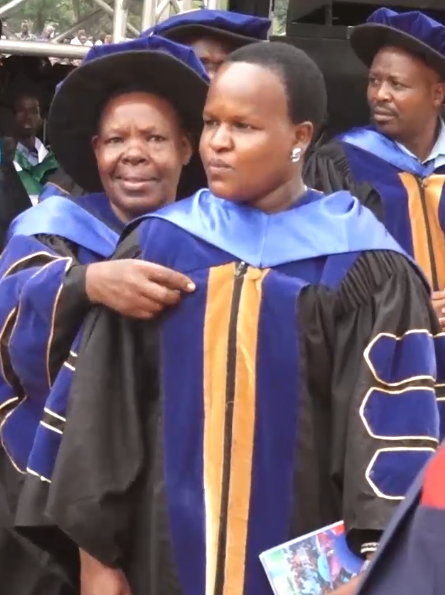
Meiguran Mirasine, aged 44, was conferred a Doctor of Philosophy in Agricultural Extension and Rural Development at Kisii University during their 14th colourful graduation ceremony.
Mirasine, the 2nd born in a family of five, was among the 26 graduates conferred with similar awards at the university.
The Ilchamus are a Maa-speaking community living in the south and southeast of Lake Baringo, Kenya, with a population of approximately 32,949 people according to the 2019 national census.
The community has previously sought political recognition and support from the state, and a significant recent development is the government’s announcement of a new sub-county for the Ilchamus in Baringo, aimed at improving their access to government services and representation.
Mirasine, who is a specialist in agricultural extension work and rural development, said her PhD work titled Determinants of Inclusive Agricultural Value Chain and Impact on Livelihoods in the Seed Maize Multiplication Programme in Baringo South was a milestone in her research.
The research was based on a maize programme in Baringo South, which has been running for many years since 1996.
The study, she said, established that production logistics like inadequate irrigation capacity among farmers, poor road networks to the interior farms, inadequate post-harvest facilities, inefficiencies in farmer group management and limited contractual knowledge among farmers were among the challenges faced by farmers in the area.
She said her research, therefore, recommends various actions from the government, the private sector and farming households to ensure farmers’ efforts do not go to waste and the programme contributes to the betterment of livelihoods.
The mother of three explained her experience since primary school, saying how she was brought up by two women, her mother and grandmother, experiencing many challenges, including poverty, which led to child labour, and lack of basic needs like food and school fees.
I’m the first woman to earn a PhD, and this has been inspired by many things. First is that I was brought up by two women whom I adore a lot. My mother, Jane Memunyi Lemuguran, and my grandmother, Mamelock
However, she explained that she strived for excellence, balancing family, work and education responsibilities but through support from family.
Dr Mirasine mused about her achievement, which she said had softened the blow of being raised in a difficult life in the rural arid land, where she recalled taking turns to care for livestock in the far grazing areas and, therefore, missing school 2-3 days a week, especially during periods of intense drought.
Mirasine joined high school in 1996-1999 at Pemwai Girls in Baringo, where she was in a class of 81 and was among the only two girls who made it to university.
She then joined Egerton University to pursue a bachelor’s degree in agricultural education and extension, and at the end of the 4 years, she excelled with first-class honours.
She later joined the humanitarian and development industry, working and serving vulnerable communities in different counties within Kenya with non-governmental organisations.
Afterwards, she enrolled for a master’s degree between 2012 and 2015 to sharpen her skills before her current doctorate award.
To all the young girls and women of the Ilchamus community and even the other
minority groups in Kenya who experience many challenges of marginalisation, Mirasine said that with determination and resilience, it was possible to succeed.
She also advised the young graduates seeking employment to market themselves using the great knowledge they have acquired through internships and also voluntary work to enhance their skills and experience, which can come in handy during hiring.
According to the Kisii University acting Chancellor, Dr Sara Ruto, today’s world demands a competency-based education approach, and she urged the university graduates to develop a continuous learning mindset in a bid to remain relevant.
Dr Ruto observed that being a learner for life will ensure the graduates are positioned to take advantage of available opportunities.
The Ilchamus community previously faced significant economic hardship, including inadequate access to modern facilities like education and healthcare, and persistent insecurity from inter-ethnic violence and cattle rustling with neighbouring groups.
Indicators of vulnerability in the area included floods, drought, food shortage, lack of grazing areas and the presence of alien species introduced on land and in the lake, known as Prosopis juliflora (or locally known as Mathenge), which was introduced by the government in 1975 to stop the desertification effect in the area.
These challenges have been worsened by the climate change impacts in recent years, with the worst affected being women, children, and the aged, who take time to relocate whenever disasters like drought, flooding, or insecurity attacks occur.
Ruto’s pledge to marginalised communities
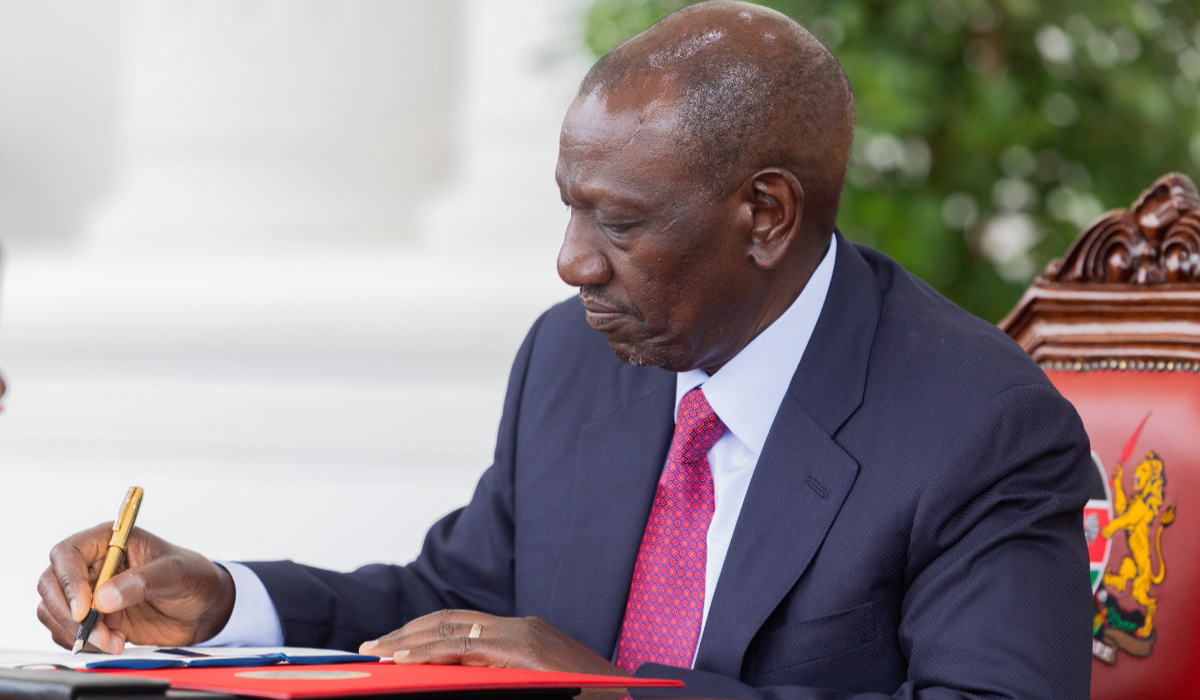
President William Ruto has also been quoted in sections of the press saying the government is establishing a Ksh 500 million National Minority Scholarship Programme to support children from indigenous, minority and marginalised communities to access quality secondary and tertiary education.
President Ruto was speaking at State House, Nairobi, on December 18 during the UN International Day for Minorities celebrations, where he met with over 5,000 leaders and members of minorities, indigenous and marginalised communities.