A rare sunset total solar eclipse will occur for millions of people on Wednesday
By CNN, August 12, 2026Sky watchers across parts of Europe are preparing for a rare total solar eclipse on Wednesday, August 12, 2026, with northern Spain, Iceland and parts of Greenland among the best places to witness the event.
The eclipse will happen when the Moon moves between the Earth and the Sun, blocking the Sun’s light from reaching parts of the planet. While many areas will see only a partial eclipse, people along the narrow path of totality will briefly see the Sun completely covered.
Spain set for a rare sunset eclipse
Northern Spain is expected to offer one of the most unusual views of the eclipse because totality will happen shortly before sunset.
In León, for example, totality is expected to begin at about 8:28 p.m. local time and last for roughly two minutes. Other parts of northern Spain will also experience the event as the Sun is low on the horizon.
Solar astrophysicist Dr Ryan French, who is observing the eclipse from Spain, said the timing could create a striking view as daylight fades.
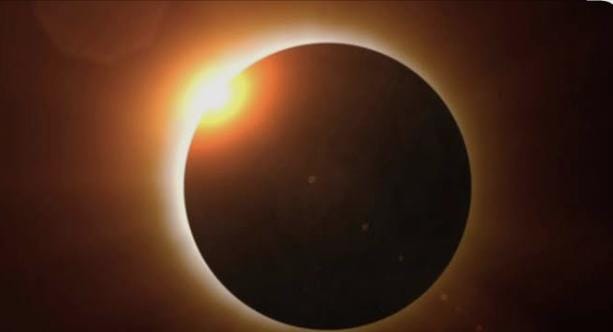
“For pretty much the entirety of Spain, by the time the sun sets sort of over the horizon, the total eclipse will have happened, but the sun will set in a partial eclipse,” French said.
Iceland and Greenland will also experience totality, with some locations getting more than two minutes of darkness. The eclipse will then continue towards Spain and a small section of northeastern Portugal.
What viewers will see
The eclipse will not begin with sudden darkness. It will start as a partial eclipse, with the Moon slowly moving across the face of the Sun.
As totality approaches, the sky will become darker, and the surroundings may take on a different appearance. Bright points of light known as Baily’s beads can appear briefly before disappearing, followed by the familiar “diamond ring” effect.
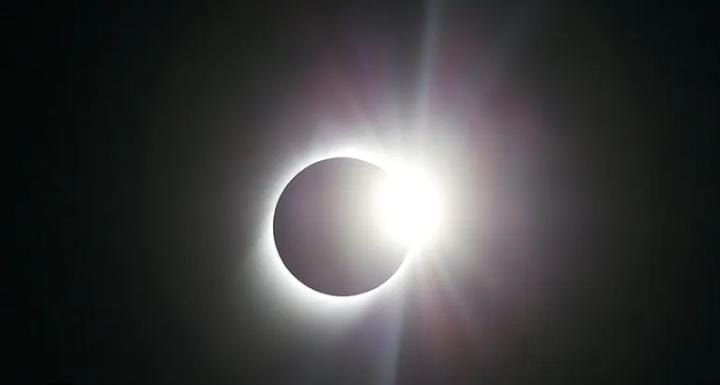
During totality, the Sun’s outer atmosphere, known as the corona, becomes visible around the dark Moon. The sky can also develop a silvery, twilight-like appearance.
“The sky will have some sort of weird, twilighty, silvery glow about it,” French said.
Perseid meteor shower follows
The eclipse is not the only sky event expected to attract attention. The Perseid meteor shower is also reaching its peak around the same period, giving sky watchers another reason to look upwards.
For people outside the path of totality, the eclipse will still be visible as a partial event, although the extent of the Sun’s coverage will depend on location. Much of Europe and northwestern Africa will see a noticeable partial eclipse.
How to watch safely
Viewers should use certified eclipse glasses or a proper handheld solar viewer when looking at the Sun. Ordinary sunglasses are not enough. NASA also warns against looking at the Sun through cameras, binoculars or telescopes without the correct solar filters.
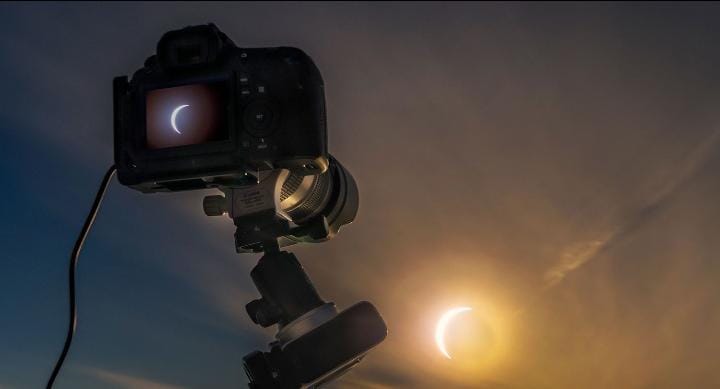
For those unable to see the eclipse directly, NASA and the European Space Agency are providing online coverage.
The next total solar eclipse visible in parts of southern Europe and North Africa will take place on August 2, 2027, giving sky watchers another chance to witness the Moon briefly turn daylight into darkness.