Instagram introduces new AI profile label after rise in fake celebrity scams
By William Muthama, September 1, 2026Instagram is changing how it labels AI-generated accounts, as fake influencers, celebrity impersonation and deepfake scams become harder for users to spot.
On Tuesday, September 1, 2026, Instagram announced that it is replacing its “AI creator” label with “AI-generated profile.” The new label is aimed at accounts built around people who are created using artificial intelligence rather than real humans.
Instagram said users do not want to follow a profile that appears to belong to a real person, only to discover later that the identity is artificial.
“An AI-generated profile is for profiles whose content features an AI-generated person rather than a human. The label signals to people that a profile’s identity is AI-generated and not a real person,” Instagram stated.
The company said the new name should make the purpose of the label clearer and reduce confusion between real creators who use AI tools and profiles whose identities are completely AI-generated.
What Instagram’s label means
The new label will not apply to every creator who uses AI.
Instagram is specifically targeting profiles where the person featured is AI-generated. A real influencer using AI to edit a photograph, improve a caption or create graphics would not automatically need the label.
Instagram said the clearer name will help users understand whether the person they are seeing is real or artificial.
“This more precise name reduces the likelihood of miscategorisation and ultimately makes the label more trustworthy for the community,” Instagram stated.
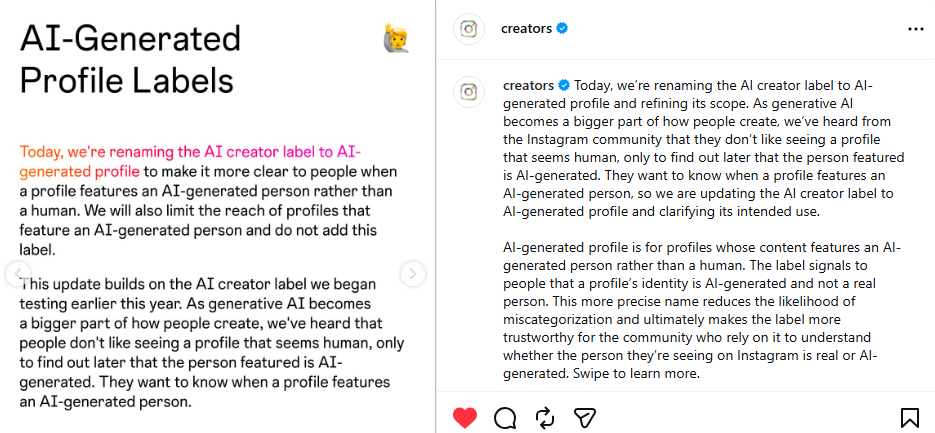
Instagram is also taking action against profiles that use AI-generated people without disclosure. Such accounts could have their distribution limited, meaning their posts may be less likely to appear in recommendation areas such as Reels and Explore.
The platform is not banning AI influencers. Instead, it is pushing for greater transparency.
For users, the message is simple: a realistic face does not necessarily mean a real person. When an unfamiliar celebrity or influencer asks for money, promotes an investment or makes an unusual offer, users should verify the account before trusting it.
Fake celebrities and athletes
The change comes as scammers increasingly use celebrity faces and voices to make fraudulent offers look legitimate.
Footballers have become a major target. Research into deepfake advertising found thousands of scam ads using the likenesses of stars including Cristiano Ronaldo, Lionel Messi, Neymar, Luis Díaz and Moisés Caicedo.
Some advertisements made the players appear to promote gambling apps, investments and cryptocurrency opportunities they had never endorsed. In one campaign, hundreds of ads used Ronaldo’s likeness to promote a fake gambling service.
The problem also affects celebrities and business figures.
Researchers have documented fake advertisements using AI-generated versions of public figures to promote fraudulent investment platforms. In one case, scammers used the face and voice of Colombian entrepreneur Mario Hernández in fake investment advertisements that ran on Facebook and Instagram.
These scams rely on familiarity. When users see a famous person apparently recommending a product or investment, they may be more likely to trust the message.