Advertisement
Passport bribery: How much Kenyans pay to get their document faster and the risks involved
22nd August, 2026 07:11 AM
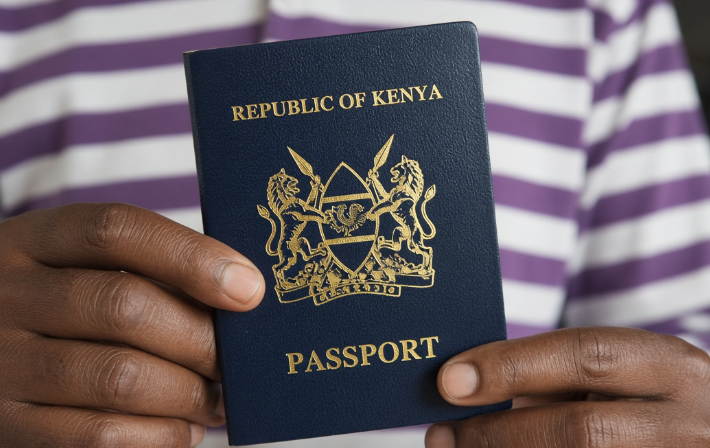
For many Kenyans, obtaining a passport is supposed to be a straightforward government service: apply through the official eCitizen platform, pay the prescribed fee, submit biometric details and wait for the document to be processed.
In reality, however, long delays, backlogs and uncertainty over processing times have created an informal market for people seeking to get their passports faster.
Applicants facing urgent travel, employment, education or family commitments have reported paying brokers and corrupt officials thousands of shillings to bypass delays and move their applications through the system. The shortcut, however, can come at a far greater cost than the bribe itself.
The official cost of a Kenyan passport
The official cost of a standard 66-page ordinary Kenyan passport is Ksh12,500. That is the amount applicants are expected to pay through official government channels.
Yet corruption surveys and recent enforcement cases suggest that some applicants are asked to pay substantial additional amounts to have their applications processed more quickly.
According to the Kenya National Ethics and Corruption Survey 2025 by the Ethics and Anti-Corruption Commission (EACC), the average bribe associated with obtaining a passport was about Ksh 12,514.
Recent enforcement cases have highlighted demands in the Ksh 12,000 to Ksh20,000 range. Media investigations and anecdotal accounts have also described brokers offering so-called VIP or accelerated passport services for around Ksh 15,000, with promises that applicants can receive their documents within days or a week.
For families applying for several passports, the unofficial payments can quickly rise into tens of thousands of shillings.
Why are applicants paying?
The main reason applicants pay bribes is the pressure of time. Kenyans who need passports for urgent travel, employment, education, medical treatment, family emergencies or visa applications may become desperate when applications take longer than expected.
Long queues, processing backlogs and uncertainty over when a passport will be ready create opportunities for brokers and corrupt officials to exploit applicants.
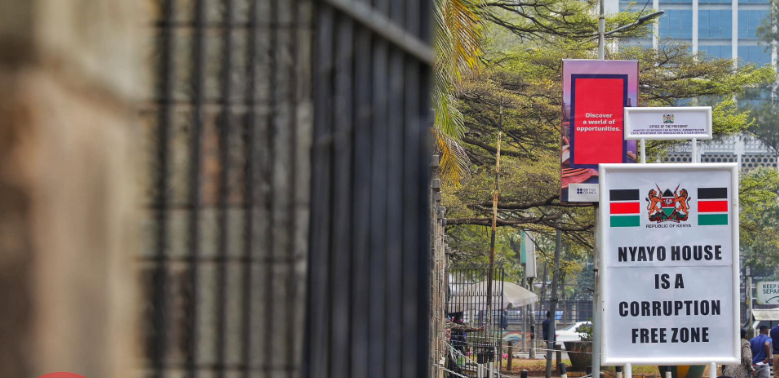
Some people are approached around immigration offices, while others are introduced to brokers through friends, relatives or previous applicants.
The process often begins with a promise. A broker may tell an applicant that their passport can be “fast-tracked” for an additional fee, claiming to have contacts inside immigration who can move the application forward, speed up fingerprint processing or arrange earlier collection.
Once money changes hands, the broker may contact a corrupt insider who allegedly uses access to government systems to interfere with the normal process.
In some cases, however, there may be no insider at all, and the applicant simply becomes the victim of a fraudster.
The system can create a cycle in which delays create desperation, desperation creates demand for shortcuts, and that demand creates opportunities for brokers and corrupt officials.
Inside the passport bribery network
Passport bribery can involve more than an applicant and a single corrupt official. Brokers may act as intermediaries, connecting desperate applicants with people who have access to government systems.
Investigations into passport and identity fraud in Kenya have pointed to networks involving brokers, corrupt insiders and compromised civil-registration processes.
Rogue officials may exploit weaknesses in official systems or misuse access to facilitate files that have not been properly vetted.
Fraud can also begin before the passport application stage. Foreign nationals or other ineligible individuals may attempt to obtain foundational documents, including birth certificates and national identity cards, using false information, fraudulent family relationships or compromised local officials.
Investigations have also raised concerns about the diversion of official materials and equipment, including government stamps, blank forms and biometric tools.
Such materials can potentially be used to create records and documents that appear authentic, making fraud more difficult to detect.
Penalties for passport bribery in Kenya
For giving or receiving a bribe to speed up a passport application, Kenya’s Bribery Act, 2016 provides for a maximum penalty of 10 years in prison, a fine of up to Ksh5 million, or both.

A court may also impose an additional fine of up to five times the value of the benefit or loss connected to the offence.
The consequences can extend beyond a fine or prison sentence. Public officers convicted of bribery can lose their jobs and may be barred from holding public office for up to 10 years, depending on the applicable legal provisions. Authorities may also pursue the recovery of benefits or property linked to the offence.
Author
William Muthama
William Muthama is a digital journalist with a focus on entertainment, human interest, and current affairs. Share stories: [email protected]/ [email protected]
View all posts by William Muthama